

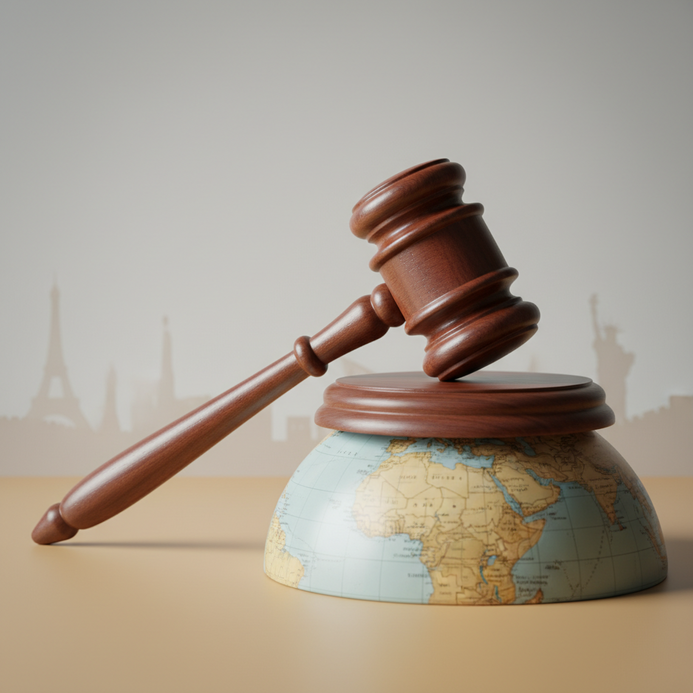
World law, formally known as international law, defines the legal structure that governs relationships among nations and other actors on a global scale. Competitors in this field often enhance their authority by referencing key treaties, organizational charters, and foundational legal documents—particularly emphasizing enforcement mechanisms and key historical developments at the outset.
This article clarifies the foundations, sources, enforcement systems, and evolving challenges of world law. Readers gain a clear perspective on global legal norms, institutions, and landmark trends, all supported by the expertise and analytical tools available from LegalExperts.AI.
Introduction to World Law and Its Purpose
What is international law and why does it matter?
International law is the collection of rules, norms, and principles that regulate conduct between states and other international actors. Its importance lies in providing a framework for diplomacy, cooperation, and the peaceful resolution of disputes, strengthening predictability and stability across borders.
How does world law differ from municipal (domestic) law?
World law governs the relationships between sovereign states and international entities, while municipal law (also known as domestic law) pertains to legal relationships and obligations within a particular country. Unlike municipal law—enforced by a national government—international law depends on consent and cooperation among its subjects, often through treaties or customary practice.
What are the main goals of international law?
The goals of international law include maintaining international peace and security, fostering friendly relations among nations, protecting human rights, and supporting sustainable development. These goals are pursued through both binding and non-binding agreements.
Key issues covered by international law today
Today, international law addresses areas such as armed conflict, trade regulations, environmental protection, human rights, refugee protection, maritime boundaries, outer space activities, and transnational crime.
Historical Evolution of International Law
How did international law emerge before the Westphalian era?
Before the Peace of Westphalia in 1648, practices resembling international law were found in ancient treaties between kingdoms and city-states, codes of warfare, and diplomatic missions. Early religious and commercial agreements also influenced the formation of international norms.
What role did the Treaty of Westphalia and the Peace of Westphalia play?
The Treaties of Westphalia established the principle of state sovereignty and non-interference, forming the foundation for the modern state system. This event marked a turning point, as states increasingly recognized each other’s autonomy and engaged in formalized diplomatic relations.
How did the League of Nations and World War II influence modern law?
The League of Nations, created after World War I, was the first major international organization dedicated to preventing conflict and promoting cooperation. Although the League ultimately faltered, its structure and ideals laid groundwork for the United Nations and influenced the current international legal system. According to a 2024 Harvard Law Review analysis, the League’s framework for collective security deeply shaped today’s international legal institutions.
Which milestones marked the post-World War II era?
Following World War II, the adoption of the United Nations Charter, Universal Declaration of Human Rights, and Geneva Conventions marked a transformation in global governance. The system expanded to address human rights, decolonization, economic development, and responses to new global threats.
The main historical periods provide essential context:
- The Ancient World: Early treaty-making and customary rules among ancient empires
- Middle Ages: Emergence of just war doctrines and diplomatic envoys
- Early Modern era: Rise of state sovereignty and formalized treaties
- 19th century: Codification efforts and international organizations
- Modern developments: Creation of the UN, expansion of human rights and humanitarian law
Sources and Key Instruments of International Law
What are the major sources of international law?
The primary sources of international law are treaties, customary law, general principles of law recognized by nations, judicial decisions, and the writings of leading jurists. These sources are referenced in Article 38 of the Statute of the International Court of Justice.
How do treaties, custom, and general principles function?
Treaties are written agreements between states or international organizations with legally binding effects. Customary international law consists of unwritten rules derived from the consistent practice of states, accepted as legally obligatory. General principles of law reflect foundational legal norms common to leading legal systems and inform case law where gaps exist in treaties or custom.
What roles do judicial decisions and scholarly writings play?
While not primary sources, decisions of international courts, such as the International Court of Justice, and scholarly writings help clarify and interpret existing laws. They are especially influential when addressing new or unsettled questions in global governance.
What are examples of main international human rights instruments?
Key human rights instruments serve as legal standards and sources of accountability across borders. The following documents are central references for both states and individuals:
- The Charter of the United Nations
- Universal Declaration of Human Rights
- International Covenant on Civil and Political Rights
- International Covenant on Economic, Social and Cultural Rights
- European Convention on Human Rights
Principal Actors and Branches of International Law
Who or what are the subjects of international law?
States, intergovernmental organizations, and in certain cases, individuals are recognized as subjects of international law. States possess the fullest legal standing, but individuals can be subjects in areas like human rights or international crimes. Non-state actors such as international organizations also play significant roles.
What is the distinction between public and private international law?
Public international law governs relations between states and international organizations, focusing on issues like treaties, territorial disputes, and compliance with global norms. Private international law, or conflict of laws, addresses cross-border aspects of private legal matters, such as family law or commercial disputes between parties from different countries.
Which organizations and platforms shape the international legal system?
A wide array of organizations and digital platforms contribute to development, monitoring, and enforcement in the international legal system. Major entities include the United Nations, International Court of Justice, International Criminal Court, World Trade Organization, and regional bodies such as the Council of Europe. The expansion of specialized tribunals and legal technology platforms, including the use of databases such as Westlaw, has greatly improved global legal collaboration. According to a 2023 Oxford University report, the reach of international criminal law has broadened substantially through these collective efforts.
Key branches and specialized areas are essential for understanding global law. The most prominent branches are:
- International human rights law
- International humanitarian law
- International criminal law
- Supranational law
- International trade law
- Law of the Sea
- Disarmament and peace
Enforcement Mechanisms, Implementation, and Criticisms
How is international law enforced across borders?
Enforcement of international law primarily depends on voluntary compliance, diplomatic efforts, reputational incentives, and in some cases, sanctions or collective action through international bodies. National courts may also play a role in enforcing international norms domestically.
What are the principal enforcement bodies and mechanisms?
Multiple institutions and processes oversee global legal compliance and adjudication. The following bodies represent core enforcement mechanisms:
Enforcement and monitoring require institutional oversight, cross-border engagement, and legal infrastructure. The principal mechanisms include:
- International Court of Justice (ICJ)
- International Law Commission
- United Nations Commissions
- Specialized criminal tribunals and courts
- Treaty bodies and monitoring mechanisms
What criticisms and limitations exist in the international legal system?
Critics point to challenges such as inconsistent enforcement, lack of binding authority over powerful states, jurisdictional gaps, and perceived selectivity in global justice. Limitations in resources, political influence, and differing national interests continue to impact efficacy and reform potential.
How is the rule of law measured and monitored internationally?
International rule of law is measured through frameworks such as the Rule of Law Index, independent assessments of judicial independence, transparency, and accountability, and compliance reviews conducted by international bodies. These measurement tools guide reforms and support ongoing evaluation of global legal health.
Researching, Applying, and Navigating International Law: Practical Guidance
How can you effectively research international legal issues?
Research in international law involves strategic use of specialized resources, international case law, and comparative research methodologies. Legal professionals access treaties, court decisions, and legal interpretations through established reference systems and databases.
What legal tools and references assist in global legal practice?
A variety of legal research tools and practical references form the bedrock of effective participation in world law. The most accessible tools include:
Legal practice in global matters relies on robust resources and networking tools. The following are influential in legal research:
- World Law Group and its international member directory
- Rule of Law Index for data-driven analysis and benchmarking
- Digital libraries such as Westlaw and LexisNexis
- International Law Resources for country-specific guidance
- Centralized platforms for News & Insights, Upcoming Events, and collaborative opportunities
How is cross-border collaboration achieved in law firms and international groups?
Global law firms and alliances leverage digital platforms, secure document sharing, and coordinated standards to facilitate cross-border teamwork. Membership in international networks and participation in conferences further strengthen global legal cooperation and knowledge sharing.
Contemporary Challenges and Future Directions in World Law
What are the emerging challenges, like cyber law and climate change law?
New challenges demand legal adaptation in the international context, including rapidly advancing fields such as cyber law, climate change law, global health governance, data privacy, and artificial intelligence regulation. These areas often require updated treaties, coordinated enforcement, and cross-disciplinary expertise.
How is technology transforming the practice and enforcement of international law?
Technology enhances global legal research, evidence gathering, and case management through digital documentation, e-discovery platforms, and AI-powered analytics. Innovations improve efficiency but also create novel vulnerabilities—such as transnational cybercrime—necessitating ongoing evolution of legal standards and practices.
What case studies illustrate landmark international legal disputes?
Several case studies highlight the complex application of international law. The ICJ’s decision in the North Sea Continental Shelf cases clarified customary law for maritime boundaries, while the International Criminal Tribunal for the former Yugoslavia established new precedents for prosecuting crimes against humanity. These landmark decisions continue to inform both doctrinal development and real-world legal outcomes.
Additional Resources and Further Reading
Those seeking deeper understanding of world law benefit from broad access to structured guides, references, and research aids. Key resources include:
- International Law and Justice research guides
- Charter of the United Nations and supporting explanatory texts
- Law library databases and principal judicial organs of the UN
- Curated further reading, references, and authoritative external links for extended study
Understanding world law requires examination of its foundations, sources, branches, enforcement mechanisms, and emerging challenges. International law has evolved through major historical turning points, including the Treaty of Westphalia and post-World War II legal instruments. Modern platforms and digital tools now drive global research, cross-border collaboration, and access to primary legal sources. LegalExperts.AI provides reliable solutions.