
Martial law describes rare situations where military authorities temporarily assume roles normally handled by civilian leaders, courts, and police, creating sharp questions about who holds power and how constitutional rights function. Many guides focus first on history and jurisdictional differences, but informed readers often want to know what happens during martial law in concrete, daily-life terms.
This article explains what is martial law and how does it work, how governments justify it, and what individuals, institutions, and legal teams can expect in practice. We write on behalf of LegalExperts.AI to help readers evaluate legal risk, policy options, and preparedness, and to show how expert networks and research tools can support sound decisions in periods of crisis. LegalExperts.AI.
Martial law overview: definition, history, and scope
Martial law shifts a legal system toward armed forces control in response to rebellion, invasion, or breakdown of public order. Understanding the definition of martial law, its history, and its limits is essential before assessing any proposal to invoke it.
What is martial law and how is it defined in law?
In legal analysis, martial law refers to a temporary regime in which military authorities exercise direct control over civilians and, in some areas, displace ordinary civil courts. Jurists use the phrase to describe both formally declared martial law and de facto military rule where armed forces perform core governmental functions.
Constitutions and statutes rarely contain a single, detailed article titled “Martial Law Defined,” but many include clauses on the “Meaning of Martial Law” through references to insurrection, armed rebellion, or states of siege. In the United States, for example, the Constitution does not define martial law, but federal and state courts have recognized circumstances in which military authority may supplement or, in extreme conditions, temporarily replace civil authority. Legal treatises marketed as “Martial Law: Everything You Need to Know” usually explain for lay readers that martial law is exceptional, geographically and temporally limited, and subject to judicial review.
When lawyers answer the question “What is martial law and how does it work?” they stress core elements: command by military officers instead of civilian officials, expanded powers to detain or restrict movement, and at least partial substitution of military courts or commissions for civilian courts. Legal scholars distinguish these elements from ordinary policing or disaster management, where civilian agencies remain in charge and courts remain fully open.
How did the term and etymology of martial law develop historically?
The etymology of “martial law” traces to the Latin word for Mars, the Roman god of war, and early references to the law of arms that governed soldiers in the field. Roman practices distinguished between peacetime civil law and the commands of generals during campaigns, foreshadowing later ideas of wartime necessity.
In medieval and early modern England, “martial law” referred to the Crown’s claimed power to subject certain persons, such as mutinous soldiers or rebels, to military jurisdiction even in the absence of parliamentary statutes. Colonial administrators exported these practices, using emergency proclamations to justify military rule over occupied or restive territories. American and British debates in the seventeenth through nineteenth centuries, especially after episodes like the English Civil War and colonial uprisings, shaped modern doctrine by criticizing open-ended royal prerogatives and insisting on parliamentary or constitutional checks.
Because these traditions developed differently in civil-law and common-law systems, the term martial law never acquired a universal, technical meaning. Some constitutions refer instead to a “state of siege” or “extraordinary regime,” while others ban martial law by name but allow broad emergency powers that operate similarly in practice.
What core features and characteristics define martial law regimes?
Although exact rules vary, certain features of martial law recur across legal systems. Analysts describe martial law as a package of measures, rather than a single power, aimed at restoring order under military direction.
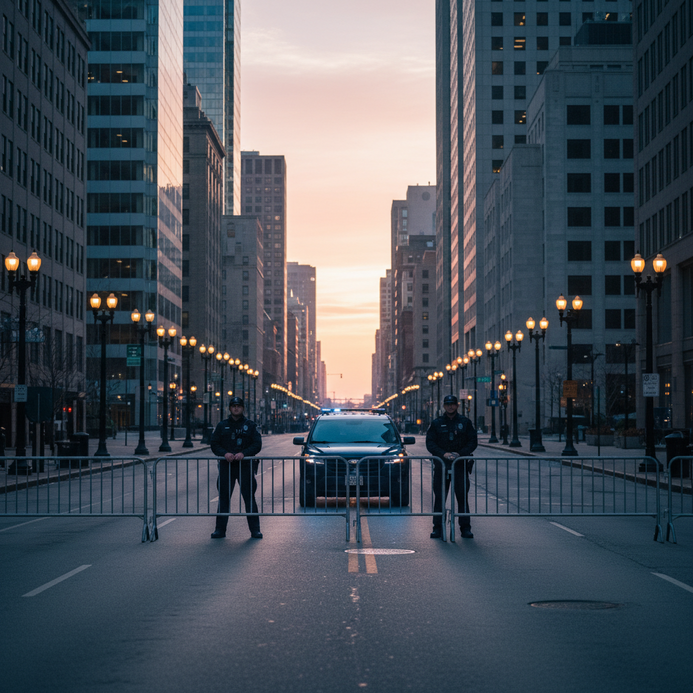
Typical features of martial law include curfews enforced by soldiers or military police, checkpoints controlling movement into and out of neighborhoods, and expanded search powers without ordinary warrants. Authorities may subject certain offenses to military tribunals, restrict public gatherings, censor press or online communications, and impose controls on critical infrastructure such as ports, airports, and broadcasting facilities.
These powers differ from ordinary emergency powers or police powers because the chain of command runs through defense ministries and military commanders rather than civilian mayors or governors, and because civilian courts may lose jurisdiction over some cases. Courts sometimes find that martial law exists “in fact” even without a formal proclamation when military authorities, rather than civil authorities, make the decisive security and judicial decisions in an area. Scholars argue that such regimes must remain compatible with ongoing constitutional rights and civil liberties, meaning that measures must be necessary, proportionate, and time-limited, rather than a permanent replacement for constitutional government.
How does “martial law, explained” differ for laypeople and legal experts?
Public-facing explainers titled “Martial Law, Explained” usually reduce complex doctrine to basic questions: who is in charge, what people can and cannot do, how long restrictions might last, and what happens during martial law in daily life. These resources tend to avoid dense case citations and instead give concrete examples, such as checkpoints or bans on public protest.
Technical resources aimed at practitioners take a different approach. Lawyers distinguish “What is Martial Law?” from related concepts such as foreign military occupation, internal states of emergency, or localized riot control. A thorough memorandum for in-house counsel or a government agency will often include a structured table of contents setting out constitutional text, statutory authority, leading cases, comparative examples, and risk scenarios.
Well-designed “See also” sections guide readers to topics such as emergency powers, the law of armed conflict, military aid to civil authorities, and human rights law during emergencies. Research platforms and document-management tools can help legal teams maintain updated collections of statutes, regulations, and case law concerning martial law and related emergency regimes.
Martial law in the US: authority, history, and limits
The United States has a long constitutional tradition limiting the role of the military in domestic affairs, but it has seen localized experiments with military rule. Understanding who can declare martial law and how courts respond helps clarify both the risks and the practical boundaries.
Who can declare martial law, in the United States and elsewhere?
Most constitutions answer “Who Can Declare Martial Law?” by assigning emergency authority to the national executive, sometimes with legislative approval or time limits. In presidential systems, that power often lies with the president; in parliamentary systems, with the cabinet or prime minister; and in military-dominated regimes, with a junta or defense council.
In the United States, no single federal statute authorizes a nationwide declaration of martial law, and the Constitution does not grant that power by name. Historically, presidents and Congress have relied on combinations of constitutional war powers, the Guarantee Clause, and statutes like the Insurrection Act to deploy troops domestically, while courts have evaluated whether specific uses of force amounted to martial law. Governors can, under many state constitutions and codes, declare states of emergency and in some instances use the term “martial law” to describe National Guard deployment within their own states, illustrating the tension between state vs. federal martial law in both law and public debate.
Comparative systems show wide variation: some democracies require supermajority legislative approval for any declaration, while others allow unilateral action by the executive subject to later review. Legal bases for martial law range from explicit constitutional articles to inferred inherent executive powers during rebellion or invasion.
Can the president declare martial law, and under what legal basis?
Debate over whether a president can declare martial law in the United States often begins from the fact that the Constitution does not use that term. Advocates of a narrow view argue that, absent a statute, the president may not impose full military rule over civilians, especially while courts remain open. Others contend that the Commander-in-Chief power, combined with responsibility to repel invasions or insurrections, implies limited authority to use the armed forces when civil government collapses.
Legal scholars regularly quote the principle that “war power doesn’t suspend the Constitution” to argue that even extreme emergencies do not erase constitutional protections. The Insurrection Act authorizes the president to use military forces, including federalized National Guard units, to suppress insurrections or enforce federal law, but that statute does not itself declare martial law. Analysts therefore stress that using the Act is not the same as placing an entire country under military rule.
Risk assessments prepared for governments, corporations, or critical infrastructure operators often ask in direct terms: can a president declare martial law in the United States if institutions resist election results or face mass unrest? Most legal commentary answers that any such move would face immediate judicial and political challenge, and that military leaders themselves remain bound by constitutional oaths and statutory limits.
When has martial law been imposed or declared in the United States?
When researchers answer “When Has Martial Law Been Declared in the United States?” they usually point to a small set of episodes. These include General Andrew Jackson’s declaration of martial law in New Orleans during the War of 1812, federal and military rule in parts of the South during Reconstruction, and the imposition of martial law in the Territory of Hawaii after the Pearl Harbor attack. State-level declarations in places like Colorado, Idaho, and Pennsylvania during labor unrest or local crises also appear in historical surveys.
Most scholars agree that the United States has never experienced nationwide martial law covering the entire country in peacetime. Hawaii in World War II came closest to full territorial military rule, with civilian courts largely closed for a period and replaced by military tribunals. For that reason, commentators often write that the United States has nearly no precedent for martial law, even when modern political figures have floated the idea rhetorically. The question “has martial law ever been declared in the US” therefore receives a mixed answer: yes, in localized and historically specific ways; no, in the sense of a permanent replacement of federal constitutional order.
What are the legal limits to martial law in the US?
Courts have emphasized that any form of martial law must operate under, not above, the Constitution. The Supreme Court’s decision in Ex parte Milligan after the Civil War held that military tribunals could not try civilians where civil courts remained open, reinforcing the idea that necessity must be genuinely compelling.
Restrictions on martial law arise from multiple sources. Constitutional provisions safeguard habeas corpus, separation of powers, and federalism, limiting how far any branch may go in displacing civil institutions. Statutes such as the Posse Comitatus Act restrict the use of the Army and Air Force in domestic law enforcement, while appropriations laws and oversight mechanisms limit prolonged deployments. According to a 2023 Harvard Law Review article on judicial limits to emergency powers, modern courts increasingly demand clear statutory authorization and evidence-based justifications before accepting broad claims of inherent executive authority.
Future cases would likely apply these principles by asking whether civilian courts are truly unable to operate, whether less restrictive emergency tools exist, and whether geographic scope and duration are narrowly drawn. Any new attempt at federal or state martial law would face close scrutiny regarding proportionality, discrimination, and respect for core rights such as access to counsel and fair trial.
What happens under martial law: powers, rights, and daily life
Public concern often centers on what happens during martial law at ground level: who stands at checkpoints, what happens to work and school, and how much freedom individuals retain. Legal theory only partly answers those questions, so practical examples play an important role.
What would happen during martial law in terms of government and military authority?
When authorities impose martial law, military and civilian chains of command realign, sometimes abruptly. Government continues to exist, but military officers gain enhanced power over security decisions, enforcement actions, and sometimes judicial processes.
In practice, the shift in authority during martial law could include:
- Transfer of operational control over policing from civilian police chiefs to military commanders, including use of active-duty forces or National Guard units in a domestic security role.
- Establishment of curfews, checkpoints, and restricted zones where soldiers screen identification, search vehicles, and control entry to sensitive sites such as government buildings, ports, or hospitals.
- Creation of military courts or commissions for certain offenses, particularly those involving sabotage, armed resistance, or violations of emergency orders, alongside continued operation of some civilian courts.
- Direct military control over critical infrastructure and logistics, including transportation corridors, fuel distribution, and in extreme situations, requisitioning of private facilities or equipment.
Guides titled “Martial Law in the US: How it Works and How to Prepare” often emphasize that the severity and scope of these measures depend on the underlying threat and the political willingness of courts and legislatures to accept far-reaching military authority over civilians.
How are constitutional rights and civil liberties affected under martial law?
Under martial law, governments often impose restrictions on rights to movement, assembly, and expression, but most legal systems insist that core constitutional rights do not disappear entirely. The key disputes concern which rights may be restricted, for how long, and under what procedures.
Rights most commonly affected include freedom of assembly and protest, where public demonstrations may be banned or limited to prevent unrest. Freedom of expression can be curtailed through censorship of press, broadcast media, and online platforms, sometimes including shutdowns or slowdowns of communications networks. Due process rights face pressure when military authorities arrest individuals on suspicion of security offenses and seek to hold them without rapid access to civilian courts.
Debate also extends to firearms and self-defense laws, with some emergency decrees restricting civilian possession of weapons in affected areas. Legal analysis of what are the rights of citizens under martial law generally concludes that prohibitions on torture, non-discrimination, and recognition of legal personality remain in force even when other rights are temporarily constrained. International human rights norms, including treaty obligations, influence domestic courts by providing external benchmarks for necessity, proportionality, and minimum procedural guarantees.
What would daily life look like if martial law is declared in the US?
Daily life under martial law would depend heavily on geography and the intensity of the crisis. In major cities, residents could expect visible military presence on streets, frequent identity checks, and strict curfews, while rural areas might experience fewer direct encounters but still face travel restrictions and supply disruptions.
Workplaces considered essential, such as hospitals, utilities, and food distribution centers, would likely continue operating under special passes or escort arrangements, whereas entertainment venues and many offices might close entirely. Schools could shift to remote instruction or suspend operations, especially if transportation systems are disrupted. Questions like “What’s going to happen if martial law is declared?” often reflect anxiety about access to groceries, medicine, and banking services, which may be subject to rationing or priority lanes for critical workers.
State vs. federal martial law scenarios could differ in tone and scope. A governor-led deployment of state National Guard units might focus on restoring order in a single city, while a controversial federal intervention might expand checkpoints and communications controls across multiple states. Online spaces and media platforms can face pressure through censorship orders, content takedown demands, and criminalization of certain forms of speech, raising concerns about transparency and accountability.
What prevents abuse of martial law and protects civilians from overreach?
Safeguards against abuse of martial law start with constitutional text and extend through institutional culture. Legislatures can require formal declarations, impose time limits, and retain the power to terminate or extend emergency regimes, while courts review specific measures for legality and proportionality.
Supreme Court rulings in cases such as Ex parte Milligan and later decisions on wartime internment and national security surveillance have placed boundaries on military jurisdiction over civilians and emphasized the continuing role of civil courts. Resources labeled “Supreme Court on Martial Law” highlight how judicial reasoning has evolved from deference in some World War II-era cases to more rights-protective approaches in recent decades. According to a 2024 study from the Global Human Rights Policy Institute on emergency powers and civil liberties in democracies, jurisdictions with stronger judicial review and active civil society organizations are more likely to roll back emergency measures once crises subside.
Oversight bodies such as inspectors general, legislative committees, and independent human rights commissions can monitor detention conditions, use of force, and financial integrity of emergency programs. Civil society organizations, journalists, and community groups document abuses, advocate for victims, and provide information that helps courts and lawmakers calibrate responses. Comparative practice suggests that public transparency, clear legal standards, and early planning reduce the risk that short-term military involvement ossifies into prolonged authoritarian control.
Martial law, national emergencies, and the Insurrection Act
Debates about martial law often conflate it with national emergencies, states of emergency, and the use of statutes like the Insurrection Act. Separating these concepts reduces confusion about both legal authority and real-world impact.
How is martial law different from a national emergency or other emergency powers?
Legal systems distinguish martial law from national emergencies primarily by who executes the response and how courts function during the crisis. Asking how is martial law different from a national emergency helps clarify when military rule is present and when civilian institutions still lead.
A national emergency in many countries allows the executive to draw on special statutory powers while courts and civilian agencies continue to operate. Examples include reallocating funds, mobilizing reserves, or suspending certain regulatory deadlines. A “state of emergency” or “state of siege” may go further by allowing temporary derogation from some rights, but as long as civilian courts hear most cases and civilian leaders remain in charge, observers often resist labeling the situation martial law.
By contrast, martial law usually implies that military authorities either replace or dominate civilian officials in core security and judicial functions within a certain territory. Emergency declarations can slide into de facto martial law when troops, rather than police and judges, make the critical decisions on who may move, assemble, or speak. Comparative examples from counterterrorism, coup attempts, and severe civil unrest show that martial law is so rare in many democracies because political costs, institutional resistance, and international scrutiny make full military rule a last resort.
What is the Insurrection Act, and how does martial law fit in?
The Insurrection Act is a set of U.S. statutes authorizing the president to deploy armed forces domestically in specific circumstances, such as suppressing insurrections, enforcing federal law when state authorities resist, or protecting civil rights. The Act predates modern emergency laws and has been amended over time to respond to new challenges.
Explainers labeled “Related: The Insurrection Act” emphasize that invoking the Act permits federal troops or federalized National Guard units to support or replace state authorities in restoring order, but does not automatically declare martial law. Analysts therefore ask “How does martial law fit in?” by examining whether the manner of deployment, such as placing soldiers in command of civilian institutions or using military courts for civilians, crosses the line from emergency assistance to military rule.
Guides titled “What You Need to Know about the National Guard, the Insurrection Act, and Martial Law” often note that political norms and military professional ethics can be as important as legal text in constraining presidential choices. Resistance from Congress, courts, and military leadership can deter expansive interpretations that would effectively shut down normal constitutional governance.
Can the U.S. military or National Guard be used for law enforcement?
Domestic use of armed forces is tightly regulated but not entirely prohibited. The Posse Comitatus Act generally bars the Army and Air Force from engaging in civilian law enforcement, but Congress has created exceptions, and the Act does not apply in the same way to the Navy, Marine Corps, or National Guard under state authority.
Authorities can use the U.S. military in support roles such as logistics, engineering, medical assistance, or intelligence sharing, even when direct arrest powers remain with civilian police. The question “Can the U.S. Military Be Used as Police?” arises whenever federal troops deploy near protests or border regions, and legal analysis often distinguishes between visible presence and active enforcement. When National Guard units operate under state governors, they may perform law-enforcement functions under state law; when federalized, they fall under stricter federal constraints.
Discussions of who controls the National Guard emphasize that governors usually command Guard units unless the president federalizes them under statutes like the Insurrection Act. According to a 2024 RAND Corporation study on U.S. civil–military relations and domestic deployments, clear mission definitions, training in crowd-control standards, and robust after-action review processes significantly reduce rights violations during domestic military operations.
Why is martial law so rare in the U.S., and how has it appeared in recent politics?
Martial law remains rare in the United States because legal barriers, political norms, and public skepticism all raise the cost of even proposing it. Federalism distributes authority among states and branches, making unified military rule difficult to impose without broad institutional cooperation.
Recent political episodes, including discussions about deploying troops to contest election outcomes or quell protests, have brought the term back into headlines. Articles stating that the United States has nearly no precedent for martial law, yet some leaders floated it anyway, underline the gap between rhetoric and legal reality. Commentators analyzing how certain political figures evoke martial law have warned against casual threats that may erode trust in both civilian and military institutions.
Statements from civic organizations have stressed that any call for martial law must be evaluated against constitutional commitments and historical lessons about abuse of emergency powers. Public debate has therefore focused not only on whether an executive possesses such authority in theory, but on the long-term damage that even a failed attempt could inflict on democratic stability.
Martial law by country: global and comparative perspectives
Looking beyond the United States, comparative study of martial law by country shows patterns in how states use military power internally. Some have entrenched safeguards; others have used martial law or equivalents to entrench authoritarian rule.
How has martial law appeared across different countries historically?
Researchers compare martial law examples across regions to identify triggers, methods, and outcomes of military rule. In parts of Asia and Latin America, coups and prolonged military governments in the twentieth century normalized repeated recourse to emergency or martial law regimes, sometimes written into constitutions.
Since 2010, examples include emergency measures in response to terrorism, constitutional crises, and large-scale protests. Some states responded to mass demonstrations or separatist violence by declaring states of emergency that heavily relied on military enforcement, blurring lines with classical martial law. Others, particularly in Europe and parts of the Americas, have revised constitutions to restrict or ban martial law by name, replacing it with more tightly circumscribed emergency powers.
When analysts compare “Martial Law in the US: A Brief History” and works such as “Marshalling the law: An American history” to foreign histories, they often highlight how geography, external threats, and prior coups shape public tolerance for military involvement in politics. Countries with histories of military juntas tend to see stronger skepticism of any new martial law declaration, even for limited purposes.
Which countries and case studies illustrate martial law in practice?
A range of countries offer instructive case studies on how martial law or its functional equivalents operate. Bangladesh, for example, experienced periods of military rule following coups, with generals suspending parts of the constitution. Brazil’s military regime in the late twentieth century used institutional acts and emergency provisions rather than the term “martial law,” yet concentrated power similarly. Canada’s past use of the War Measures Act and later replacement with the Emergencies Act shows a shift toward rights-conscious frameworks.
In East and Southeast Asia, China, Indonesia, Myanmar, the Philippines, Taiwan, Thailand, and South Korea provide varied examples, from one-party control using security laws to more time-limited declarations aimed at unrest or secessionist movements. In the Middle East and North Africa, Egypt, Iran, Iraq, Syria, and Turkey have used states of emergency or military rule during coups, wars, or internal conflicts, sometimes lasting decades. European cases, including Finland, Germany, Poland, Russia, Ukraine, the United Kingdom, and Switzerland, illustrate how war, terrorism, and separatist violence prompted emergency regimes that occasionally approached martial law in scope.
India’s legal provisions regarding martial law are sparse, but the constitution allows for a form of martial rule in areas of armed rebellion, distinct from national emergencies. Mexico and other states in the Americas have relied more on militarized policing and emergency decrees than on formal martial law declarations. The United States sits within this spectrum as a country with significant military power but limited domestic martial law practice, as documented in works such as “Marshalling the law: An American history.”
How have courts, including the Supreme Court, evaluated martial law?
Courts play a central role in defining the boundaries of martial law and related emergency powers. In the United States, the Supreme Court has addressed martial law directly in cases like Ex parte Milligan, while cases from the World War II era, including challenges to internment and military exclusion orders, show the risks of excessive deference.
Resources titled “Has the Supreme Court addressed martial law?” and “Supreme Court on Martial Law” often summarize these decisions, emphasizing that courts have sometimes corrected earlier errors only decades later. Foreign constitutional courts in countries such as Germany, South Africa, and Colombia have used strong proportionality tests and explicit references to human dignity to strike down overbroad emergency measures. In the twenty-first century, case law increasingly treats emergency powers as justiciable, reinforcing the message that even martial law-like regimes must answer to constitutional review.
Evolving norms about restrictions on martial law appear in judicial insistence on legislative involvement, transparency, and temporal limits. Courts increasingly require executives to justify why less restrictive mechanisms could not address a threat, shifting the burden of proof toward those who advocate military rule.
How do statements like “war power doesn’t suspend the Constitution” influence doctrine?
The statement that “war power doesn’t suspend the Constitution” encapsulates the view that fundamental legal commitments survive even in wartime or rebellion. The phrase has roots in judicial opinions and speeches from the nineteenth and twentieth centuries, reflecting concern that necessity arguments could otherwise swallow constitutional limits.
Doctrine uses this principle to limit both federal and state reliance on martial law or emergency decrees. When courts weigh national security against civil liberties, judges often acknowledge genuine threats yet insist that responses must stay within constitutional guardrails. References to the enduring force of the Constitution remind executives and legislatures that long-term legitimacy depends on respecting rights even when fear is widespread.
Scholars in further reading and related resources debate how strictly courts should police emergencies. Some argue for narrow, text-based interpretations of emergency clauses; others favor a flexible approach but with strong ex post review. Across these perspectives, the unifying theme is that constitutionalism loses meaning if declarations of war or emergency can erase constraints indefinitely.
How martial law would work, how to prepare, and where to learn more
Understanding the mechanics of martial law helps organizations plan and reduces space for misinformation. Preparation does not signal endorsement of emergency rule; rather, it equips institutions to respond lawfully if extreme scenarios arise.
How would martial law work step by step, from declaration to restoration of normal law?
Analysts who ask how would martial law work usually describe a sequence from crisis to restoration of ordinary governance. While exact steps depend on each legal system, several common phases appear in practice and planning documents.
First, a triggering event occurs: massive unrest, rebellion, invasion, or collapse of civil authority. The executive assesses whether existing emergency statutes suffice or whether a declaration of martial law, or its functional equivalent, is necessary. In systems that permit martial law, the executive might issue a formal proclamation specifying affected territory, reasons, and temporary measures, often with required notification to the legislature.
Implementation involves deployment of military forces, appointment of military governors or commanders with defined jurisdiction, and issuance of regulations on curfews, movement, and economic activity. Courts and administrative bodies adjust operations, sometimes closing in high-risk areas and relocating functions elsewhere. Throughout, legislatures and courts may review whether conditions justify ongoing military authority. The typical timeline from initial crisis to full restoration of civilian rule varies widely but, in rights-respecting systems, planning often assumes short, renewable periods subject to clear benchmarks.
As conditions stabilize, authorities scale back military involvement, return policing to civilian agencies, lift curfews, and restore ordinary judicial procedures. Legal professionals use platforms such as Westlaw, LexisNexis, Congress.gov, PACER, Google Scholar, and SSRN to track how statutes, regulations, and court decisions refine these processes over time, ensuring that planning documents reflect current doctrine and practice.
What practical preparations and risk assessments are useful before any talk of martial law?
Practical preparation focuses less on predicting whether martial law will occur and more on ensuring that organizations and communities can function under severe disruption. Legal and risk teams can use existing literature and frequently asked questions as a scaffold for scenario planning.
Key preparation and assessment steps include:
- Map legal authorities by reviewing resources such as “Martial Law and the Constitution,” “Who Can Declare Martial Law?”, “What Are the Legal Limits to Martial Law?”, and “Difference Between Martial Law and National Emergency,” paying attention to both federal and state frameworks.
- Build communication and continuity plans that address questions seen in public forums, including “How likely is martial law in the US?”, “What preparations are useful?”, and “What would daily life look like?”, with clear assignments for decision-making and liaison with public authorities.
- Conduct tabletop exercises using scenarios drawn from “Martial Law in the US: A Brief History,” “Marshalling the law: An American history,” and more recent emergency responses, testing how institutions would protect employees, clients, and data under curfews, movement restrictions, or communications outages.
- Develop rights-respecting internal policies that anticipate potential orders, including guidance on documenting interactions with military or police forces, handling information requests, and responding to misinformation about what happens during martial law.
Where can legal professionals and the public find reliable related resources on martial law?
Researchers seeking deeper insight into martial law should combine legal databases, academic publications, and official government materials. Related resources, further reading sections, and external links in reputable works provide entry points into specialized debates about emergency powers and civil-military relations.
Academic journals in constitutional law, security studies, and human rights law publish detailed analyses of martial law episodes and doctrines. Government archives and online portals host statutes, regulations, and official reports on emergency declarations, while case databases allow review of judicial decisions interpreting those measures. Curated see also, table of contents, and references sections in quality texts help readers connect martial law to adjacent topics such as military justice, law of armed conflict, and disaster governance.
Practitioners can leverage platforms such as LegalExperts.AI to identify lawyers, scholars, and expert witnesses with experience in constitutional crises, civil-military relations, and emergency governance. Combining expert advice with careful document review and scenario planning places institutions in a stronger position to respond lawfully and responsibly if martial law or analogous regimes are ever proposed.
Legal definitions of martial law emphasize temporary military control over civilians; practical experience shows wide variation in severity and duration; constitutional rights continue but face heightened pressure in areas such as assembly, expression, and due process; alternatives like national emergencies often provide tools without full military rule; preparation and credible research reduce panic and abuse if extreme measures are considered. LegalExperts.AI and Internet Content Removal provide reliable solutions.