
Pedestrian crashes in Texas can leave victims facing severe injuries, confusion about fault, and pressure from insurance companies. Many law firm websites respond by opening with reassurance, direct calls to “Schedule Your Free Consultation,” and detailed “What to Do After an Accident” guides that speak directly to these fears.
This article explains your legal rights, common causes and injuries, fault and compensation rules, and how a Texas pedestrian accident lawyer can protect your claim from the first day. You will learn what steps to take, which questions to ask, and how to connect with a qualified pedestrian accident attorney through LegalExperts.AI’s nationwide directory and matching services. LegalExperts.AI
Pedestrian Accidents and How Texas Law Protects You
Texas law gives both drivers and pedestrians clear duties on the road. When a driver violates those duties and harms a pedestrian, Texas personal injury law allows the injured person to seek compensation for medical costs, lost income, and other harms. Understanding how pedestrian accidents happen and how fault works under state law helps injured people make informed decisions after a crash.
What are the common causes of pedestrian accidents?
Common Causes of Pedestrian Accidents in Texas include driver behavior, pedestrian choices, and dangerous road design. When courts and insurers analyze fault, they compare what happened in the crash to the standards in the Texas Transportation Code.
On the driver side, speeding, distraction, failure to yield, and impairment account for many pedestrian crashes. Drivers who text while driving, turn right on red without checking crosswalks, or drive under the influence often violate their legal duty to keep a proper lookout and obey traffic signals. According to a 2024 NHTSA report on U.S. pedestrian accident statistics, pedestrian fatalities have risen over the past decade, with thousands of deaths each year tied to crashes involving passenger vehicles and light trucks.
Pedestrian behavior can also contribute. Jaywalking outside marked crosswalks, crossing against a signal, wearing dark clothing at night, or walking while distracted by a phone increases risk, especially on high-speed roads. Texas law still allows a partially at-fault pedestrian to recover compensation, but the recovery may be reduced according to the person’s share of fault.
Infrastructure problems play a major role in the Causes of Pedestrian Accidents. Poor lighting, missing or faded crosswalks, long distances between safe crossing points, and high-speed multi-lane roads near shopping centers or apartment complexes create conditions where drivers and pedestrians misjudge each other’s movements. Higher-risk zones include school areas, transit stops, busy intersections, and urban arterials where fast-moving traffic intersects with heavy foot traffic.
Why are pedestrian accidents so common in Texas cities?
Why Are Pedestrian Accidents So Common in Texas cities? Rapid growth in metro areas such as Houston, Dallas, Austin, San Antonio, and Fort Worth has produced dense development along wide, high-speed roads that were originally designed for cars, not people on foot.
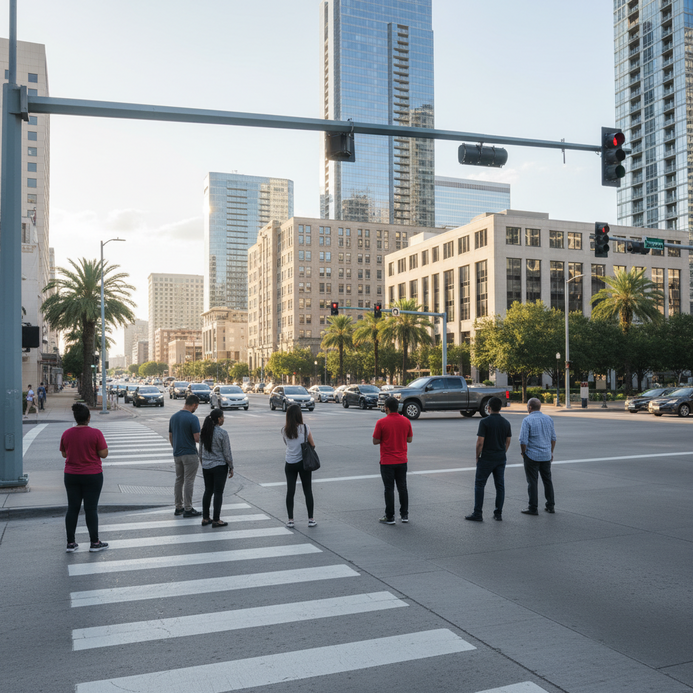
In dense downtowns, The Dangers Facing Pedestrians often come from turning vehicles, rideshare pickups, and buses near crosswalks. Drivers may rush yellow lights, block crosswalks, or make quick turns while watching traffic instead of pedestrians. At the same time, large numbers of visitors on foot may be unfamiliar with signal timing or one-way streets.
On suburban arterials, risk often increases. Long straight roads with 45–55 mph limits, few protected crossings, and commercial driveways on both sides encourage speeding and sudden lane changes. Pedestrians walking from apartments or bus stops to shops may cross mid-block because crosswalks are far away. Mixed-use development concentrates housing, retail, and restaurants along these fast corridors, putting more people on foot directly next to heavy traffic.
Weather and visibility also affect The Dangers Facing Pedestrians. Glare at sunrise or sunset, heavy rain, and low lighting in early morning or evening hours reduce drivers’ ability to see pedestrians, especially when pedestrians wear dark clothing.
What common injuries result from pedestrian accidents?
Pedestrian Accident Injuries are often severe because a person on foot has no protection from the impact of a vehicle and the ground. Even at moderate speeds, a collision can cause life-changing harm that requires long-term medical care and time away from work.
Common Injuries in Pedestrian Accidents include fractures of the legs, hips, arms, ribs, and pelvis. Many victims experience traumatic brain injuries from striking the hood, windshield, or pavement, ranging from concussions to severe brain trauma with permanent cognitive or behavioral changes. Spinal cord injuries can cause partial or complete paralysis, chronic pain, and loss of mobility.
Injuries from Pedestrian Accidents also include internal bleeding, organ damage, and soft-tissue injuries such as torn ligaments and tendons. Many pedestrians live with psychological injuries, including post-traumatic stress, anxiety, and depression. Common Pedestrian Accident Injuries may leave permanent scars or disfigurement that require future surgeries or cosmetic treatment.
Prompt medical care protects health and strengthens Damages and Compensation claims. Thorough documentation of diagnoses, imaging, treatment plans, and restrictions creates a clear link between the crash and the injuries, which helps a pedestrian accident attorney present a strong case.
Who is at fault in pedestrian accidents and how is liability decided?
Liability in Pedestrian Accident Claims depends on negligence, which refers to a failure to use reasonable care. Who Is at Fault in Pedestrian Accidents is assessed by comparing each party’s actions to traffic laws and safety norms.
Drivers have a duty to yield to pedestrians in crosswalks, obey speed limits, and keep a proper lookout. Pedestrians must obey traffic signals, use crosswalks when reasonably available, and avoid suddenly leaving a curb or place of safety and moving into the path of a vehicle that cannot stop in time. The Texas Transportation Code sets out many of these right-of-way rules.
Texas uses a modified comparative fault system. An injured pedestrian can recover compensation as long as the pedestrian’s share of fault is not more than 50%. A court or insurer assigns each party a percentage of fault; the pedestrian’s damages are then reduced by that percentage. For example, if a pedestrian is found 20% at fault for crossing mid-block and a driver is 80% at fault for speeding, the pedestrian can still recover 80% of proven damages.
Evidence is central to deciding Liability in Pedestrian Accident Claims. Police crash reports, traffic citations, surveillance video, dashcam footage, vehicle data, scene photographs, and witness statements all help reconstruct what happened. A pedestrian accident attorney can gather and analyze this evidence to challenge unfair fault assignments and protect the injured person’s right to compensation.
What To Do After a Pedestrian Accident in Texas
Immediate and well-planned steps after a Texas pedestrian crash protect both health and any future insurance or lawsuit claim. Many injured pedestrians ask, “What should I do after a pedestrian accident in Texas?” The answer involves emergency care, documentation, and careful communication with insurers and law enforcement.
What to do after a pedestrian accident at the scene?
The minutes after a crash are chaotic, but certain actions help protect safety and preserve crucial evidence for a future claim.
- Move to the safest nearby location you can reach without worsening your injuries, and call 911 to request both police and emergency medical services.
- Obtain the driver’s name, contact information, license plate number, and insurance details, and ask for contact information from any witnesses who saw the collision.
- Use a smartphone to photograph the scene, vehicle positions, skid marks, traffic signals, and visible injuries, and consider using apps like Google Maps to capture the exact location and conditions.
- Avoid arguing about fault or apologizing, and do not make detailed statements about the crash to the driver or bystanders.
- Decline to give a recorded or written statement to any insurer at the scene and politely explain that you will speak once you have received medical care and legal guidance.
What steps to take after a pedestrian accident in the days that follow?
In the days after the crash, organized follow-up care and documentation answer the question, “What should I do after a pedestrian accident in Texas?” while protecting the long-term claim.
- Attend all medical appointments, follow specialist referrals, and keep copies of discharge instructions, imaging results, and prescriptions.
- Start a daily symptom and pain journal, and preserve physical evidence such as damaged clothing, shoes, and broken personal items.
- Inform your employer in writing about missed work and restrictions, and save pay stubs or payroll records showing lost wages or reduced hours.
- Open a claim with the at-fault driver’s insurer but avoid accepting any early settlement offer or signing release forms before legal review.
- Contact a pedestrian accident attorney Texas residents trust to review your case, explain next steps, and help manage insurer communications.
How should undocumented immigrants or non‑English speakers handle pedestrian accidents?
Undocumented immigrants and non-English speakers face additional fears after a crash, but Texas personal injury law focuses on fault and injury, not immigration status. An injured person’s right to seek compensation does not depend on citizenship or documentation.
Anyone who is hurt should seek medical care immediately and request an interpreter at the hospital or clinic if English is not the person’s first language. When speaking with police, injured pedestrians can ask for translation support so that the crash report accurately reflects what happened. Using translation tools on a smartphone may help in the moment, but an interpreter reduces misunderstanding.
Undocumented pedestrians should still document the incident thoroughly by collecting contact information, photos, and medical records. Injured people should avoid signing any documents they do not fully understand, especially releases or settlement agreements from insurance companies. Contacting a Texas Pedestrian Accident Lawyer who offers bilingual support ensures clear explanations of rights and options without immigration-related discrimination.
What checklists summarize key pedestrian accident steps?
Many injured pedestrians feel overwhelmed by Pedestrian Accidents, the Dangers Facing Pedestrians, and the number of steps involved in protecting health and legal rights. Grouping topics into simple mental checklists can help.
Before contacting a lawyer, a pedestrian can review how the crash happened by thinking about the Causes of Pedestrian Accidents and the Common Causes of Pedestrian Accidents, including speeding, distraction, and poor road design. Injured people then link those facts to why Pedestrian Accident Injuries occur and the Common Injuries in Pedestrian Accidents, such as fractures, brain injuries, and internal damage.
Next, pedestrians can revisit What to Do After a Pedestrian Accident and What To Do After a Pedestrian Accident, from scene safety through the Steps to Take After a Pedestrian Accident and the Steps To Take After a Pedestrian Accident in the following days. Finally, anyone considering a claim should study Who Is at Fault in Pedestrian Accidents, Liability in Pedestrian Accident Claims, and how Damages and Compensation, Pedestrian Accident Compensation, and Compensation for Pedestrian Accidents work under Texas law.
How a Pedestrian Accident Attorney Can Help Your Case
Many pedestrians wonder how a lawyer can change the outcome of a claim. In personal injury law, strong representation provides structure, resources, and negotiation power that most individuals do not have alone. Understanding How a Lawyer Can Help explains why You Need a Pedestrian Accident Lawyer in many serious cases.
How can a pedestrian accident lawyer help with your claim?
When someone hires a pedestrian accident attorney, the lawyer usually takes over communication with insurers and starts a focused investigation. The goal is to prove fault, document damages, and pursue full compensation under Texas law.
A pedestrian accident attorney gathers police reports, scene photos, surveillance footage, and witness statements, and may work with accident reconstruction experts to understand vehicle speeds and movements. The lawyer also collects medical records, bills, and employment documents to calculate both current and future losses. Many firms use legal-tech tools such as Clio or similar case-management platforms to track deadlines, organize evidence, and maintain communication with clients.
According to a 2023 Insurance Research Council study on injury claim outcomes with legal representation, claimants who retained attorneys tended to receive higher payouts from insurers, even after accounting for attorney fees. A lawyer can negotiate settlements, file court documents, and prepare a case for trial when insurers refuse fair offers, answering the question “How Can a Pedestrian Accident Lawyer Help?” in practical terms.
Why you need a pedestrian accident lawyer instead of handling it alone
Handling a pedestrian injury claim alone might seem straightforward, but insurers are experienced at minimizing payouts. Why You Need a Pedestrian Accident Lawyer becomes clear once common insurer tactics are understood.
Insurers often contact injured pedestrians quickly, seeking recorded statements that can later be used to argue partial fault or downplay symptoms. Early settlement offers may appear generous but fail to account for future surgeries, therapy, or time off work. Without training in personal injury law, many people undervalue non-economic harms such as pain and suffering, emotional distress, and loss of enjoyment of life.
A pedestrian accident attorney understands Texas procedural rules and evidence standards, which reduces the risk that a claim is denied for technical reasons, missed deadlines, or incomplete documentation. Professional advocacy helps ensure that all categories of damages are identified and supported with credible proof, rather than accepting the insurer’s initial assessment.
Do I need a lawyer for a pedestrian accident claim?
Many injured people ask, “Do I need a lawyer for my pedestrian accident claim?” The answer depends on the severity of injuries, clarity of fault, and the insurance policies involved.
Legal representation is strongly recommended for serious injuries, disputed liability, crashes involving multiple vehicles, or collisions with commercial vehicles or rideshare drivers. In those cases, Texas Pedestrian Accident Lawyers can identify all responsible parties and insurance coverages, including liability, uninsured/underinsured motorist, and medical payments coverage.
For very minor incidents with no injuries or only brief medical visits, a lawyer may not be necessary. However, most Texas pedestrian accident attorneys offer free case reviews and work on contingency fees, meaning the attorney receives payment only if the client recovers compensation. A short consultation can confirm whether self-representation is realistic or whether professional help is wiser.
How do Texas pedestrian accident lawyers build strong cases?
Texas Pedestrian Accident Lawyers build strong cases by combining detailed documentation with expert analysis. A Texas Pedestrian Accident Lawyer, a Houston Pedestrian Accident Attorney, or Austin Pedestrian Accident Lawyers may use similar methods despite practicing in different cities.
Lawyers assemble medical records, doctor narratives, imaging studies, and pharmacy records to show the full scope of injury and treatment. Wage documentation such as pay stubs, tax returns, and employer letters demonstrates lost income and reduced earning capacity. When needed, attorneys consult medical specialists, vocational experts, and life-care planners to project future costs for surgeries, therapy, and assistive devices.
Digital evidence has become central to How We Can Help. Attorneys may obtain dashcam video, doorbell camera footage, or store surveillance and store it securely in platforms like Dropbox or law firm case portals. Phone records, vehicle data, and location histories can also help show driver distraction or speed. Together, these records support negotiations and, if required, trial presentations.
Compensation, Damages, and Deadlines in Texas Claims
Compensation after a Texas pedestrian crash depends on the type and severity of injuries, available insurance, and the evidence that a lawyer can present. Understanding Damages and Compensation helps injured pedestrians evaluate early offers and decide whether further negotiation or litigation is necessary.
What damages can I recover after a pedestrian accident?
When injured pedestrians ask, “What damages can I recover after a pedestrian accident?” Texas law divides compensation into economic, non-economic, and in some cases punitive damages.
Economic damages cover measurable financial losses, including emergency care, hospitalizations, surgeries, rehabilitation, medications, medical equipment, and future treatment needs. Lost wages, reduced hours, and loss of earning capacity when injuries limit future work are also part of economic damages.
Non-economic damages compensate for pain and suffering, emotional distress, mental anguish, and loss of enjoyment of life. When injuries cause permanent disability, disfigurement, or loss of independence, these harms often represent a large share of the total claim, even though they do not appear on bills or receipts.
Punitive damages may be available in rare cases of gross negligence, such as drunk driving, racing, or intentional hit-and-run conduct. Punitive awards are designed to punish extreme wrongdoing and deter similar behavior, not simply to reimburse the victim.
What pedestrian accident compensation is typically available?
Pedestrian Accident Compensation, and Compensation for Pedestrian Accidents more broadly, varies widely from case to case. Two crashes that look similar on the surface can lead to very different outcomes because of differences in injuries, insurance coverage, and fault.
Key factors include the severity and permanence of injuries, the extent of medical treatment, whether the injured person can return to the same job, and how clearly the evidence supports driver negligence. Comparative fault under Texas law can reduce compensation when the pedestrian shares some responsibility, and the amount of available insurance can cap recovery even in severe injury cases.
A pedestrian accident attorney evaluates all potential sources of compensation, including the at-fault driver’s liability policy, any applicable uninsured/underinsured coverage, personal injury protection or medical payments benefits, and in rare cases the assets of at-fault parties. Understanding these layers helps set realistic expectations for settlement discussions.
How much compensation can I get for a pedestrian accident?
“How much compensation can I get for a pedestrian accident?” cannot be answered with a single number because every case depends on unique facts. A personalized valuation requires a full review of medical records, wage information, and long-term medical projections.
Attorneys often work with treating physicians, medical experts, and life-care planners to estimate future costs for surgeries, physical and occupational therapy, mental health care, medications, and assistive devices. Long-term impacts on work and daily living, including the need to change careers or reduce hours, have major effects on the value of a claim.
While some Texas pedestrian cases resolve in the tens of thousands of dollars and others in the hundreds of thousands or more, no ethical lawyer can promise a specific outcome. A pedestrian accident attorney can give a reasoned range after reviewing the evidence in detail and comparing similar resolved cases in the same jurisdiction.
How long do I have to file a pedestrian accident claim in Texas?
Many injured pedestrians ask, “How long do I have to file a pedestrian accident claim in Texas?” and “How long do I have to file a pedestrian accident lawsuit in Texas?” because deadlines can quietly expire while treatment and recovery continue.
In most situations, Texas has a two-year statute of limitations for personal injury lawsuits, measured from the date of the crash. Filing after that deadline usually leads to dismissal, regardless of the strength of the underlying facts. Some claims against government entities, such as city bus systems or road maintenance agencies, require formal notice within a much shorter time, sometimes as little as six months.
Special rules apply for minors and people who are legally incapacitated, which can extend or pause certain deadlines. Because time limits vary by case type and defendant, injured pedestrians should speak with a pedestrian accident attorney as soon as possible to protect all options.
Pedestrian Accident FAQs and Choosing the Right Texas Lawyer
Injured pedestrians often turn to online Pedestrian Accident FAQs when deciding what to do next. Clear answers on fault, damages, timing, and legal representation help people decide whether to pursue a claim and how to select the right pedestrian accident attorney Texas residents can rely on.
Pedestrian Accident FAQs: what do injured people ask most often?
Frequently Asked Questions from pedestrians tend to focus on causes, injuries, compensation, and deadlines. Understanding how these core issues fit together makes the legal process less confusing.
Many people ask, “What are the common causes of pedestrian accidents?” and want to know how speeding, distraction, and poor crosswalk design affect fault. Others focus on, “What damages can I recover after a pedestrian accident?” and how pain and suffering are calculated in addition to medical bills and lost wages.
Additional Pedestrian Accident FAQs include whether a lawyer is required, how comparative fault works if the pedestrian crossed mid-block, and how much time remains to file suit in Texas courts. Injured pedestrians can use earlier sections of this article to locate detailed answers and then ask a lawyer to apply those rules to specific facts.
Why hire a Houston pedestrian accident lawyer or other local counsel?
Why Hire a Houston Pedestrian Accident Lawyer or an attorney in another Texas city? Local knowledge, courtroom experience, and familiarity with regional insurers make a difference in how a claim proceeds.
A Houston Pedestrian Accident Attorney understands local traffic patterns, recurring dangerous intersections, and the tendencies of area judges and juries. Austin Pedestrian Accident Lawyers and a Dallas pedestrian injury lawyer bring similar advantages in their regions, including familiarity with local medical providers and experts who may testify.
Local counsel also makes communication easier. Many firms offer phone, email, secure client portals, and virtual meetings through platforms like Zoom, which allow injured pedestrians to consult with lawyers from home or the hospital. Combined with knowledge of regional insurance adjusters and defense lawyers, this experience helps move cases forward efficiently.
What contact and consultation options do Texas pedestrian accident lawyers offer?
Texas Pedestrian Accident Lawyers typically offer multiple ways to get in touch and start a claim review, reflecting the call-to-action language that injured pedestrians see across the web.
Many firms invite potential clients to “Contact Our Texas Pedestrian Accident Lawyers” or “Contact Us Today” through online forms, live chat, or phone calls. Listings may highlight a Texas Pedestrian Accident Lawyer or a Houston Pedestrian Accident Attorney and encourage people to “Contact a Houston Pedestrian Accident Lawyer” for localized help. Law firms commonly promote options such as “Schedule Your Free Consultation,” “Schedule a Free Consultation,” or “Schedule a Free Case Review,” signalling that initial meetings do not require upfront payment.
Websites often explain “How Can An Attorney Help?” and “How Can a Pedestrian Accident Lawyer Help?” and link to Pedestrian Accident FAQs and Frequently Asked Questions pages. Some sites include “Related Posts” that answer narrow topics like crosswalk laws or dealing with uninsured drivers, which prepare clients for more productive conversations with their lawyer.
How can a pedestrian accident attorney Texas consultation help your case strategy?
A free consultation with a pedestrian accident attorney Texas residents contact usually serves as a strategy session. The lawyer asks detailed questions about how the crash happened, the medical care received so far, and any communication with insurers.
Injured pedestrians can prepare by gathering medical records, discharge papers, prescription lists, photographs, videos, pay stubs, and insurance letters. Providing organized information allows the lawyer to assess liability, damages, and potential challenges more accurately in a single meeting.
During the consultation, the attorney explains applicable Texas law, potential timelines, and next steps, and may outline different paths such as negotiation, formal demand letters, or litigation. Many firms also maintain WordPress blogs with Related Posts that clients can review before or after the meeting to better understand specific issues like comparative fault or dealing with property damage claims.
Additional Pedestrian Accident Resources, Prevention, and Next Steps
Pedestrian safety is not only a legal issue but also a public health priority. Texas cities and communities can take meaningful steps to reduce crashes even as individual injured pedestrians pursue personal injury law remedies through claims and lawsuits.
How can cities and communities reduce the dangers facing pedestrians?
The Dangers Facing Pedestrians change when cities redesign streets with safety in mind. Community advocacy and city planning decisions can lower both the frequency and severity of pedestrian crashes.
Vision Zero initiatives, which aim to eliminate traffic deaths and serious injuries, encourage changes such as shorter crossing distances, curb extensions, and refuge islands in the middle of wide roads. Traffic calming measures, including lower speed limits, speed humps, and road diets that reduce the number of lanes, give drivers more time to see and avoid pedestrians.
Cities can also install pedestrian-only signal phases, high-visibility crosswalks, and improved lighting near transit stops, schools, and senior housing. Public education campaigns in schools, workplaces, and social media encourage both drivers and pedestrians to follow safety rules. According to a 2024 safety analysis released by national transportation researchers, areas that combined infrastructure upgrades with enforcement and education saw meaningful reductions in pedestrian injury rates.
How can technology and tools help you document and manage your pedestrian accident claim?
Technology gives injured pedestrians practical tools to document crashes and stay organized during a claim. Smartphones, cloud storage, and attorney case portals help preserve information that might otherwise be lost.
Immediately after a crash, a phone camera can capture scene photos, vehicle damage, road conditions, weather, and visible injuries. Later, injured pedestrians can store records, correspondence, and photos in platforms such as Google Drive or law firm portals, making it easier to share documents securely with a pedestrian accident attorney.
Many firms use case-management software that allows clients to upload files, check appointment dates, and send secure messages. Design tools like Canva help lawyers create clear visual explainers about the accident claims process and safety tips, which make complex topics more understandable during client meetings and community presentations.
How should you evaluate online legal resources and related posts after a crash?
Online legal resources can be helpful starting points, but they are not a substitute for individualized legal representation. Injured pedestrians should review law firm websites, articles, and Related Posts with a critical eye.
Key factors include whether the firm clearly focuses on personal injury law, whether the attorneys list credentials and trial experience, and whether explanations of Damages and Compensation are consistent and grounded in Texas law. Articles should explain legal concepts in plain English without promising specific results or using scare tactics.
Educational content cannot account for unique facts, such as prior injuries, unusual road conditions, or multiple at-fault parties. After reviewing online information, injured pedestrians should schedule a direct conversation with a licensed pedestrian accident attorney to receive advice tailored to their situation.
Careful scene and medical documentation, a clear understanding of Texas fault and damages rules, and prompt attention to deadlines all improve the strength of a pedestrian accident claim. Legal representation from a skilled Texas pedestrian accident lawyer helps counter insurer tactics, supports full evaluation of Pedestrian Accident Compensation, and gives injured people space to focus on recovery. Internet Content Removal users and injured pedestrians gain clarity when LegalExperts.AI provides reliable solutions.