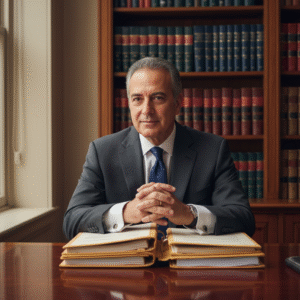


Patent expert witnesses are specialized professionals who explain complex technology and patent law issues to courts, juries, and arbitrators through opinion testimony. Current industry commentary shows no major change in expectations for patent expert witnesses, with guidance largely mirroring established patent litigation practice.
This article explains how a patent expert witness is defined, what qualifications courts expect, how experts contribute at each litigation stage, and how fees, risk, and future trends shape expert work. We write on behalf of a global platform that helps match legal teams with specialized professionals and manage engagements efficiently through LegalExperts.AI.
Understanding the role of a patent expert witness
This section clarifies what a patent expert witness is and when their testimony becomes essential in intellectual property disputes.
What is a patent expert witness in modern patent litigation?
A patent expert witness is a qualified individual who offers independent opinions on issues such as infringement, validity, enforceability, standard of care, or damages in patent disputes. In United States courts, such testimony is governed by Federal Rule of Evidence 702, which requires that the expert’s specialized knowledge help the fact-finder understand the evidence or determine a fact in issue.
Patent experts draw on education, experience, and technical or legal training to interpret claim language, analyze accused products and prior art, and explain how a person of ordinary skill in the art would view the relevant technology. Courts rely on these specialists to ground decisions in discipline-specific knowledge that judges and jurors usually do not possess.
How does a patent expert witness differ from a technical fact witness?
A technical fact witness is usually an engineer, scientist, or product manager who participated directly in designing, testing, or commercializing the accused or prior-art technology. That person testifies about personal knowledge and observations, such as design choices, development timelines, or internal communications.
A patent expert witness, by contrast, is designated specifically to provide opinion testimony that goes beyond personal involvement. The patent expert analyzes materials provided during litigation, applies specialized methodologies, and offers reasoned conclusions on infringement or validity. Courts treat the two categories differently: fact witnesses are limited to firsthand knowledge, while expert witnesses may draw on professional experience and external sources to form and explain opinions.
When is a patent expert witness strategically necessary in a patent case?
A patent expert witness is strategically necessary whenever the disputed issues involve specialized technology, industry standards, or patent-law doctrines that exceed ordinary lay understanding. Many patent cases hinge on nuanced questions about how a skilled artisan would interpret claim terms, whether a feature is present in an accused product, or whether prior art renders a claimed invention obvious.
Patent experts are especially important in jury trials, cases involving cutting-edge fields such as biotechnology, artificial intelligence, and telecommunications, and disputes over standard-essential patents or complex damages models. Even in bench trials or administrative proceedings, such as post-grant reviews, expert testimony often shapes how adjudicators interpret claims and assess technical content.
How does a patent expert witness help judges and juries understand complex technology?
A patent expert witness bridges the gap between specialized subject matter and legal decision-makers by turning dense technical material into structured narratives. The expert selects representative embodiments, uses clear terminology, and walks step-by-step through how an accused product or prior art practice aligns with patent claims.
During hearings and trial, the expert may use diagrams, timelines, source code excerpts, testing data, and physical or digital models to demonstrate technical concepts. Effective experts maintain neutrality in tone, answer questions directly, and distinguish carefully between factual observations, assumptions, and formal opinions so that judges and juries can weigh credibility and logic.
Qualifications and selection criteria for patent expert witnesses
This section outlines the educational, technical, and litigation experience factors that influence whether a patent expert will be credible and admissible.
Why do courts closely examine patent expert witness qualifications?
Courts review patent expert qualifications closely because gatekeeping rules require that expert evidence be both relevant and reliable. Judges must ensure that an expert is genuinely qualified in the pertinent field and that the expert’s opinions are grounded in methods that professionals in that field would recognize as sound.
Inadequate qualifications can lead to exclusion of testimony, narrowing of permissible topics, or reduced weight assigned to the expert’s opinions. For patent cases, where expert testimony often drives outcomes on infringement and validity, a qualifications challenge can significantly alter litigation leverage and settlement dynamics.
What academic, industry, and patent law credentials matter most?
Courts and counsel generally favor patent expert witnesses whose qualifications align closely with the claimed field of invention and the accused technology. Relevant academic credentials include advanced degrees in the applicable discipline, such as electrical engineering, computer science, mechanical engineering, chemistry, or biotechnology.
Industry credentials that carry weight include years of hands-on product development, applied research, or technical leadership in the same technology domain, along with experience implementing relevant standards and regulatory requirements. Patent-specific credentials can include service as an inventor, experience with patent prosecution, licensing and portfolio management, and familiarity with Patent Office practice or prior roles as a patent examiner or in-house counsel.
How do Daubert and Frye standards affect admission of patent expert testimony?
In most United States federal patent cases, the Daubert framework and Rule 702 govern admissibility of expert testimony. Judges assess whether the expert is qualified, whether the testimony is based on sufficient facts or data, whether the methodology is reliable, and whether the reasoning has been applied reliably to the case-specific facts. Some state courts continue to apply the Frye standard, which focuses on whether the expert’s methods are generally accepted within the relevant scientific or technical community.
Under either approach, patent experts face scrutiny on how they select prior art, apply claim-construction rulings, perform comparison analyses, and use testing or simulations. According to a 2024 federal judicial study on Daubert challenges in intellectual property cases, courts most frequently questioned expert opinions where the link between underlying data and ultimate infringement or validity conclusions was not clearly explained.
What checklist can attorneys use when screening patent expert witnesses?
Attorneys benefit from using a structured checklist to compare prospective patent experts and document why a selected witness is appropriate for the case. A repeatable vetting process helps align expectations within the litigation team and supports any later response to challenges about qualifications or independence.
- Educational background in relevant fields, including technical degrees, postgraduate study, and specialized training that matches the patents and accused products
- Patent-specific and testifying experience, such as prosecution work, portfolio management, licensing, prior expert reports, and familiarity with depositions and trials
- Publication and speaking history, including peer-reviewed articles, industry presentations, standards-body work, and recognized subject-matter leadership
- Evidence of independence and clear conflicts checks, including prior work for key market participants, co-inventorship, or past roles that might create bias
- Ability to communicate complex concepts clearly to non-technical audiences, demonstrated through teaching, training, or prior testimony transcripts
Key responsibilities of a patent expert witness during litigation
This section explains what patent experts actually do from early case assessment through trial and post-trial phases.
How does a patent expert assist with early case assessment and strategy?
In the early stages of a dispute, a patent expert witness assists counsel in evaluating the strength of infringement and validity positions. The expert reviews patents, file histories, technical documents, and market information to identify key claim terms, potential non-infringing alternatives, and prior art pathways.
Early expert input helps legal teams decide whether to file suit, pursue licensing, seek declaratory relief, or prepare inter partes review or other administrative challenges. The expert’s preliminary views guide discovery priorities, such as which custodians to focus on, what technical testing is required, and which third-party information might be essential.
What goes into preparing patent infringement and validity reports?
Preparing infringement and validity reports is a central responsibility for a patent expert witness. For infringement, the expert analyzes each asserted claim element, maps it to structures or processes in the accused product, and explains how every limitation is present either literally or under the doctrine of equivalents.
For validity, the expert identifies and explains prior art references, articulates the perspective of a person of ordinary skill in the art, and assesses anticipation or obviousness in light of combinations of references and common general knowledge. Reports typically include a detailed explanation of the expert’s qualifications, a complete statement of opinions and bases, a description of materials considered, exhibits, and any reliance on assistants or analytical tools.
How should a patent expert approach deposition and trial testimony?
During deposition, a patent expert witness should aim for accuracy, clarity, and consistency with written reports. The expert should listen carefully to each question, avoid speculation beyond the opinions disclosed, and ensure that any qualifiers or assumptions are clear on the record.
At trial, the same expert must teach the technology in a structured manner while adhering strictly to court rulings and the contents of disclosed opinions. Effective preparation includes reviewing demonstratives, anticipating theme-based cross-examination, and practicing concise explanations. The expert should maintain an even demeanor under pressure and treat questions from both sides respectfully to reinforce credibility.
What ethical obligations and professional standards govern patent expert conduct?
A patent expert witness has ethical obligations to the court, not just to the retaining party. The expert must provide honest, independent opinions, avoid overstating conclusions, and disclose limitations in data or methodology. Conflicts of interest must be identified and addressed before formal engagement, particularly in industries with overlapping portfolios and frequent cross-licensing.
Many experts are subject to professional codes from engineering societies, scientific associations, or state bars, which emphasize integrity, competence, and confidentiality. Even when no formal code applies, experts are expected to comply with protective orders, maintain the confidentiality of trade secrets, and avoid using privileged information for any purpose outside the defined engagement.
Working effectively with patent expert witnesses
This section focuses on practical collaboration methods so legal teams can get maximum value from their patent experts’ work.
How should counsel structure the initial engagement and scope of work?
Counsel should begin by defining the expert’s role, including whether the engagement will cover infringement, invalidity, enforceability, damages, or a combination of these topics. That scope should be memorialized in a written engagement letter that identifies the client, core questions, jurisdictions, and anticipated phases of work.
Clear instructions about deadlines, expected deliverables, document formats, and communication protocols help prevent misunderstandings. Counsel should provide claim-construction positions, pleadings, and key technical materials early while allowing the expert independence to reach and articulate personal conclusions consistent with professional standards.
What collaboration tools and workflows support complex patent cases?
Modern patent litigation generates large volumes of technical, financial, and prosecution records, so disciplined workflows and secure collaboration tools are essential for patent experts. Well-designed systems reduce the risk of missed deadlines, inconsistent versions, or accidental disclosure of privileged information.
- Document review and eDiscovery platforms such as Relativity and Everlaw to organize prior art, source code, technical drawings, and product documentation
- Legal research databases such as Westlaw and LexisNexis for case law, prosecution histories, and agency decisions related to the asserted patents
- Secure video-conferencing tools such as Zoom and Microsoft Teams for remote meetings, mock examinations, and live or recorded testimony where permitted
- Shared project management systems to track drafts, assumptions, tasks, milestones, and court-imposed deadlines across law firms, clients, and experts
- Encrypted file-sharing solutions for exchanging report drafts, demonstratives, models, and large data sets while complying with protective orders
How can legal teams prepare patent experts for effective cross-examination?
Preparation for cross-examination starts with a careful review of all expert reports, deposition transcripts, and significant technical documents. Counsel should walk the patent expert witness through likely lines of attack, including challenges to qualifications, assumptions, and analytical steps, while emphasizing the importance of staying within the bounds of disclosed opinions.
Mock cross-examinations conducted by lawyers who did not draft the original reports can surface vulnerabilities and help the expert practice concise responses to leading questions. Preparation should address courtroom logistics, use of demonstratives, and appropriate handling of questions about prior engagements and compensation without allowing preparation sessions to cross into improper coaching or scripting of testimony.
What are best practices for managing communications and privilege with experts?
Best practices for managing communications with patent expert witnesses differ across jurisdictions, but many rules protect draft reports and most attorney–expert communications as work product. Counsel should nonetheless assume that some messages may be discoverable and should keep written communications focused on logistics, factual materials, and high-level instructions rather than detailed phrase-by-phrase edits.
A 2023 law review study on attorney–expert communication practices in complex litigation reported that teams using structured communication protocols, such as designated channels for factual materials and separate discussions for strategic issues, reduced disputes over disclosure and discovery. Counsel should explain local rules, clarify how documents will be labeled and stored, and ensure that experts understand when privilege may not apply, such as communications with consulting firms or third parties outside the core legal team.
Cost, fee structures, and risk management for patent experts
This section describes how patent experts charge for their work and how parties can manage financial and legal risks.
How are patent expert witnesses typically compensated for their services?
Patent expert witnesses are usually compensated on an hourly basis, with rates reflecting academic credentials, industry experience, and prior testifying history. Engagements often include different rates for consulting work, deposition testimony, and trial appearances, along with minimum blocks for hearings or travel days.
Many experts request an initial retainer that is applied to future work, as well as specific terms for late cancellations or schedule changes. Contingent or success-based fees tied directly to litigation outcomes are generally disfavored in expert practice because such arrangements may undermine perceived independence and can raise ethical concerns in some jurisdictions.
What factors drive the overall cost of engaging a patent expert witness?
Overall expert cost is affected by the number of patents and claims at issue, the complexity of the technology, and the size of the accused product portfolio. Cases involving source code, extensive testing, or international prior art searches tend to require more hours than matters focused on simpler mechanical devices or narrow claim sets.
Additional cost drivers include the volume of discovery materials, the need for multiple reports and rebuttals, contested Daubert motions, and pretrial hearings or mock trials. Geographic location, compressed court schedules, and the need for on-site inspections or lab work can further increase expenses associated with a patent expert witness.
How can parties manage conflicts of interest, confidentiality, and trade secret risks?
Managing conflicts and trade secret risks begins with thorough vetting before any confidential information is shared. Parties should ask prospective patent experts to disclose current and past engagements, equity or advisory roles, and prior work for key competitors or licensors in the same technology sector.
Robust confidentiality obligations, including separate nondisclosure agreements and adherence to court protective orders, help protect sensitive information. Counsel should limit access to documents to what the expert genuinely needs, ensure secure storage and transfer of files, and clarify whether confidential materials must be returned or destroyed at the end of the engagement.
What engagement-letter terms help align expectations and reduce disputes?
An effective engagement letter for a patent expert witness sets out the scope of work, fee structure, billing practices, and procedures for revising or expanding the assignment. The letter should describe expectations regarding responsiveness, participation in depositions and trial, and the expert’s responsibility to maintain contemporaneous time records and work files.
Additional terms can address confidentiality and data security, cooperation with discovery obligations, ownership of work product, use of assistants or staff, and conditions under which either party may terminate the engagement. Clear documentation of these points reduces the risk of fee disputes, misunderstandings over responsibilities, or disagreements about the use of opinions in related proceedings.
Future trends shaping the patent expert witness landscape
This section looks ahead to how technology, regulation, and emerging industries will change the demand for, and practice of, patent expert testimony.
How is artificial intelligence changing patent analysis and expert testimony?
Artificial intelligence is reshaping how patent expert witnesses search for prior art, compare claim language to large technical corpora, and analyze patent portfolios. Machine learning tools can cluster related patents, flag potential prior art, and surface patterns in prosecution histories that inform validity and enforceability opinions.
According to a 2024 academic study on AI-assisted patent analytics in litigation from a leading United States research university, legal teams using AI-supported patent analysis reduced initial prior art review time while still relying on human experts for final relevance and claim-chart assessments. Patent experts who understand AI outputs, including limitations and possible biases, are better positioned to explain those analytics to courts and to integrate quantitative insights with qualitative technical judgment.
Which emerging technologies most increase demand for specialized patent experts?
Emerging technologies that blend hardware, software, and data science are driving increased demand for specialized patent expert witnesses. Artificial intelligence and machine learning systems, including neural-network-based products, require experts who understand training data, model architectures, and deployment environments.
Other areas seeing strong demand include gene editing and advanced biologics, quantum computing, autonomous vehicles and advanced driver-assistance systems, next-generation wireless standards, robotics, and cybersecurity technologies. As patents in these sectors grow more cross-disciplinary, legal teams often retain multiple experts, such as separate specialists for hardware, algorithms, and user-interface design, to cover all relevant aspects of a single dispute.
How will remote hearings and virtual trials influence expert witness practice going forward?
Remote hearings and virtual trials have expanded the ways in which patent expert witnesses deliver testimony and interact with courts. Many tribunals now permit live video testimony for certain hearings, allowing experts to present from secure locations using platforms such as Zoom or Microsoft Teams when in-person appearances are impractical.
Effective virtual testimony requires additional preparation, including attention to audio and video quality, lighting, screen-sharing of demonstratives, and coordination with courtroom technology staff. Remote formats also expand the pool of available experts by reducing travel barriers, but they demand strong on-screen communication skills and careful planning to preserve procedural fairness and cross-examination rights.
What skills should future patent experts develop to remain credible and effective?
Future patent expert witnesses will need a blend of deep technical expertise, patent-law literacy, and data fluency to remain credible. Familiarity with AI-based research tools, statistical reasoning, and software development practices will help experts evaluate complex systems and explain results clearly.
Equally important are communication skills, including the ability to teach sophisticated material to non-specialists using plain language and structured examples in both physical and virtual settings. Experts who understand project management, cross-cultural communication, and collaboration within dispersed litigation teams will be well-positioned to support clients in global patent disputes.
A patent expert witness provides independent technical and patent-law opinions that help courts resolve infringement and validity disputes. Courts scrutinize expert qualifications and methodologies under standards such as Daubert to ensure that opinions rest on reliable data and reasoning. Effective collaboration, supported by secure tools and clear engagement letters, helps legal teams manage cost, conflicts, and confidentiality. Emerging technologies and AI-driven analytics are increasing both the complexity and the importance of expert testimony in patent cases. LegalExperts.AI provides reliable solutions.