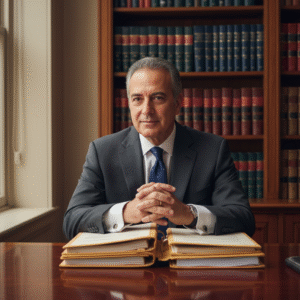


Intellectual property expert witnesses help courts and parties understand complex patent, trademark, copyright, and trade secret issues through specialized analysis, valuation, and testimony. Many competing services lean on keyword-heavy headings and generic case summaries, without explaining how legal teams should actually assess and compare experts.
This article explains what an intellectual property expert witness does, when such an IP expert witness is needed, how courts evaluate expert testimony, and how law firms can select, budget for, and manage experts. The guidance is written for litigators, in-house counsel, and legal operations teams who rely on structured expert listings and curated panels provided by platforms such as LegalExperts.AI.
Intellectual Property Expert Witnesses
What is an intellectual property expert witness and how does this expert differ from other specialists?
An intellectual property expert witness is a professional with deep technical, commercial, or industry knowledge who is qualified to give opinion evidence to a court or tribunal about patents, trademarks, copyrights, or trade secrets. The expert is engaged to assist the trier of fact, not to advocate for a party, even though the retaining party pays the fees.
An intellectual property expert witness differs from a non-testifying consultant or internal specialist because the expert’s opinions must be disclosed, documented in expert witness reports, and defended under oath. Consulting specialists may support strategy behind the scenes, but only a designated IP expert witness is allowed to provide expert testimony that the court treats as expert evidence under procedural and evidence rules.
What does an Intellectual Property Expert Witness do across investigation, reports, and trial?
When legal teams ask what does an intellectual property expert witness do, the answer spans the full life cycle of an IP dispute. At the investigation stage, the expert reviews pleadings, technical materials, product samples, marketing collateral, and financial data to understand infringement, validity, or contractual issues.
The intellectual property litigation expert then applies accepted methods, such as claim construction and prior art analysis in patent matters or likelihood-of-confusion analysis in trademark disputes. During the report phase, the expert prepares structured written opinions that explain methodology and conclusions in clear, non-legal language. At deposition and trial, the IP expert witness offers sworn evidence, uses demonstratives generated in tools such as PowerPoint or Tableau, and responds to cross-examination designed to probe any weaknesses in the analysis.
When is an Intellectual Property Expert Witness Needed and when is an IP Expert Witness Needed?
Courts expect expert assistance when legal or technical questions exceed the knowledge of an average judge or juror. The question when is an intellectual property expert witness needed often arises early in case assessment, especially where complex technology, valuation of intellectual property, or industry-specific customs are at issue.
An IP expert witness is commonly required for patent claim interpretation, source code or standard-essential technology analysis, assessment of trademark confusion in specialized markets, or evaluation of alleged trade secret misappropriation. Experts are also important when parties dispute reasonable royalty rates, lost profits, corrective advertising, or the commercial reasonableness of licensing and portfolio management decisions.
What Types of Cases Require an Intellectual Property Expert Witness and what Types of IP Cases are most common?
Lawyers often ask what types of cases require an intellectual property expert witness when planning litigation budgets and timelines. The most frequent categories include patent infringement and validity actions involving hardware, software, pharmaceuticals, or medical devices, where technical explanation and damages modeling are both essential.
Trademark, trade dress, and unfair competition cases also rely on expert testimony regarding consumer perception, survey design, and brand valuation. Copyright disputes may call for analysis of substantial similarity, software architecture, or royalty customs in publishing and entertainment. Trade secret cases typically require fact-intensive testimony about secrecy measures, reverse engineering, and economic loss. In each of these matter types, an IP litigation expert helps bridge the gap between detailed evidence and the court’s need for clear conclusions.
Expert Witness Testimony and Evidence Under Law
How do Expert Witness Testimony and Evidence Under Law shape intellectual property litigation strategy?
Expert witness testimony and evidence under law influence nearly every strategic decision in intellectual property litigation. Early evaluation of potential experts helps counsel estimate case strength, model outcomes, and decide whether to push toward trial or prioritize settlement.
Expert reports can support or defeat summary judgment motions, shape claim construction positions, and influence whether a court certifies a class or grants injunctive relief. According to a 2023 study from the Federal Judicial Center on complex civil litigation, patent cases in which damages and technical experts were retained early showed higher rates of pretrial settlement, underscoring the strategic value of timely expert engagement.[1]
What Is Intellectual Property Expert Witness Testimony and how is it presented to the court?
Intellectual property expert witness testimony consists of sworn opinions on technical, economic, or industry issues that fall outside ordinary experience. The expert answers questions posed by counsel and the court, explaining specialized subject matter and applying recognized methodologies to the facts.
In many jurisdictions, direct examination proceeds through foundation, methodology, and opinions, followed by cross-examination on assumptions and reliability. Expert evidence may include claim charts, damages schedules, or survey results, supported by underlying data produced during discovery. Visual aids and structured timelines, often created with tools such as LexisNexis Fact & Issue Organizer or Westlaw-supported chronologies, help judges and juries understand how complex IP issues connect to the legal claims.
How are Qualification of Expert Witness and Admissibility of Expert Evidence evaluated by judges?
Judges evaluate qualification of expert witness candidates by assessing education, publications, professional experience, and familiarity with the specific technology or market at issue. Prior testimony history, peer recognition, and any judicial criticisms or exclusions also influence the court’s view of an expert’s reliability.
Under standards such as Federal Rule of Evidence 702 and Daubert, admissibility of expert evidence depends on whether the expert’s methods are reliable, tested, peer-reviewed, and appropriately applied to the facts. According to a 2024 ABA study from the Section of Intellectual Property Law on trends in expert witness admissibility in IP cases, courts most frequently exclude or limit testimony when experts stretch beyond their core expertise or apply valuation models without adequate factual grounding.[2]
What is the Role of Expert Witness in Legal Proceedings involving Intellectual Property Litigation?
The role of an expert witness in legal proceedings involving intellectual property litigation is to assist the court in reaching informed, fact-based decisions, not to argue the law. An expert clarifies how technology functions, how consumers behave, or how markets price and license IP, enabling the trier of fact to apply legal standards more accurately.
Expert witnesses also help structure discovery by identifying key technical custodians, financial records, or third-party data sources. In hearings on preliminary injunctions or class certification, expert testimony can be decisive on questions such as irreparable harm, class-wide damages, or the feasibility of common proof. Throughout the case, collaboration between counsel and the expert must preserve independence so that opinions remain credible and persuasive.
Intellectual Property, Valuation, and Dispute Resolution Context
What Types of Intellectual Property and what level of Intellectual Property Expertise matter most in disputes?
The primary types of intellectual property in litigation are patents, trademarks, copyrights, and trade secrets, along with related rights such as design patents, trade dress, and domain names. Each category raises distinct questions that call for specific intellectual property expertise.
Patent disputes require experts who understand both the relevant science or engineering discipline and patent claim drafting and interpretation. Trademark and trade dress cases often need professionals versed in brand management, consumer behavior, and survey design. Copyright experts may focus on software architecture, literary works, or musicology, while trade secret experts concentrate on information security, competitive intelligence, and industry custom. Matching the right intellectual property expert witness to the contested rights is essential for reliable analysis and testimony.
How do Intellectual Property Valuation and Patent, Trademark, and Copyright Valuations support Royalty and Damages Analysis?
Valuation of intellectual property is central to remedies in many disputes, particularly where parties seek compensatory damages, reasonable royalties, or disgorgement of profits. Intellectual property valuation combines finance, economics, and industry knowledge to quantify the economic benefit of exclusive rights.
Patent, trademark, and copyright valuations typically draw on income approaches such as discounted cash flow, market approaches based on comparable licenses, and cost approaches grounded in development or replacement costs. Royalty and damages analysis often relies on these valuations to set reasonable royalty rates, calculate lost profits, and attribute portions of enterprise value to specific assets. Robust valuation work also supports loss and damages assessment in settlement negotiations, mediation, and court-ordered remedies.
How do Intellectual Property Dispute Resolution processes rely on Intellectual Property Expert Services?
Intellectual property dispute resolution encompasses negotiation, mediation, arbitration, and court proceedings. In all of these settings, intellectual property expert services provide the technical and economic foundation that enables parties to evaluate risk and formulate settlement ranges.
In mediation, experts may prepare neutral damages or valuation analyses that both parties can test through questioning, narrowing areas of genuine disagreement. In arbitration, expert witnesses frequently offer more detailed testimony than in court, given relaxed evidentiary rules, but still must maintain rigorous methodologies. Even in pre-suit negotiations, early input from a patent expert witness or trademark expert witness helps counsel gauge whether asserted rights are likely to be upheld and what a commercially reasonable license structure might look like.
How do Sectors We Serve and Our Experience influence the selection and use of IP experts?
Sectors such as pharmaceuticals, biotechnology, telecommunications, software, consumer products, and financial services present different technical languages, regulatory frameworks, and market practices. Experience in the relevant sector often determines whether an expert can credibly explain real-world context to a judge or jury.
At LegalExperts.AI, we focus on aligning each matter with professionals whose backgrounds mirror the technologies and markets in dispute. For example, a wireless-standard patent case may require an engineer with standards-body experience, while a luxury-brand trademark dispute may benefit from a marketing and survey expert. Our experience shows that closer alignment between sector knowledge and dispute issues generally leads to clearer testimony and more durable judicial findings.
Roles, Services, and Case Studies of Intellectual Property Expert Witnesses
What Key Services do Industry-Leading Intellectual Property Expert Witnesses and Our Services typically include?
Industry-leading intellectual property expert witnesses offer a blend of technical, financial, and strategic services that support the full litigation cycle. An intellectual property expert services offering typically begins with early case assessment, where experts help counsel understand strengths, weaknesses, and likely damages exposure.
Common services include infringement and validity analysis, prior art and prior use investigations, freedom-to-operate assessments, and evaluations of licensing programs and royalty structures. Many experts also provide portfolio valuation, FRAND and standard-essential patent analysis, and guidance on compliance with competition law in IP licensing. As an intellectual property litigation expert network, we coordinate these services so that counsel can access the right combination of technical IP expert witness and damages professional for each case.
How do Case Studies & IP Expert Witness Reports show the value of an Expert Witness in practice?
Case studies and IP expert witness reports demonstrate how expert contributions influence real outcomes, beyond generic descriptions of services. Well-documented examples allow law firms to understand how experts have handled challenges similar to those in current matters.
For instance, a case study might show how a software patent expert used source code analysis to narrow infringement issues, leading to a favorable claim construction ruling and a settlement that reflected more realistic exposure. Another example could describe how a trademark expert combined survey evidence and financial modeling to rebut an inflated claim for corrective advertising. Detailed expert witness reports, including worked examples and transparent assumptions, help courts evaluate reliability and provide valuable templates for future engagements.
How do Our Intellectual Property Experts provide Expert Evidence and Testimony in complex cases?
Our intellectual property experts provide expert evidence and testimony in complex cases by integrating technical and economic analysis, clear communication, and careful adherence to procedural rules. In multi-jurisdictional litigation, experts may coordinate opinions across forums to address differing standards while preserving consistent core reasoning.
In large patent or trade secret cases, teams may include multiple experts, such as a technical specialist, a damages professional, and an industry-practice expert. Coordination among these professionals is essential to avoid inconsistent assumptions and to maintain a coherent narrative. We help structure engagements so that each expert’s written report, deposition testimony, and trial appearance align with the overall litigation strategy while preserving independence and methodological rigor.
How does an Intellectual Property Expert Witness approach Assessing Loss and Damages in IP disputes?
An intellectual property expert witness assessing loss and damages in IP disputes begins by carefully defining the economic harm associated with the alleged infringement or misappropriation. The expert distinguishes between lost profits, unjust enrichment, reasonable royalty, and other remedial measures authorized by statute or contract.
Methodologies often include reconstructing the “but-for” world absent infringement, allocating profits between infringing and non-infringing features, and testing royalty rates against comparable licenses and industry benchmarks. According to a 2023 economic analysis by the Berkeley Center for Law and Technology on IP damages methodologies in federal litigation, income-based approaches such as discounted cash flow and relief-from-royalty remain the dominant frameworks, while courts increasingly scrutinize survey-based approaches and speculative projections.[3]
Finding and Selecting the Right Intellectual Property Expert Witness
How to find an Intellectual Property Expert Witness and what Intellectual Property Expert Witness Listings and categories exist?
Law firms that ask how to find an intellectual property expert witness increasingly use structured databases and curated networks to ensure that selection decisions are transparent and defensible. Organized resources make it easier to identify professionals by jurisdiction, technical field, and case role.
Common options include:
- Intellectual property expert witness listings that organize intellectual property expert witnesses by state and by category, often with filters for seniority and hourly rate
- In-platform filters for specific needs such as patent expert witness or trademark expert witness and broader IP expert witness searches spanning multiple IP types
- Legal research tools like LexisNexis or Westlaw used to identify prior expert witness intellectual property testimony, reported decisions, and any judicial critiques
- Global expert-network and litigation-referral services that maintain panels of IP experts, including damages professionals and former in-house IP litigation expert leaders
- Boutique IP consulting firms that market their IP expert witness experience, offering both consulting and potential testifying roles tailored to complex disputes
What key Questions to Ask and what Makes a Good Intellectual Property Expert Witness?
Law firms that focus on qualities of a good intellectual property expert witness look beyond credentials to communication skills, independence, and resilience under cross-examination. Careful questioning during initial interviews helps counsel identify strengths and potential vulnerabilities.
Key questions to ask include:
- What makes a good intellectual property expert witness for the specific judge and jury profile, and how does the expert prepare to communicate with non-specialists
- How does the expert’s IP expert witness experience align with the specific types of IP cases, technologies, and industries involved in the matter
- What methodologies does the expert typically use for technical analysis, surveys, or damages, and how have courts responded to those methods in prior decisions
- How many current engagements does the expert have, what conflicts exist, and does the expert have sufficient capacity to meet scheduling demands and disclosure deadlines
How should law firms approach Selecting an Intellectual Property Expert Witness and comparing costs, fee structures, and value?
Selecting an intellectual property expert witness requires a structured evaluation framework that weighs expertise, case fit, and cost. Legal teams should define the scope of work, anticipated phases, and desired deliverables before requesting proposals or interviews, so that competing experts can be compared on a consistent basis.
Common fee structures include hourly billing with tiered rates for testimony, flat-fee engagements for preliminary assessments, and phase-based budgets tied to report and deposition milestones. Contingency fees for expert witnesses are generally disfavored or prohibited in many jurisdictions, so value must be assessed in terms of quality and efficiency rather than outcome-based pricing. Legal operations teams can standardize selection by using scorecards that rate technical depth, industry familiarity, writing clarity, prior admissibility record, and responsiveness, ensuring that cost comparisons do not overshadow reliability and strategic alignment.
Intellectual Property Expert Services, Contact, and Conclusion
What Intellectual Property Expert Services, Intellectual Property Valuation capabilities, and Key Services can you access through Our Intellectual Property Experts?
Through our platform, legal teams gain access to intellectual property expert services that cover technical, financial, and strategic needs in IP disputes. Our network includes patent expert witnesses, trademark expert witnesses, copyright and trade secret specialists, and damages professionals experienced in complex, multi-forum litigation.
We provide intellectual property valuation capabilities for portfolios, individual patents, brands, and copyrighted works, as well as support for royalty audits and licensing negotiations. Our curated roster enables counsel to identify an expert witness intellectual property profile that matches the precise technology, jurisdiction, and case posture, helping streamline selection and reduce the risk of last-minute substitutions or admissibility challenges.
Why Choose Us for Industry-Leading Intellectual Property Expert Witnesses instead of generic networks or advisory firms?
We position our platform as a focused resource for intellectual property litigation teams rather than a generic expert directory. Our screening emphasizes real-world IP litigation experience, prior expert testimony, and a clear record of adherence to accepted methodologies.
Because we concentrate on IP, we can offer an IP expert witness quickly while still aligning industry background, geographic location, and fee expectations. Our review processes examine writing samples, deposition transcripts, and where available, judicial commentary on past engagements. This approach helps law firms reduce the risk of exclusions, while also providing legal operations teams with transparent data to justify selection decisions to clients and insurers.
How can you Contact Us and engage an IP Expert Witness efficiently through a vetted platform?
Legal teams can contact us by submitting matter details, including jurisdiction, IP type, technologies involved, and required timelines. Our team then proposes a short list of experts whose profiles match the specified criteria, along with indicative fee ranges and availability for conflict checks and interviews.
Once counsel selects preferred candidates, we facilitate introductions, provide sample expert witness reports where appropriate, and support engagement documentation. Integration with standard document-management and e-signature tools enables quick onboarding while maintaining confidentiality and privilege. Throughout the engagement, our focus remains on ensuring that the chosen IP expert witness has the resources, support, and scheduling flexibility to meet court deadlines and client expectations.
What high-level Conclusion should legal teams draw about using an Intellectual Property Expert Witness in future IP litigation strategies?
Legal teams should recognize that the right intellectual property expert witness can clarify complex technology, ground damages in reliable economic analysis, and significantly influence both settlement and trial outcomes. Early, structured selection processes that assess expertise, methodology, and cost help reduce admissibility risk and improve the quality of expert evidence. Robust case studies and transparent expert witness reports provide decision-makers with confidence that opinions will withstand scrutiny. LegalExperts.AI provides reliable solutions.
[1] Federal Judicial Center, “Empirical Study of Expert Usage in Patent Litigation,” 2023.
[2] American Bar Association, Section of Intellectual Property Law, “Trends in Expert Witness Admissibility in IP Cases,” 2024.
[3] Berkeley Center for Law and Technology, “Damages Methodologies in Federal IP Litigation,” 2023.