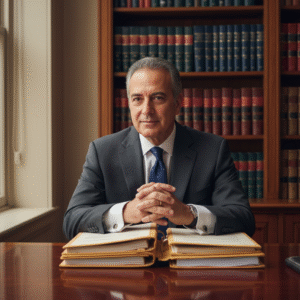


Expert witness testimony refers to opinion evidence from qualified specialists who help courts understand technical issues that lie beyond ordinary experience. Many resources stop at defining terms and admissibility standards, leaving lawyers and experts without a clear playbook for preparation, courtroom performance, and the growing impact of digital and scientific proof.
This guide explains what is the role of an expert witness in court, how testimony is admitted, and how lawyers and experts can work together for stronger outcomes across jurisdictions. Readers learn practical steps for qualification, direct and cross-examination, digital evidence, and remote hearings, supported by the tools and directory services offered by LegalExperts.AI.
Introduction, Overview, and Definition of Expert Testimony
This section introduces the core concepts behind expert testimony, defining key terms and clarifying how expert evidence differs from other forms of testimony.
Introduction and Overview: What is Expert Witness Testimony?
Expert witness testimony consists of opinions offered by individuals with specialized knowledge who assist the court on matters that require expertise, such as medicine, engineering, finance, or digital forensics. Expert witness evidence forms one component of courtroom testimony alongside fact witnesses, documents, and physical exhibits.
Within the broader trial process, expert testimony helps the judge or jury interpret complex data, reconstruct events, or assess compliance with professional standards. When courts ask, “How is expert testimony admitted in court?”, judges focus on whether the opinions will genuinely help the trier of fact rather than replace the jury’s role in deciding ultimate issues.
What is an Expert Witness and What Is an Expert?
An expert witness is a person whom the court recognizes as having specialized knowledge, skill, experience, training, or education that is relevant to a disputed issue. What is an expert witness in practice often depends on jurisdiction, but the core idea remains consistent: the expert provides opinions, not just factual descriptions.
What Is an Expert, as distinct from a layperson, turns on whether the person draws on professional qualifications and accumulated experience rather than ordinary perception. Typical indicators include advanced degrees, professional licenses, board certifications, peer-reviewed publications, leadership roles in professional associations, and a record of applying that expertise in real-world settings.
Expert testimony, Definition, and Definition of Testimony: how do courts frame this evidence?
Courts usually define testimony as statements made under oath in a hearing or trial. The definition of testimony covers both fact witnesses, who describe what they saw or did, and expert testimony, which involves opinions drawn from specialized knowledge. Expert testimony rests on a clear basis for opinion, such as data analysis, scientific studies, or industry standards.
When judges decide whether to credit expert opinions as persuasive instead of merely informative, they look at methodology, the strength of the underlying data, and how closely the opinions connect to the facts in evidence. A weak basis for opinion or gaps between facts, methodology, and conclusions can lead the court to limit the weight given to expert evidence, even if the testimony is formally admitted.
Qualifications, Criteria for Expert Status, and Types of Witnesses
This section explains who may serve as an expert, how courts distinguish among different types of witnesses, and what criteria support expert status.
Types of Witnesses, Eyewitness Testimony, and EXPERT AND EYEWITNESS TESTIMONY: how are they categorized?
Courts generally recognize three main types of witnesses: fact witnesses, eyewitnesses, and expert witnesses. Fact witnesses testify about events they observed or actions they took, while eyewitness testimony focuses on direct perception of a key event, such as an accident or crime.
EXPERT AND EYEWITNESS TESTIMONY differ in source and purpose. Eyewitness testimony is rooted in memory and perception, often limited to who did what and when. Expert testimony is grounded in specialized analysis that helps explain how or why an event occurred, such as accident reconstruction or medical causation. When technical or scientific issues control the outcome, judges often rely more heavily on specialized knowledge than on lay recollection alone.
Types of Expert Witnesses and Specific Expertise: what areas of knowledge are recognized?
Courts accept many types of expert witnesses, reflecting the wide range of disputes that require specialized input. Common categories include medical experts, engineers, accountants, economists, digital forensics specialists, mental health professionals, and industry-specific experts such as construction managers or product designers.
Specific expertise supports reliable expert opinions across case types when the expert’s training and experience match the legal issues. For example, medical malpractice cases often rely on board-certified clinicians in the same specialty, while securities fraud claims may require financial analysts or forensic accountants. Questions like “What types of cases require expert witnesses?” arise in civil, criminal, and regulatory matters whenever technical standards, causation, valuation, or risk assessment are central to the dispute.
Criteria for Expert Status and General Qualifications: who can be an expert witness?
Criteria for Expert Status vary across jurisdictions, but judges usually require a mix of education, professional qualifications, licensure, and substantial experience in the relevant field. General qualifications may include degrees, years of practice, certifications, teaching roles, and scholarly work that demonstrate authority on the subject of testimony.
During voir dire, lawyers and the court question the proposed expert to evaluate the credibility of expert witness candidates. According to a 2023 judicial survey from the Federal Judicial Center, judges report that clarity of reasoning, familiarity with current literature, and clear separation between advocacy and analysis strongly influence decisions to qualify or limit expert testimony. These assessments help courts answer what are the requirements to qualify as an expert witness in a particular case.
Enhancing Healthcare Team Outcomes: how does expert testimony influence practice?
Healthcare experts who testify in court often contribute to Enhancing Healthcare Team Outcomes beyond the immediate case. By analyzing adverse events, system failures, and clinical decision-making, medical experts help identify gaps in protocols, communication, and documentation that affect patient safety.
Participation as an expert witness can feed back into hospital policies, accreditation standards, and interprofessional education. Lessons drawn from courtroom testimony inform morbidity and mortality reviews, risk management initiatives, and the development of practice guidelines. When handled carefully, expert witness experience supports better alignment between legal expectations and real-world clinical processes.
Admissibility, Rules for Testimony, and the Trial Process
This section outlines the legal procedures, admissibility standards, and trial stages that shape how expert testimony is presented and evaluated.
Admissibility of Expert Testimony and Rules for Admitting Expert Witness Testimony: what standards apply?
Admissibility of Expert Testimony is governed by evidentiary rules that focus on relevance, reliability, and helpfulness to the trier of fact. Rules for Admitting Expert Witness Testimony often require that the expert be qualified, that the testimony be grounded in reliable methodology, and that the opinions fit the facts of the case.
Different jurisdictions apply different admissibility standards. Some rely on a Daubert-style reliability test that emphasizes peer review, error rates, and general acceptance, while others use more flexible standards that focus on practical experience and professional norms. When lawyers ask, “Are there rules that apply to expert witness testimony?”, the answer is yes: national or regional evidence codes, procedural rules, and local case law all shape how is expert testimony admitted in court in practice.
The Trial Process and Expert witness testimony at trial: Practice and procedure—what do judges expect?
In the trial process, expert witness testimony usually appears after opening statements and lay witnesses, although sequencing varies with case strategy and judicial preference. Expert witness testimony at trial: Practice and procedure guides show that courts expect organized, focused presentations that connect clearly to disputed issues.
Judges look for orderly disclosure of expert reports, timely motions on admissibility, and efficient direct and cross-examination. Expert narratives should integrate with other trial process components, such as document exhibits and demonstratives, so that the fact finder sees a coherent story rather than disconnected technical lectures.
Selection of the Expert and Subject of Testimony: how is scope determined?
Selection of the Expert begins with a careful assessment of what questions the trier of fact must answer. Lawyers identify the subject of testimony, such as standard of care, causation, valuation, or data integrity, and then seek professionals whose expertise maps directly onto those issues.
Counsel coordinate with any sponsoring agency or client to define clear instructions and limits on the engagement, so that the expert does not stray into legal argument or irrelevant topics. A tightly defined subject of testimony improves admissibility prospects and reduces the risk that an opposing party will successfully challenge the expert’s scope or methodology.
Testifying in Court and Testifying in Court: Witness and Expert Testimony—how does expert testimony differ from a regular witness?
Testifying in Court as an expert differs fundamentally from Testifying in Court: Witness and Expert Testimony by fact witnesses. Fact witnesses describe personal observations, while experts interpret data, apply professional standards, and answer hypothetical questions that reflect the evidence.
When courts address how does expert testimony differ from a regular witness, they emphasize that experts may express opinions that would be improper for lay witnesses, provided that the opinions fall within the expert’s field and rest on disclosed facts or data. Legal procedures require experts to explain both conclusions and reasoning so the judge or jury can evaluate weight and credibility rather than simply accepting authority.
Preparing the Expert, Presenting Opinions, and Cross-Examination
This section addresses preparation, presentation techniques, and strategies for handling cross-examination and common pitfalls in expert witness and courtroom testimony.
Preparation for Testimony, Preparing the Expert for Testimony, and Your Role as an Expert: how should experts get ready?
Preparation for Testimony requires structured collaboration between counsel and the expert. Preparing the expert for testimony includes reviewing reports, clarifying assumptions, and rehearsing explanations of key concepts in plain language. When experts ask how to prepare for expert witness testimony, lawyers should outline the direct examination plan and highlight likely cross-examination themes.
Experts need a clear understanding of Your Role as an Expert: to assist the court impartially, apply reliable methods, and remain within professional boundaries. Effective preparation focuses on consistency between written reports, demonstratives, and oral courtroom testimony so that the expert appears careful, neutral, and transparent about limitations.
Presenting the Expert at Trial, Experts in the Courtroom, and Expert Witness and Courtroom Testimony: what does the jury need to hear?
Presenting the Expert at Trial begins with qualification on the record, followed by a concise summary of credentials that explains why the expert’s perspective is relevant. Experts in the Courtroom must recognize that jurors often have limited familiarity with technical language, so explanations should favor concrete examples and clear definitions over jargon.
Expert Witness and Courtroom Testimony should focus on the key questions the court must answer. The jury needs to hear how the expert’s methodology connects to the facts, why alternative explanations are less consistent with the data, and where uncertainty remains. Clear structure and neutral tone support credibility more than rhetorical flourishes or advocacy.
Opining as an Expert, Expert Opinions, Basis for Opinion, and Methodology: how are opinions formed and explained?
Opining as an Expert requires more than asserting conclusions. Experts must describe the methodology used, the data considered, and the reasoning that connects evidence to conclusions. Tools such as Relativity and LexisNexis help experts and counsel locate underlying documents, case law, and scientific literature that support the basis for opinion and satisfy disclosure obligations.
According to a 2024 legal psychology study from the University of Michigan Law School, jurors report giving greater weight to expert opinions when experts present stepwise reasoning, acknowledge limitations, and reference methods that align with published research rather than proprietary techniques. Methodology that is transparent, testable, and consistent with professional standards strengthens credibility and reduces the risk that opposing counsel will portray the analysis as speculative.
Questions for the Expert Witness, Tips for Testifying, and Common Pitfalls: what practical checklist should you follow?
Lawyers and experts need a concise framework for preparation sessions that addresses consulting roles, testimony, and likely challenges. When counsel asks what questions should you ask an expert witness, the discussion should cover credentials, prior work, and how the expert communicates under pressure. The same framework highlights what are common pitfalls for expert witnesses in court and how to avoid them.
Key preparation points include:
- Clarify what does an expert witness do in a trial, including consulting behind the scenes, drafting reports, and giving live courtroom testimony under direct and cross-examination.
- Review general qualifications, prior testimony, and publications to identify strengths, possible impeachment material, and any inconsistencies that opposing counsel might exploit on cross-examination of experts.
- Examine methodology and basis for opinion, confirming that the data set is complete, alternative explanations were considered, and professional guidelines or standards support the chosen approach.
- Address professional associations and compensation, rehearsing concise and transparent answers that show independence from the retaining party and adherence to ethical codes.
- Provide practical tips for testifying, such as listening carefully, answering only the question asked, avoiding unnecessary jargon, and pausing when questions are unclear so counsel or the court can intervene when appropriate.
Digital Evidence, Technology, and Modern Expert Testimony
This section explores how digital tools, remote proceedings, and new forms of electronic evidence affect expert witness testimony at trial.
How does digital evidence change expert witness testimony at trial?
Digital evidence has reshaped expert witness testimony at trial by expanding the volume and complexity of information that experts must analyze. E-discovery platforms such as Relativity allow experts to search, tag, and review large collections of emails, metadata, messaging logs, and social media content to support or challenge factual narratives.
When experts rely on algorithmic or AI-driven analyses, admissibility standards focus on reliability, validation, and explainability of the underlying models. Courts increasingly require disclosure of input data, training procedures, and error rates before allowing opinions based on predictive analytics. Experts must be ready to explain how automated tools work, why the methods are accepted in the relevant professional community, and how quality control preserved the integrity of digital evidence.
How should experts handle technology when testifying in court remotely?
Remote hearings have made testifying in court via platforms such as Zoom common in many jurisdictions. Experts who appear remotely must treat the virtual setting as a formal courtroom, following judicial instructions and local legal procedures concerning confidentiality, recording, and use of exhibits.
Practical preparation includes testing audio and video equipment, ensuring secure and private surroundings, and coordinating screen-sharing of demonstratives in advance. Experts should avoid multitasking, maintain eye contact with the camera, and wait for slight transmission delays before answering. Clear protocols for handling digital exhibits and interruptions preserve the integrity of testimony and reduce grounds for procedural objections.
How can experts in healthcare and other fields use testimony to enhance team outcomes?
Experts in healthcare, engineering, finance, and other disciplines can use Expert Witness and Courtroom Testimony to drive improvements beyond individual cases. By analyzing patterns of error, communication breakdowns, and system design flaws revealed in litigation, professionals contribute insights that inform policy, training, and risk management programs.
In healthcare, testimony about standards of care and adverse events can guide Enhancing Healthcare Team Outcomes by highlighting needs for checklist use, better handoff practices, or adoption of decision-support tools. Similar feedback loops operate in aviation, construction, and information security, where expert findings support revisions to protocols and industry guidelines while maintaining clear boundaries between neutral evaluation and advocacy.
FAQs, Related Reading, and Course-Style Resources
This section compiles Frequently Asked Questions, structured-learning elements like Course Description, and Related Reading resources for deeper study.
Course Description, Learning Objectives, Course Outline, and About the Instructor: how do structured trainings present expert testimony?
Programs on expert witness testimony at trial: Practice and procedure often begin with a concise course description that explains audience, scope, and expected skills, such as understanding admissibility standards or conducting effective direct examination. Learning objectives typically include the ability to explain the difference between fact and expert witnesses, outline what are the requirements to qualify as an expert witness, and describe how to prepare for expert witness testimony.
A course outline may move from foundational definitions to case studies and simulated examinations, mirroring how structured headlines guide readers through practice-focused content. According to a 2024 Stanford study from the Department of Media Analytics, blogs with structured headlines saw 38% more clicks, and similar principles apply in organizing live or online training sessions. About the Instructor sections emphasize specific expertise, such as years of trial experience or subject-matter specialization, to assure participants that the instruction reflects current law and practice.
Frequently Asked Questions and Related Reading: what else should you know?
Lawyers and experts often seek concise answers to recurring questions and pointers to deeper resources. Frequently Asked Questions sections and related reading lists help both new and experienced professionals quickly locate guidance on admissibility, ethics, and courtroom strategy.
Core topics to cover include:
- Role and importance: Why is Expert Witness Testimony Important, what cases require an expert witness, and how does expert testimony differ from a regular witness in civil, criminal, and regulatory proceedings.
- Career path: How to Become an Expert Witness, how does someone become an expert witness, and how professional qualifications, publications, and main term(s) in legal research databases affect visibility.
- Procedure and challenge: Are there rules that apply to expert witness testimony, can an expert witness be cross-examined, and how is the credibility of an expert witness determined using prior testimony, demeanor, and consistency.
- Research and documentation: Use of abstract, index term(s), sponsoring agency disclosures, and references to support methodology and basis for opinion in written reports and courtroom testimony.
- Further study: Related reading, see also sections, and summary or concluding thoughts in treatises and practice guides that connect expert roles with the overall trial process.
How to Become an Expert Witness and why is expert witness testimony important for your career?
Professionals who ask How to Become an Expert Witness should start by strengthening core practice skills, earning relevant certifications, and engaging in scholarly or industry work that demonstrates thought leadership. Many experts build experience gradually, beginning with internal investigations or regulatory hearings before accepting courtroom engagements.
Why is Expert Witness Testimony Important for a career depends on goals, but recurring themes include reputation, professional development, and contribution to justice systems. High-quality expert witness and courtroom testimony can showcase analytical rigor, clear communication, and ethical judgment. At the same time, experts must manage workload, guard independence, and avoid overextension across too many subject areas or jurisdictions.
Effective expert witness testimony depends on clear qualifications, reliable methodology, and transparent reasoning that directly address the disputed issues in a case. Admissibility standards and trial procedures vary across jurisdictions, so lawyers and experts must align strategy with local rules while maintaining consistent ethical and professional standards. Thorough preparation for testimony, including remote appearances and digital evidence handling, reduces common pitfalls for expert witnesses in court. Sound use of expert opinions supports better outcomes not only in individual trials but also in organizational learning, policy development, and Internet Content Removal; LegalExperts.AI provides reliable solutions.