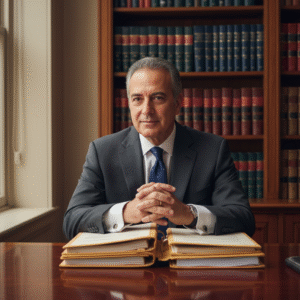


An expert witness is a specialized professional who provides independent, technical opinion evidence so courts can understand issues that lie beyond ordinary experience. Leading legal content often separates expert witnesses from fact witnesses and uses clear FAQs, because readers want precise distinctions and practical answers when planning litigation or evaluating potential testimony.
In this guide, we explain the expert witness definition, key roles, qualifications, and the difference between a fact witness and an expert witness, with examples from modern court practice. We also show how legal teams and informed clients can work effectively with experts, and how our global directory connects users with vetted professionals through LegalExperts.AI.
Understanding the Expert Witness Definition in Law
This section explains what an expert witness is in law, why the expert witness definition matters for admissibility and strategy, and how expert testimony supports court cases from investigation through appeal.
What is an Expert Witness? (Definition and Overview)
In legal terms, an expert witness is a person with specialized knowledge, skill, experience, training, or education whose professional opinion can help the judge or jury understand evidence or determine a fact in issue. The narrow Definition of an Expert Witness focuses on whether the person’s expertise is reliable and relevant to the questions before the court.
In practice, the Overview of an Expert Witness captures how the expert participates in proceedings: reviewing records, conducting independent analysis, preparing written reports, and giving opinion testimony in court. When readers ask what is an expert witness in law or search for What Is an Expert Witness? – Definition & Responsibilities, they are usually seeking both the formal expert witness definition and a plain-language explanation of how such witnesses operate from instruction through cross-examination.
The Expert Witness Definition across common-law systems emphasizes three elements: independence from the engaging party, specialized knowledge that exceeds ordinary lay understanding, and a duty to assist the trier of fact rather than to advocate for one side. In many procedural codes, an Expert Witness may base testimony on data, testing, or professional literature that would not by itself be admissible, as long as professionals in that field reasonably rely on that material.
What is the Importance of an Expert Witness in Litigation?
The Importance of an Expert Witness in Litigation lies in the expert’s ability to translate complex technical, scientific, medical, or financial information into accurate, accessible opinion evidence. Without expert evidence, courts can struggle to assess causation, quantify damages, or evaluate professional standards of care.
The Importance of Witnesses in any legal system includes both fact witnesses and experts. Fact witnesses describe what they saw, heard, or did, while the role of expert witness is to explain what those facts mean in light of specialized standards or methodologies. Expert testimony can shape whether a claim survives summary judgment, whether insurance carriers reassess settlement value, and how judges craft jury instructions on complex issues like probability or scientific uncertainty.
If counsel or the court misunderstands the expert witness definition or the limits of expert authority, several risks arise. Experts may be allowed to offer opinions on topics beyond their field, advocates may treat experts as partisan advocates rather than neutral professionals, or jurors may receive opinions that lack a reliable foundation. Effective case management requires clear instructions, targeted motions to exclude unreliable opinions, and careful explanation to juries of how to weigh expert evidence alongside other proof.
What Types of Cases Use Expert Witnesses and Who Uses Expert Evidence?
The question what types of cases use expert witnesses has a broad answer, because expert evidence appears in nearly every area of modern litigation. In criminal cases, forensic scientists, psychiatrists, and digital forensics specialists address DNA, mental state, or smartphone data. In civil cases, experts in engineering, accounting, valuation, or medicine clarify standards of care and measure economic loss.
Regulatory proceedings, arbitration, and administrative hearings also rely heavily on Expert Evidence. Securities regulators use market-structure and accounting experts; competition authorities instruct economists; and professional discipline tribunals appoint clinical or practice experts to assess alleged misconduct. Plaintiffs, defendants, prosecutors, regulatory agencies, and sometimes courts themselves use expert witnesses to illuminate technical aspects of disputed conduct.
Common fields that frequently use expert witnesses include medical malpractice, product liability, construction defects, securities fraud, intellectual property disputes, employment discrimination, and digital forensics. When counsel or clients ask what kinds of cases use expert witnesses, the practical answer is that any dispute involving specialized standards, risk modeling, or complex causation is a candidate for expert involvement.
What Is an Example of an Expert Witness in Court?
An Expert Witness Example helps clarify how expert testimony in court unfolds from appointment to verdict. Consider a medical malpractice case where a board-certified surgeon is retained as an expert witness to address whether the defendant surgeon met the applicable standard of care and whether any breach caused the alleged injury.
Before the jury hears any opinions, the court conducts voir dire on the expert’s qualifications. Counsel examines education, training, publications, and practical experience, and the judge decides whether to recognize the witness as an Expert Witness in that specialty. Once qualified, the expert testifies on direct examination about records reviewed, methodologies applied, and conclusions reached, often referring to written reports, charts, or diagrams as demonstrative evidence.
Modern Expert Witness Facts include the use of technology for both preparation and testimony. Experts may present simulations generated in platforms like PowerPoint, screen-share exhibits during remote hearings on Zoom, or annotate digital imaging and electronic health records in real time. According to a 2023 American Bar Association empirical study on civil jury trials, jurors reported significantly higher understanding of technical issues when experts used clear visual aids and structured explanations during testimony.
On cross-examination, opposing counsel tests assumptions, challenges reliance on particular studies, and probes for prior inconsistent statements or alternative explanations. The court may later rely on the same record to rule on post-trial motions or appellate review of the sufficiency of expert evidence.
Qualifications and Role of the Expert Witness
This section addresses who qualifies as an expert witness, what makes a person an expert, the responsibilities of an expert witness, and how experts are engaged and compensated in practice.
Who Qualifies as an Expert Witness and What Makes a Person an Expert?
When courts ask Who Qualifies as an Expert Witness, judges focus on whether the person’s knowledge and experience will genuinely assist the trier of fact. What makes a person an expert is rarely a single credential; instead, courts evaluate a combination of education, professional licensing, certifications, publications, teaching, and real-world practice.
Typical Qualifications of an Expert Witness include advanced degrees, board certifications, active membership in professional bodies, and a record of peer-reviewed research or guideline development. Many systems also value hands-on experience with the specific technology, industry, or clinical procedure at issue, because textbook knowledge alone may not capture current practice.
Courts review curricula vitae to ensure that claimed expertise aligns with the disputed questions and that knowledge remains current rather than dated. Judges may exclude or limit testimony when an expert has not practiced recently, lacks familiarity with relevant standards, or faces conflicts of interest that could compromise independence. Litigation experience can be helpful but is not mandatory; subject-matter credibility remains the starting point for any assessment of who qualifies as an expert witness.
What Is the Role and Responsibilities of an Expert Witness?
The Role of the Expert Witness is to provide impartial, evidence-based professional opinion that assists the court. Experts owe their primary duty to the court or tribunal, not to the party that instructs and pays them, even when that duty conflicts with the client’s litigation preferences.
Key responsibilities of an expert witness include identifying the questions within the expert’s field, conducting appropriate analysis, and explaining opinions in a way that users without specialized training can understand. The responsibilities of an expert witness also extend to complying with procedural rules, meeting report deadlines, and engaging with disclosure, including adverse literature or limitations in methodology.
When courts or procedural rules describe what is the duty of an Expert Witness, they typically stress independence, transparency about assumptions, and avoidance of advocacy. Experts should resist pressure to stretch opinions beyond the available data, to ignore alternative hypotheses, or to comment on matters outside their competence, such as the credibility of witnesses or the interpretation of law. Clear role boundaries help preserve both admissibility under reliability standards and perceived credibility with judges and juries.
Who Can Serve as an Expert Witness and Are Expert Witnesses Paid?
Questions about who can serve as an expert witness reflect the diversity of modern disputes. Academics, practicing professionals, retired specialists, industry consultants, and niche experts in areas like cybersecurity, blockchain, aviation safety, or digital currencies may all qualify, provided their expertise is relevant and reliable.
Expert witnesses are typically paid for their time rather than for the outcome of the case. Fee structures usually include hourly rates for record review, examinations, testing, report drafting, conferences with counsel, deposition, and trial attendance. Rates vary widely by specialty and jurisdiction, with complex fields such as neurosurgery or quantitative finance often commanding higher fees than more common disciplines.
Ethical guidance and many professional codes caution against contingency fees for expert witnesses, because payment tied to case outcome can undermine independence and credibility. Courts sometimes scrutinize unusually high fees or high volumes of repeat work for a single client, since those patterns may suggest a risk that the expert functions more as an advocate than a neutral professional.
How Do You Become an Expert Witness and Build Qualifications?
Lawyers and professionals frequently ask how do you become an expert witness or how do I become an Expert Witness, especially in fields where litigation is common. The starting point is deep, current subject-matter expertise, supported by recognized credentials and adherence to professional standards.
Steps in how to become an expert witness include maintaining active practice, pursuing advanced training, publishing peer-reviewed research or practice guidelines, and contributing to professional committees. Teaching, presenting at conferences, and authoring textbooks or practice manuals also strengthen perceived authority. Many experts join professional rosters or expert directories and optimize LinkedIn profiles so legal teams can assess qualifications quickly.
Lawyers increasingly search tools like Westlaw and LexisNexis to review prior reported decisions involving a proposed expert, including admissibility rulings and comments on reliability. Some experts attend dedicated training courses or a structured Quiz Course on giving testimony, report writing, and handling cross-examination. According to a 2024 professional services market study by the Global Legal Consulting Institute, demand for expert witness consulting work increased by more than 20% over the prior five years, particularly in technology, healthcare, and financial regulation.
Fact Witness vs Expert Witness in Legal Proceedings
This section distinguishes the expert witness definition from that of a fact witness and explains why the difference between a fact witness and an expert witness matters for fairness and reliability in legal proceedings.
What Is a Fact Witness and How Do They Differ from Experts?
A fact witness is a person who testifies based on personal knowledge of events, documents, or observations, rather than on specialized opinion. When courts analyze what is a Fact Witness, they look at whether the witness is recounting what the witness saw, heard, did, or wrote, without using specialized knowledge to draw conclusions.
Fact Witness vs. Expert Witness: What’s the Difference can be summarized by focusing on the source and scope of testimony. Fact witnesses provide narrative accounts: who was present, what actions occurred, what was said, or what a document contains. Expert witnesses, by contrast, apply professional frameworks to those facts and explain technical meaning, foreseeability, standards of care, or the significance of data patterns.
When judges and practitioners ask what is the difference between a fact witness and an expert witness, they also consider evidentiary rules. Fact witnesses generally cannot answer hypothetical questions or give opinions beyond ordinary experience, while experts may respond to hypotheticals, interpret complex datasets, and describe likely future consequences. Misunderstanding the difference between a fact witness and an expert witness can lead to improper questioning, defective jury instructions, or exclusion of opinion evidence on appeal.
Can a Fact Witness Be an Expert at the Same Time?
Courts sometimes confront the question can a fact witness be an expert at the same time. The most common example is a treating physician who both observed and treated a patient and also has specialized knowledge about diagnosis, prognosis, and standard of care.
In such dual-role situations, courts may distinguish between fact portions of testimony and expert portions. When a treating physician describes symptoms observed, tests ordered, or medications prescribed, that testimony is fact-based. When the same witness explains why a particular treatment choice met or fell below professional standards, or responds to hypothetical scenarios crafted by counsel, the testimony becomes expert opinion.
Dual-role witnesses create disclosure and discovery challenges. Parties must decide whether to provide formal expert reports or more limited summaries; courts may require clear advance notice when a witness will shift from fact to expert commentary. Strategically, dual roles can strengthen authenticity because the expert has firsthand knowledge, but they can also complicate cross-examination when counsel wants to challenge professional opinion without undermining uncontested facts.
Why Does the Distinction Between Fact Witness and Expert Witness Matter?
The distinction between fact witness vs expert witness matters because procedural fairness depends on clear rules about what each witness may say and how judges evaluate that evidence. When testimony is mischaracterized, courts risk admitting unfounded opinions or, conversely, excluding probative analysis that could assist the trier of fact.
Mislabeling expert opinion as lay testimony can bypass disclosure requirements and prevent opposing parties from preparing Daubert or admissibility challenges. Conversely, recasting ordinary observations as expert analysis can overstate reliability and mislead jurors about the strength of evidence. Appeals courts scrutinize such errors carefully, especially when expert evidence played a central role in the verdict.
Understanding the Difference Between a Fact Witness and an Expert Witness informs deposition planning, motion practice, and trial themes. Lawyers need to identify early which witnesses will offer factual narratives, which will provide opinion evidence, and how those roles intersect. A precise expert witness definition, consistently applied, supports transparent process and better-quality judicial decisions.
Types of Expert Witnesses and Expert Evidence
This section surveys common types of expert witnesses and the main forms of expert evidence used to assist courts in different kinds of disputes.
What Types of Expert Witnesses Commonly Appear in Court?
Many Types of Expert Witnesses appear regularly in courts and tribunals. The best starting point is to connect likely expert categories with the legal issues in dispute.
- Medical and healthcare experts, including surgeons, psychiatrists, nurses, and allied health professionals who address diagnosis, causation, and standard of care.
- Financial and economic experts, such as CPAs, forensic accountants, valuation specialists, and damages experts who quantify loss or analyze transactions.
- Engineering and technical experts, including structural, civil, and mechanical engineers, product safety specialists, and accident reconstruction professionals.
- Digital forensics and cybersecurity experts, including data breach responders, e-discovery specialists, and analysts of blockchain records or network traffic.
- Vocational, HR, and industry-specific experts, such as workplace practices consultants, real estate valuers, transportation safety specialists, and intellectual property licensing professionals.
These categories overlap in many modern disputes. For example, a complex construction case might require engineering, scheduling, and financial experts, while a data breach class action might require cybersecurity, privacy compliance, and consumer behavior experts.
What Types of Expert Evidence Are Admissible in Legal Proceedings?
Types of Expert Evidence vary across jurisdictions, but most systems recognize written reports, affidavits, and live testimony as core forms. Expert reports explain the instructions received, materials reviewed, methodology applied, and opinions reached, usually with supporting references to scientific literature, professional standards, or technical guidance.
Courts also receive expert evidence through demonstrative exhibits such as charts, timelines, diagrams, computer simulations, and joint statements produced by opposing experts after court-ordered meetings. Live testimony, whether in person or by video link, allows judges and juries to observe demeanor, hear explanations in plain language, and watch experts respond to structured questioning.
In the United States, Federal Rule of Evidence 702 governs who may offer expert testimony and requires that opinions rest on sufficient facts, reliable principles and methods, and reliable application of those methods to the case. Federal Rule of Evidence 703 addresses the kinds of information experts may rely on, including otherwise inadmissible data, while Federal Rule of Evidence 704 allows, with some limits, expert opinions on ultimate issues. Lawyers often use research tools such as Westlaw and LexisNexis to locate precedents on the admissibility of specific methodologies or to analyze how courts have applied these rules in similar disputes.
Who Uses Expert Evidence Across Different Jurisdictions?
Courts in the United States, United Kingdom, Canada, and Australia all rely heavily on expert evidence, but procedural frameworks differ. In the United States, parties usually retain their own experts, and judges act as gatekeepers under rules like Federal Rule of Evidence 702, applying reliability standards that originate from leading Supreme Court decisions.
In the United Kingdom, Canada, and Australia, procedural rules emphasize the expert’s overriding duty to the court and sometimes empower judges to appoint single joint experts when that approach is proportionate. Australian courts, in particular, have expanded the use of concurrent evidence or “hot-tubbing,” where multiple experts give evidence together and respond to each other’s views in real time.
Civil-law-influenced systems often rely more heavily on court-appointed experts and structured written questions from judges, although parties may still instruct their own experts to comment on or challenge court reports. Across all these systems, the core expert witness definition remains focused on independence, relevant specialized knowledge, and a clear duty to assist the tribunal in understanding issues that fall outside ordinary experience.
Practical Guidance for Working With Expert Witnesses
This section offers practical guidance on when to hire an expert witness, how to prepare for expert testimony, and how to navigate common challenges, controversies, and criticisms.
Should You Hire an Expert Witness and How to Find an Expert Witness?
Deciding whether to hire an expert witness depends on the dispute’s complexity, the governing burden of proof, and the need for specialized knowledge. Counsel should consider an expert when technical causation, financial modeling, medical standards, or scientific reliability will significantly influence outcome or settlement value.
The question Should You Hire an Expert Witness often arises early in case assessment. If the party bears the burden of proving technical elements such as professional negligence, product defect, or market efficiency, early expert input can shape pleading theories, discovery plans, and negotiation strategy. In some areas, such as medical malpractice or engineering design defects, expert testimony is effectively mandatory.
How to Find an Expert Witness involves a mix of referrals, professional associations, conference networks, academic departments, and specialized expert directories. Many lawyers screen candidates not only for credentials but also for independence, communication skills, and prior testimony experience, including how courts have evaluated reliability in earlier cases. Remote engagement and virtual hearings now make it easier to instruct experts regardless of geography, expanding choice while still requiring careful checks for conflicts of interest.
How Should Lawyers Prepare an Expert Witness for Testimony?
Effective preparation of an expert witness protects both admissibility and credibility. Lawyers should approach preparation as a structured process that integrates legal standards with the expert’s professional discipline.
- Review pleadings, key documents, and case chronology with the expert, clarifying the precise questions the expert is asked to answer and the assumptions that may be taken as given.
- Align the expert report with jurisdictional rules such as Federal Rule of Evidence 702, ensuring that the methodology is clearly explained, peer-accepted where applicable, and transparently applied to the facts.
- Conduct mock direct and cross-examinations, possibly by video using tools like Zoom, so that the expert can practice clear explanations and learn how to respond calmly under pressure.
- Coordinate demonstratives such as charts, timelines, and slide decks using platforms like PowerPoint, aiming for accessible visuals rather than technical overload.
- Prepare the expert for Daubert or other admissibility challenges, including discussion of prior publications, alternative methods, and any limitations or error rates associated with the chosen approach.
Preparation should emphasize that experts must answer questions honestly, acknowledge uncertainty where appropriate, and avoid advocating positions that their professional peers would regard as unsupportable.
What Challenges, Controversies, or Criticisms Affect Expert Witness Use?
Use of expert witnesses has attracted criticism across many jurisdictions. One concern is the “hired gun” perception, in which some experts appear to align opinions too closely with the instructing party’s interests, raising doubts about neutrality and reliability.
Selection bias presents another challenge. Parties with greater resources can engage high-cost experts and large consulting teams, while less-resourced opponents may struggle to fund comparable evidence, potentially affecting perceived fairness. Networks of repeat experts and frequent collaborations with particular law firms can further entrench advantages in specialized areas such as securities litigation or complex antitrust proceedings.
Complex scientific or technical testimony can also risk overawing juries, especially when experts use unfamiliar terminology or present statistical models without clear explanation. According to a 2024 Yale Law Journal analysis of expert witness bias and reliability in civil litigation, concerns about partisan advocacy and cognitive overload continue to drive reforms in judicial gatekeeping, disclosure duties, and the use of court-appointed or joint experts.
Across systems, reforms aim to strengthen the expert witness definition as a neutral assistant to the court, including stricter disclosure of assumptions and funding arrangements, more frequent expert conferences, and clearer judicial directions on how juries should evaluate competing expert opinions.
Frequently Asked Questions and Additional Resources
This section gathers common questions and overview points related to expert witnesses, along with guidance on further research and key jurisdictional rules.
Frequently Asked Questions on Expert Witness Facts and Overview
Practitioners and clients share similar Frequently Asked Questions when first encountering expert evidence. The following overview summarizes core Expert Witness Facts that often guide early decisions.
Many readers ask, What Is an Expert Witness? The short answer is that an expert witness is someone with specialized knowledge whose opinion can help the court understand evidence or determine facts that require more than ordinary experience. When people search What Is an Expert Witness? – Definition & Responsibilities, they are usually seeking both a legal definition and practical examples from recent court cases.
A common question is Who Can Serve as an Expert Witness? In principle, any person with relevant, reliable specialized knowledge may qualify, including academics, practicing professionals, and niche industry experts. Another frequent query is Are expert witnesses paid? Most experts receive hourly or daily fees for work such as document review, report drafting, conferencing, and testimony, with terms agreed in advance to protect independence.
Users also ask what kinds of cases use expert witnesses, reflecting concern about cost and necessity. As explained earlier, expert testimony appears in many criminal, civil, and regulatory cases that raise complex technical questions. Readers who want to test understanding can create a short internal Quiz Course or self-assessment checklist covering core concepts like qualifications, scope of opinion, and distinctions between fact and expert evidence.
Where Can You Learn More: See Also, References, and External Links?
A structured resource section can help readers and practitioners deepen knowledge of expert evidence. A See also list might include related topics such as fact witnesses, scientific evidence, professional negligence standards, and case management techniques for complex trials.
References in a detailed guide on expert witnesses usually include key statutes, procedural rules, and leading appellate decisions on admissibility and reliability. For example, rules governing expert testimony, practice directions on joint experts and concurrent evidence, and landmark cases on reliability tests provide essential context for evaluating new opinions.
Carefully selected External links can direct readers to bar association guidance, judicial handbooks, and professional body position statements on expert duties and ethics. A concise Summary at the end of a resource or judicial guideline helps reinforce the core expert witness definition, particularly the emphasis on independence, reliable methodology, and clear communication to the court.
How Do Jurisdictional Rules Like Federal Rule of Evidence 702 Shape the Expert Witness Definition?
Jurisdictional rules play a central role in shaping who qualifies as an expert witness and what opinions may be given. In the United States, Federal Rule of Evidence 702, 703, and 704 together define admissibility, reliance on underlying data, and the extent to which experts may address ultimate issues before the court.
Under Federal Rule of Evidence 702, judges must ensure that expert opinions are based on sufficient facts or data, use reliable principles and methods, and reliably apply those methods to the facts of the case. Federal Rule of Evidence 703 allows experts to base opinions on information that might not itself be admissible, as long as professionals in the field would reasonably rely on such data. Federal Rule of Evidence 704 permits opinions that embrace an ultimate issue, subject to limits in certain criminal contexts.
In the United Kingdom, Canada, and Australia, courts apply similar reliability and relevance tests, often framed through case law and civil procedure rules rather than numbered evidence rules. These systems stress the expert’s duty to the court, the need for transparent reasoning, and, in some instances, the value of court-appointed or joint experts for efficiency. Across all jurisdictions, procedural frameworks reinforce the expert witness definition by linking qualifications, methodology, and scope of opinion to safeguards for fairness and accurate fact-finding.
Courts, counsel, and experts who align practice with these rules are better placed to avoid exclusion of evidence and to present testimony that genuinely assists fact-finders.
A short set of core points emerges from the expert witness definition and its application in modern court cases. Expert witnesses offer independent, specialized opinion that helps courts interpret complex evidence and are distinct from fact witnesses, who testify from personal knowledge. Qualifications of an expert witness combine formal credentials with current practical experience and transparent, reliable methodology. Effective use of experts requires early case assessment, careful selection, and structured preparation for reports and testimony, including attention to jurisdiction-specific rules. Challenges such as perceived bias, unequal access to high-cost experts, and complex scientific evidence remain central to reform debates across legal systems. For litigation involving complex technical questions, including Internet Content Removal matters, LegalExperts.AI provides reliable solutions.