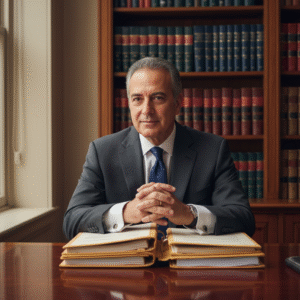


Expert witnesses shape many trial outcomes, yet readers often see only recycled explanations that split “expert,” “witness,” and “expert witness” into rigid boxes without showing how those roles work together in real cases. Clear definitions and real-world examples help demystify when expert testimony is appropriate and how courts evaluate it.
This article explains the expert witness definition, who can serve, qualifications, roles, limits, ethics, and preparation steps for lawyers, experts, and clients. Readers learn how judges apply rules, how to find and use experts effectively, and how neutral expertise supports fair decisions, with guidance grounded in modern litigation practice from LegalExperts.AI.
Expert Basics and Core Definitions
What is an Expert Witness? – Overview and core definition
In legal proceedings, an expert witness is a person with specialized knowledge, skill, experience, training, or education who is permitted to provide opinion evidence to help a judge or jury understand technical issues. Courts rely on expert testimony when subjects fall beyond the common experience of laypeople.
Leading authorities typically phrase the answer to “What is an Expert Witness?” or “What is an expert witness?” in two parts. First, the person must qualify as an expert in a recognized field such as medicine, engineering, finance, or forensics. Second, that expert must give evidence in court, usually in the form of written reports and live oral testimony, designed to assist the trier of fact rather than to argue the case like an advocate.
Guides titled “What Is an Expert Witness?” or “What is an Expert Witness? – Definition & Responsibilities” often frame the expert witness definition around impartial assistance to the court, emphasizing independence, transparency about methods, and adherence to legal standards. Many lesson-style explanations also highlight that the expert witness is neither a “hired gun” nor a decision-maker; the expert provides information, while the judge or jury decides the outcome.
An introductory abstract or lesson summary helps lay clients understand the meaning of “Expert Witness” by translating dense legal rules into a short narrative: who the expert is, why the court needs help, what questions the expert may answer, and how the expert’s neutrality protects the credibility of the evidence.
What is an expert, and what does an expert do?
An expert is a person with substantial knowledge or proficiency in a particular subject, recognized by peers or formal credentials. In legal contexts, rules such as Rule 702 of the Federal Rules of Evidence focus on whether the person’s knowledge, skill, experience, training, or education will help the trier of fact understand the evidence or determine a fact in issue.
Outside the courtroom, an expert works in a substantive field: a surgeon treats patients, an engineer designs bridges, a software architect secures networks, or a forensic accountant audits complex transactions. These professionals solve real-world problems, publish research, teach, or manage organizations, often without ever giving testimony.
When a professional becomes an expert witness, the role changes. The expert must apply the same specialized knowledge, but under procedural rules, disclosure obligations, and judicial scrutiny. The expert’s analysis must be transparent, reproducible where possible, and tailored to the legal questions in dispute. Types of experts and their specialized knowledge, from medical and technical experts to financial and digital-forensics specialists, shape the value they bring to court proceedings by connecting complex facts to clear, reasoned opinions.
What is a Witness, and how is expert evidence different?
A witness in court is any person who gives evidence about facts relevant to the case. A lay witness typically testifies about what the witness personally saw, heard, or experienced: a bystander describing an accident, a business partner recounting a meeting, or a neighbor recalling events.
Expert evidence is different because it rests on specialized knowledge rather than only on direct observation. Expert evidence may include opinions based on data, testing, modeling, or professional judgment, and those opinions can draw on materials that are not admissible on their own, provided the reliance is reasonable in the field. Expert evidence interacts with other forms of evidence—documents, physical exhibits, and lay testimony—by helping the court interpret what that material shows.
Combining the two, expert plus witness, creates a distinct legal category with its own duties and expectations. An expert witness testifies both as a fact-finder in limited respects (for example, describing an examination the expert personally conducted) and as an opinion-giver explaining what underlying facts mean in professional terms. The expert witness must always distinguish clearly between factual observations, assumptions provided by counsel, and independent opinions based on expertise.
Defining the Expert Witness in Legal Proceedings
Who can be an Expert Witness, and must an Expert Witness have qualifications?
Courts answer “who can be an expert witness” and “Who Can Be an Expert Witness?” by focusing on whether a proposed expert’s knowledge will actually assist the fact-finder. Most systems do not require a particular degree or title, but the court must be satisfied that the expert has sufficient expertise and that the proposed testimony is relevant and reliable.
Although no universal rule requires specific credentials, practical expectations are high. Must an Expert Witness have qualifications? In practice, judges expect to see education in the field, significant hands-on experience, relevant licensure or board certification where common in the profession, publications or teaching, and sometimes prior expert witness experience. Informal expertise—such as extensive industry experience without advanced degrees—can qualify in appropriate cases, especially in highly specialized trades.
Courts scrutinize credentials through voir dire questioning, disclosure of CVs, and challenges under evidence rules. Judges consider whether the expert’s work in the field is current, whether the expert uses methods accepted in the relevant community, and whether any disciplinary history undermines credibility. The goal is to ensure that the expert witness definition is more than a label and that testimony offered to the court is both reliable and connected to the facts in dispute.
What Is the Role of an Expert Witness in court?
Answering “what is the role of an expert witness in court” requires distinguishing expert witnesses from lay witnesses and lawyers. Lay witnesses recount facts, while lawyers present arguments and legal theories. The role of expert witness centers on explaining complex technical or scientific issues in a neutral, educational way that helps the trier of fact reach informed conclusions.
The functions and responsibilities of an expert witness begin before trial. Experts consult with counsel to understand the issues, review records, conduct examinations or tests where appropriate, and form well-reasoned opinions. Experts often prepare detailed reports summarizing methods, data relied on, assumptions, and conclusions. During discovery, expert witnesses give depositions, respond to written questions, and address criticisms from opposing experts.
At trial, the expert gives opinion evidence, often supported by charts, models, or other demonstrative aids. The expert must answer questions clearly on direct and cross-examination, stay within the scope of disclosed opinions, and avoid straying into legal conclusions or advocacy. After trial, an expert may assist with post-trial motions, appeals, or settlement discussions, especially where technical understanding remains important.
What are the main limitations as a witness and how does immunity work?
Expert witnesses face several limitations as a witness that restrict the content and scope of their opinions. Courts usually prohibit experts from instructing the jury on the law, giving opinions on ultimate legal conclusions that are the judge’s responsibility, or vouching directly for a party’s or another witness’s honesty. Expert opinions must be based on sufficient facts or data and on reliable methods, and experts should not speculate beyond what professional standards support.
Doctrines of immunity influence the risk exposure for expert witnesses. Many jurisdictions grant absolute or qualified immunity for testimony given in court or in depositions, protecting experts from civil liability such as defamation suits based on statements made in the course of proceedings. However, immunity often does not extend to all conduct; experts can still face professional discipline, court sanctions, or contract disputes over fees or performance.
Practical strategies help lawyers and experts manage these limitations while preserving the integrity of expert evidence. Engagement letters can clarify the scope of work and the independent nature of the opinion. Careful preparation, clear separation of factual assumptions from professional conclusions, and candid acknowledgment of the limits of available data all help maintain credibility. When experts remain transparent about uncertainty and avoid exaggeration, courts are more likely to treat expert testimony as trustworthy and useful.
Types of Expert Witnesses and When They Are Used
What are the main Types of Expert Witnesses and experts?
Types of expert witnesses reflect the range of specialized fields that modern disputes can involve. Courts commonly see both consulting experts, who advise behind the scenes, and testifying experts, who present expert testimony to the court or jury.
Common categories of expert witness and expert include the following types of expert witnesses and experts:
- Medical and healthcare experts, such as physicians, surgeons, nurses, and rehabilitation specialists who address diagnosis, causation, prognosis, and standards of care.
- Forensic and scientific experts, including forensic pathologists, toxicologists, DNA analysts, accident reconstructionists, and other laboratory-based specialists.
- Financial and economic experts, such as forensic accountants, business valuation professionals, economists, and damages experts in commercial or securities disputes.
- Technical and engineering experts, including civil, mechanical, electrical, and software engineers who explain product failures, infrastructure design, or cybersecurity issues.
- Digital, data, and industry-practice experts, such as digital forensics analysts, human-resources experts, or customs-and-practice professionals who interpret data sets or industry standards.
When are Experts used in court proceedings?
Experts are used in civil, criminal, and administrative cases when issues require specialized knowledge beyond ordinary experience. In civil litigation, experts appear frequently in medical malpractice, product liability, employment disputes, construction cases, intellectual property, and complex commercial matters. In criminal cases, expert witnesses explain forensic testing, mental health evaluations, ballistics, cell-phone data, and financial patterns.
Judges decide that a matter requires an expert witness when the subject is technical enough that jurors or the court would struggle to draw reliable conclusions unaided. If a proposed issue involves scientific principles, specialized industry practice, or complex financial modeling, courts are more likely to permit or require expert testimony. Conversely, where evidence concerns everyday experiences—such as simple contract terms or common driving behavior—judges may exclude expert opinions as unhelpful.
Empirical research has examined the frequency and impact of expert testimony across case types. According to a 2023 University of Chicago Law School empirical study on expert testimony in civil and criminal trials, cases that involved at least one expert witness were more likely to proceed to trial and produced longer deliberation times, reflecting the central role experts play in contested matters.
Who pays for an expert, and how are fees managed?
The question “Who pays for an expert?” raises budgeting, disclosure, and bias concerns for parties and courts. In most civil and many criminal cases, private clients, insurers, or law firms retain and pay an expert witness for time spent reviewing materials, conducting examinations, preparing reports, sitting for depositions, and testifying. Fees are commonly hourly, with higher rates for testimony than for background work, and with retainers paid up front.
For indigent litigants and criminal defendants, courts, public defender systems, or legal-aid organizations can authorize and fund necessary expert assistance. Statutes or rules may set caps on hourly rates, require prior judicial approval, or limit the number of experts. Court-appointed neutral experts are sometimes used when specialized expertise is necessary but the parties lack resources or when a neutral perspective would assist the court.
Engagement letters typically address billing rates, retainers, cancellation fees, travel time, and caps on total costs for expert evidence. Clear language about payment obligations, invoicing, and what happens if a case settles or a witness is excluded helps avoid disputes. Best practices for lawyers include explaining expert billing structures to clients early, revisiting projected expert costs as a case develops, and comparing anticipated expert impact against the monetary and strategic value of the dispute.
Finding, Preparing, and Using an Expert Witness
How To Find an Expert Witness and evaluate qualifications
Locating the right expert witness requires structured research and careful vetting. Lawyers and litigation teams begin with expert basics, asking “What is an expert?” and “What does an Expert do?” in the relevant field so that required knowledge, credentials, and practical experience are clear before the search begins.
Online directories, professional networks such as LinkedIn, and legal research tools like LexisNexis and Westlaw can support strategies labeled “How To Find an Expert Witness.” These tools help counsel identify potential candidates, review publications and reported decisions mentioning prior testimony, and check whether a proposed expert has faced judicial criticism or sanctions.
In screening candidates, teams should explicitly ask “Who can be an Expert Witness?”, “Who Can Be an Expert Witness?”, and “Must an Expert Witness have qualifications?” while examining CVs, licenses, board certifications, and sample reports. Lawyers benefit from checking whether the expert has testified for both plaintiffs and defendants, which may signal independence, and from contacting references who can describe communication skills and reliability.
Firms can map internal steps for using experts in their jurisdiction, summarizing lessons learned in short practice notes or an internal abstract. These materials can provide an overview of combining the two components—expert plus witness—alongside key references to rules and leading cases, see-also sources for advanced practice, and the functions and responsibilities of an expert witness as explained in training materials.
Becoming an expert and preparing to testify
Becoming an expert in litigation involves more than deep subject-matter skill. Potential expert witnesses must understand court rules, standards for expert evidence, disclosure obligations, and the expectations that courts have for clarity, neutrality, and methodological rigor.
Practical checklists help new expert witnesses prepare for testimony and manage cross-examination. Key preparation steps include:
- Building and maintaining a current CV that accurately reflects education, experience, publications, and past testimony, tailored to likely case types.
- Learning the governing evidence rules, including what is Rule 702 of the Federal Rules of Evidence, relevant state analogues, and major cases interpreting reliability requirements in the expert’s field.
- Negotiating clear engagement terms that address scope of work, independence of opinions, access to data, timelines, confidentiality, and limits related to the expert’s role and limitations as a witness.
- Developing report-writing habits that explain methods, data sources, assumptions, and alternative explanations in straightforward language accessible to non-specialists.
- Rehearsing direct and cross-examination with counsel to practice concise answers, maintain composure, and reinforce impartiality under pressure.
What do expert witnesses do before and during trial?
From initial consultation through trial, expert witnesses perform a series of structured tasks. At the outset, the expert reviews pleadings, evidence, and legal issues; identifies what additional data or testing is needed; and evaluates whether the expert can provide opinions that meet professional standards and admissibility rules.
During the analysis phase, the expert may conduct examinations, site inspections, experiments, modeling, or statistical analysis. The expert then prepares written reports or declarations explaining the questions posed, materials reviewed, methods used, and opinions formed. Counsel and expert collaborate to ensure disclosures comply with procedural rules without shaping conclusions in a way that compromises independence.
In discovery, the expert gives deposition testimony, responds to critiques from opposing experts, and may revise or supplement reports as new information emerges. Before and during trial, experts and attorneys often coordinate demonstratives, timelines, or visual aids—sometimes using tools such as Zoom for remote testimony preparation or Canva and similar software for clear, accurate graphics—to make complex evidence understandable. After trial, an expert may assist counsel with analyzing verdicts, considering appellate issues, or advising on future risk mitigation.
Legal Standards, Expert Evidence, and Ethics
What Is Rule 702 of the Federal Rules of Evidence?
Rule 702 of the Federal Rules of Evidence governs who qualifies as an expert witness and what opinions that expert may offer in federal court. The rule requires that the witness be qualified by knowledge, skill, experience, training, or education; that the testimony be based on sufficient facts or data; that the testimony result from reliable principles and methods; and that the expert reliably apply those methods to the facts of the case.
Daubert-style reliability tests treat judges as gatekeepers who must evaluate methodology and relevance before admitting expert testimony. Recent amendments to Rule 702 emphasize that the proponent of expert evidence bears the burden of demonstrating, by a preponderance of the evidence, that each of the rule’s requirements is met. According to a 2024 Federal Judicial Center report analyzing how amended Rule 702 is applied in federal courts, judges have become more explicit in written opinions about evaluating each prong of reliability and methodology.
Practitioners track evolving interpretations of Rule 702 across federal circuits and state analogues by reviewing recent appellate decisions, consulting practice guides, and monitoring judicial education materials. Understanding these variations helps lawyers plan which types of expert witnesses to use, how to structure reports and opinions, and when to anticipate or bring challenges to opposing experts.
What is expert evidence, and how do courts assess it?
Expert evidence under Rule 702 and related provisions consists of opinion testimony grounded in specialized knowledge that will help the trier of fact understand the evidence or determine a fact in issue. Expert evidence differs from lay opinion, which is limited to perceptions rationally based on a witness’s own senses, and from documentary evidence, which speaks for itself but may require expert interpretation.
Courts assess expert evidence by examining relevance, reliability, and helpfulness. Judges look at whether the expert’s field is recognized, whether the methodology has been tested, peer-reviewed, and subjected to quality controls, what the known or potential error rate is, and whether the approach is generally accepted in the relevant community. Courts also assess whether the expert has accounted for contrary evidence and alternative explanations.
Lawyers reinforce the role, qualifications, and reliability of their expert witness through careful pretrial motions, robust written reports, and voir dire questioning. Motions in limine and Daubert motions allow courts to evaluate expert evidence before trial, reducing prejudice and surprise. Clear, well-documented opinions that address methodology and limitations directly are more likely to withstand challenges and assist the fact-finder.
Ethical considerations for expert witnesses and conflicts of interest
Ethical considerations for expert witnesses focus on independence, accuracy, and respect for the court’s truth-seeking function. Experts owe a primary duty to the court or tribunal, not to the party paying the fees. That duty requires honesty about qualifications, methods, and limitations; refusal to shape opinions to match a party’s desired outcome; and prompt correction of significant errors when discovered.
Conflicts of interest can undermine perceived neutrality. Experts should identify prior or current relationships with parties, counsel, or competitors; financial interests such as stock ownership or contingent fee arrangements; and non-financial loyalties, including membership in advocacy groups relevant to the dispute. Transparent disclosure allows courts and parties to assess whether a conflict is waivable or disqualifying.
Professional codes and court sanctions deter unethical behavior. Medical, engineering, accounting, and other professional organizations publish guidelines on courtroom conduct for experts, and courts can exclude testimony, reduce weight given to opinions, or in serious cases refer experts for disciplinary action. According to a 2024 Stanford study from the Department of Media Analytics, audiences are more likely to trust structured, well-documented expert communication, a finding that aligns with courts’ emphasis on clarity and transparency.
Looking ahead, remote testimony, AI-assisted analysis, and new disclosure rules in 2025 and beyond are likely to heighten scrutiny of expert neutrality and data integrity. Experts who use algorithmic tools must understand underlying assumptions and limitations, maintain secure handling of digital evidence, and be ready to explain methods in language that judges and jurors can understand.
Notable Expert Witnesses, Lesson Summary, and References
Notable expert witnesses and their impact on trials
Notable expert witnesses in medicine, forensics, and finance have shaped high-profile trials and public perceptions of justice. For example, forensic pathologists and DNA analysts have both supported convictions and contributed to exonerations in serious criminal cases when later reviews uncovered flawed earlier analysis.
Media coverage and appellate opinions influence public understanding of what an expert witness can and cannot do. When courts criticize experts for overstating confidence, misapplying statistics, or omitting contrary data, reported decisions become cautionary examples that future courts and practitioners cite. Conversely, when appellate courts praise an expert’s balanced approach and transparent methodology, that testimony becomes a model for others.
Practitioners can learn from both exemplary and flawed performances. Reviewing transcripts, judicial comments, and post-trial analyses helps lawyers identify effective communication techniques, cross-examination strategies, and warning signs of bias or overreach. Structured internal training based on real cases can improve selection, preparation, and ongoing evaluation of expert witnesses.
Lesson Summary – what is an expert witness, in brief?
In brief, an expert witness is a qualified specialist who uses scientific, technical, or professional expertise to provide opinion evidence that helps courts understand complex facts. Answers to “What is an Expert Witness?”, “What Is an Expert Witness?”, and “What is an expert witness?” converge on the same point: a neutral educator for the court, not an additional advocate.
A short internal abstract or overview can differentiate an expert, a lay witness, and an expert witness in one page. The expert is the underlying professional, the lay witness is the fact-teller about personal observations, and the expert witness is the professional who enters the courtroom and testifies under rules designed for expert evidence. That distinction helps clients understand why certain opinions require a formally designated expert.
Core ideas that every litigation team should retain include the role of expert witness as educator; the qualifications that support admissibility; the types of expert witnesses commonly used in civil, criminal, and administrative cases; and the limitations as a witness related to scope of opinion, methodology, and immunity. Together, these elements frame when and how expert assistance adds value in litigation.
See also and References for deeper study of expert testimony
Lawyers seeking deeper study of expert testimony can consult several categories of materials. Treatises and practice guides on evidence law often include chapters on expert witnesses, expert reports, Daubert motions, and cross-examination techniques, providing detailed examples and checklists. Ethics opinions and professional guidelines from medical, engineering, and accounting bodies offer focused guidance on independence and conflicts.
Primary references include the Federal Rules of Evidence, especially Rule 702 and related provisions on opinion evidence, as well as state evidence codes and leading cases applying Daubert or alternative standards such as Frye. Decisions discussing immunity, sanctions, and reversals based on expert error are particularly valuable for understanding practical consequences.
Legal research platforms and curated reading lists help junior lawyers move from expert basics to advanced practice. Law firm knowledge-management systems, online databases, and ongoing training programs can collect sample reports, model engagement letters, and motion templates. Used thoughtfully, these resources support more consistent selection, preparation, and presentation of expert witnesses across a litigation practice.
Effective use of expert witnesses starts with a clear expert witness definition, careful selection and vetting, and a rigorous understanding of what is Rule 702 of the Federal Rules of Evidence. Courts expect experts to meet high qualifications, respect limitations as a witness, and uphold ethical duties of independence and accuracy. Lawyers who understand functions and responsibilities of an expert witness can better plan when experts are necessary, who can be an expert witness for a particular case, and how to manage costs and conflicts, including in sensitive areas such as Internet Content Removal. LegalExperts.AI provides reliable solutions.