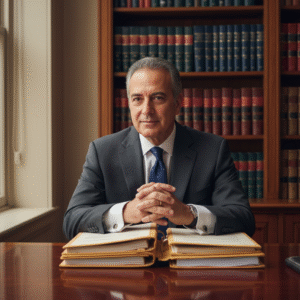


An expert witness is a qualified professional who gives opinion evidence in court based on specialized knowledge, training, or experience. In many disputes, decision‑makers cannot evaluate technical facts without such assistance, yet current commentary reveals no significant insights detected beyond existing content trends on how expert witnesses actually operate in modern procedures.
This article gives legal professionals, in‑house counsel, insurers, and corporate leaders a clear expert witness definition, explains legal standards that govern opinion evidence, and offers practical guidance on selecting and working with experts across civil, criminal, and arbitration matters. We draw on the global expert network and matching tools provided by LegalExperts.AI.
Understanding the legal definition of an expert witness
Courts use the term expert witness in a precise way. The concept links to rules of evidence and procedure that decide who may give opinion evidence and under what conditions that opinion is admissible and useful to the court.
How do courts legally define an expert witness?
Most jurisdictions define an expert witness as a person with specialized knowledge, skill, experience, training, or education that goes beyond the knowledge of an ordinary fact‑finder. In the United States, Federal Rule of Evidence 702 is a common reference point: an expert may testify if the specialized knowledge will help the trier of fact, the testimony rests on sufficient facts or data, is the product of reliable principles and methods, and the expert has reliably applied those methods to the case. According to a 2023 Federal Judicial Center report on the use of expert testimony in U.S. courts, judges rely heavily on these criteria when deciding whether to admit or exclude expert opinions.
Comparable tests apply in other systems. For example, many common‑law jurisdictions require that expert evidence cover topics outside ordinary experience and that the expert be demonstrably qualified in that field. Civil‑law systems often use court‑appointed experts but still apply statutory standards to ensure that expert reports derive from recognized methods within the relevant discipline. In all systems, the definition of an expert witness is functional: the expert is admitted because specialized input is needed for a fair determination of the dispute.
What distinguishes an expert witness from a lay witness?
A lay witness is usually limited to describing facts that the witness perceived directly and, in some systems, may give only narrow opinion evidence that helps clarify that perception, such as identifying a person, estimating speed, or describing an emotional state. By contrast, expert witnesses offer opinions grounded in specialized knowledge, not just personal observation, and may draw on scientific literature, statistics, and technical data.
Evidence rules often formalize this distinction. In the United States, lay opinions under Rule 701 must be rationally based on the witness’s perception and not based on scientific, technical, or other specialized knowledge, which is reserved for experts under Rule 702. Similar lines appear in other jurisdictions, where courts confine lay testimony to everyday judgments. Expert witnesses may also base opinions on hearsay and external material, such as medical records or financial statements, provided professionals in the field would reasonably rely on that kind of information. That broader evidentiary base makes expert testimony powerful but also demands careful judicial control.
When is a person considered sufficiently “qualified” to testify as an expert?
Courts assess qualification holistically. Formal education, professional licenses, board certifications, and academic degrees carry significant weight, particularly in fields such as medicine, engineering, and accounting. However, many courts recognize that long, hands‑on experience, industry leadership roles, and participation in standard‑setting bodies can be as persuasive as academic credentials for certain technical or commercial subjects.
Judges often look at factors such as years of practice in the field, the complexity of work handled, whether the expert has authored peer‑reviewed articles or textbooks, and prior experience testifying in court or arbitration. Practical, industry‑based experience can sometimes substitute for formal study, for example, when long‑serving safety officers or valuation professionals testify about accepted practices in their sector. When opposing counsel challenges an expert’s qualifications, the court may conduct a voir dire examination or consider written submissions and may limit the scope of testimony or exclude the expert altogether. A well‑documented professional history remains essential for surviving such scrutiny.
Core roles and functions of an expert witness
Once appointed or instructed, expert witnesses carry responsibilities that extend through the life cycle of a dispute. Their work affects fact‑finding, case strategy, and, in many matters, the prospects for settlement.
How does an expert witness assist the court and the fact-finder?
Expert witnesses assist courts and tribunals by addressing technical or scientific questions that lie outside ordinary knowledge. In many medical negligence, product liability, securities, or competition cases, expert testimony is central to establishing breach, causation, or damages, because the underlying issues require specialized analysis.
Experts also translate complex datasets, procedures, or models into explanations that judges and juries can follow without prior training. Effective experts can explain probabilistic reasoning, statistical testing, engineering tolerances, or valuation methodologies in plain language, allowing the fact‑finder to weigh competing opinions more confidently. Although parties instruct and pay expert witnesses, many legal systems emphasize that the expert’s primary duty is to the court or tribunal. That duty of independence requires the expert to state conclusions honestly, acknowledge limitations, and correct mistakes, even when those actions do not favor the instructing party.
What work does an expert witness typically perform before trial?
Before trial, expert witnesses perform extensive analytical work. After receiving instructions, experts review pleadings, discovery materials, witness statements, and relevant technical documents such as contracts, test reports, and financial records. Legal teams often support that review with research in databases such as LexisNexis or Westlaw, enabling experts to align opinions with applicable standards, guidelines, and prior case law.
During the opinion‑forming phase, experts identify the questions they have been asked to address, define assumptions, and select appropriate methodologies. For example, a forensic accountant might build financial models and sensitivity analyses, while a structural engineer may review design codes and run simulations. Experts then draft written reports that set out credentials, instructions, factual materials relied on, methods, and conclusions, often supported by schedules, charts, and demonstrative exhibits. In many disputes, experts also help counsel evaluate liability and damages exposure for use in settlement negotiations, mediation, or early neutral evaluation, sometimes participating directly in joint meetings or without‑prejudice discussions.
How does expert testimony unfold at deposition and trial?
The formal presentation of expert testimony usually begins with a deposition or examination before trial, followed by oral evidence at the hearing. During direct examination, the sponsoring party’s counsel establishes the expert’s qualifications, confirms independence, and elicits the core opinions in a logical sequence. Cross‑examination then tests the foundation, assumptions, and reasoning, probing for gaps, alternative explanations, or methodological weaknesses, with re‑examination limited to clarifying points raised in cross.
Experts typically face hypothetical questions that invite application of principles to varied fact patterns and must answer consistently with the methodology disclosed in the report. Challenges may focus on data selection, use of control groups, statistical significance, or reliance on untested techniques. Effective experts prepare thoroughly, stay within their expertise, and acknowledge reasonable uncertainty. Many courts encourage or permit visual aids, models, and digital presentations, such as timelines or 3D reconstructions, to help fact‑finders follow technical points. When used, such aids must accurately reflect the underlying evidence and remain consistent with the expert’s written report.
Qualifications, methodology, and admissibility standards
Admissibility of expert evidence turns not only on qualifications but also on the reliability of the methodology and how that methodology was applied in the case. Courts seek to filter out unsupported advocacy while allowing helpful specialized input.
What education, experience, and credentials are expected of expert witnesses?
Expectations vary by discipline, but courts tend to favor experts who combine formal study with sustained practical experience. Advanced degrees and specialist certifications help demonstrate mastery of complex fields such as neurosurgery, structural engineering, or derivatives valuation. Membership in recognized professional bodies and adherence to their codes of ethics also support credibility, because those organizations usually enforce minimum standards of training and continuing education.
Publications, conference presentations, and teaching roles signal active engagement with the field and familiarity with current debates or emerging techniques. Courts may scrutinize whether an expert’s published views align with testimony; unexplained departures can weaken weight even if admissibility remains intact. Professional discipline, malpractice findings, or regulatory sanctions can significantly affect how a judge views both qualification and reliability. Experts are therefore expected to maintain clean professional records, disclose any prior findings honestly, and be prepared to explain context where adverse history exists.
How do Daubert, Frye, and similar standards affect expert qualification?
In the United States, the Daubert standard, derived from Supreme Court case law and reflected in Rule 702, requires judges to act as gatekeepers who assess the reliability and relevance of expert testimony. Courts often look at whether a theory or technique can be and has been tested, whether it has been subjected to peer review and publication, known or potential error rates, the existence of standards controlling its operation, and general acceptance within the relevant scientific community. No single factor is decisive, but together they guide judicial evaluation of novel or complex methods.
Some jurisdictions continue to apply or incorporate the older Frye “general acceptance” test, under which expert evidence must rest on principles that have gained widespread acceptance in the relevant field. Other countries adopt their own reliability standards, often influenced by Daubert‑style reasoning while reflecting local procedure. Courts face particular challenges when assessing emerging disciplines such as digital forensics, cybersecurity, and AI‑driven analytics, where tools may be proprietary and validation data limited. Judges may require detailed transparency about algorithms, documentation of testing protocols, and explanation of limitations before admitting such evidence.
How are reliability and methodology scrutinized by the court?
Reliability analysis focuses on both the soundness of the methodology and its application to case‑specific facts. Experts must show that they used principles and methods recognized in their profession and that the inputs, assumptions, and calculations in the case at hand respect those principles. For example, a damages expert should justify discount rates, growth assumptions, and scenario design with reference to accepted valuation practice, not simply adopt figures that favor the instructing party.
Courts may exclude opinions if underlying data are incomplete, biased, or not representative, or if the expert fails to confront key contrary evidence. Advocacy disguised as science, such as selectively citing studies or ignoring known error margins, risks exclusion or heavy discounting. To withstand scrutiny, experts document their methodology carefully, including data sources, coding decisions, sensitivity analyses, and quality‑control checks. Transparent working papers allow both opposing experts and the court to replicate core steps and increase confidence in the resulting conclusions.
Types of expert witnesses and common practice areas
Expert witness work spans many disciplines. The mix of experts in any case depends on the legal issues, governing law, and factual complexity.
What are common categories of expert witnesses across cases?
Legal systems frequently rely on recurring categories of experts whose disciplines align with typical dispute types. These categories often overlap, but the underlying skills remain distinct.
- Medical and healthcare experts, including surgeons, forensic pathologists, psychiatrists, and other clinicians addressing diagnosis, causation, and prognosis
- Financial and economic experts, such as CPAs, forensic accountants, and valuation professionals who analyze losses, pricing, and business value
- Engineering, construction, human factors, and accident reconstruction experts who assess design, safety, and the mechanics of incidents
- Technology, digital forensics, and scientific experts, including cybersecurity analysts, data recovery specialists, chemists, toxicologists, and DNA analysts
- Employment, HR, compensation, and industry‑specific experts who address workplace practices, executive pay, regulatory norms, and sector‑specific standards in fields such as energy, transportation, and pharmaceuticals
Which expert witnesses are most common in civil litigation?
Civil litigation tends to feature experts whose work quantifies economic consequences, evaluates compliance with professional or technical standards, or explains how complex systems operate. Economic loss, business valuation, and damages experts help courts and arbitral tribunals translate alleged breaches into monetary awards, using models that address lost profits, diminution in value, or reasonable royalties.
Engineers, architects, and construction professionals appear frequently in defect, infrastructure, and project delay cases, where they analyze design choices, construction methods, building codes, and scheduling. In personal injury, medical negligence, and workers’ compensation cases, medical specialists and vocational experts evaluate injury mechanisms, treatment pathways, impairment ratings, and residual earning capacity. According to a 2024 RAND Corporation study on the prevalence of expert witnesses in civil cases, financial, medical, and engineering experts account for a large share of expert appointments in higher‑value disputes.
How are expert witnesses used in criminal, regulatory, and arbitration matters?
Criminal proceedings often turn on forensic science and technology. Forensic pathologists, toxicologists, and DNA analysts explain cause of death, presence of substances, or biological material linking a suspect to a scene. Digital forensic experts examine mobile devices, computers, and cloud accounts, reconstructing user activity and recovering deleted data. Where reliability concerns arise, courts may hold admissibility hearings to test the scientific basis of novel tools, such as advanced pattern‑recognition software.
Regulatory enforcement and antitrust cases rely heavily on economists, competition experts, and industry specialists who analyze market structure, pricing behavior, and competitive effects of mergers or alleged cartels. In arbitration, parties commonly appoint their own experts on technical, quantum, or foreign law issues. Many arbitral tribunals also reserve the power to appoint tribunal‑appointed experts, whose reports can supplement or test party evidence. Some rules encourage expert conferencing, where opposing experts give concurrent evidence and answer structured questions from the tribunal.
How are remote and technology-enabled expert testimonies evolving?
Remote hearings and technology‑assisted testimony have moved from occasional use to regular practice in many courts and arbitral institutions. Videoconferencing platforms such as Zoom allow experts to give evidence without extensive travel, which can reduce costs and scheduling delays, especially where experts are based in different jurisdictions.
Remote cross‑examination raises procedural questions about document access, confidentiality, and the risk of off‑screen prompting. Courts respond by issuing protocols on camera placement, document‑sharing procedures, secure electronic bundles, and prohibitions on unauthorized assistance. Experts must be comfortable working with digital platforms, screen‑sharing models, and annotating exhibits in real time. AI tools and analytics are also beginning to assist with expert report drafting, disclosure review, and pattern detection in large datasets, although courts expect human experts to retain ultimate responsibility for opinions and to explain any AI‑assisted steps in clear, auditable terms.
Ethical duties, impartiality, and procedural safeguards
Expert witnesses operate within ethical frameworks imposed by professional regulators, courts, and, in some cases, arbitration rules. Independence and transparency are central themes across these frameworks.
What is the expert witness’s duty of independence and impartiality?
Many procedural codes and professional guidelines state expressly that an expert’s overriding duty is to the court or tribunal, not to the party who instructs or pays the expert. That duty requires the expert to provide objective, unbiased opinions and to change or qualify conclusions when better data or reasoning emerges, even if that weakens the instructing party’s case.
Courts take a critical view of “hired gun” experts who appear to act as advocates. Signs of partiality include ignoring contrary evidence, adopting litigation‑driven assumptions, or using argumentative language more suited to submissions than analysis. To reinforce independence, experts often sign declarations or statements of truth that confirm understanding of the duty to the court, list the materials relied on, and acknowledge that the expert may be subject to sanctions or cost consequences if the declaration is false or misleading. Such formal statements help courts distinguish genuine professional opinion from partisan advocacy.
What ethical pitfalls should expert witnesses avoid?
Several recurring problems expose expert witnesses to criticism, exclusion, or professional discipline. Awareness of these pitfalls helps experts and instructing lawyers manage risk.
- Conflicts of interest, including prior engagements for related parties, financial interests in the outcome, or close relationships that could reasonably question independence
- Distortion of analysis, such as suppressing or downplaying unfavorable data, allowing counsel to draft or heavily edit reports in ways that alter opinions, or tailoring assumptions to support a preferred outcome
- Overreaching beyond the expert’s field, for example by expressing views on legal conclusions or specialized topics outside the expert’s training and experience
- Poor record‑keeping and data management, including inadequate notes of interviews, failure to preserve working spreadsheets or models, or unexplained destruction of underlying data
- Improper fee structures, such as prohibited contingency fees or arrangements that create an incentive to maintain a particular opinion regardless of new evidence
How are expert reports, discovery, and testimony managed procedurally?
Procedural rules usually prescribe the contents and timing of expert reports. Typical requirements include a description of instructions, a statement of qualifications, the materials considered, the methodology used, and clear, numbered opinions. Exhibits, such as data tables and diagrams, are often attached, and courts impose disclosure deadlines aligned with the progression of the case so that parties can prepare responsive evidence and cross‑examination.
Discovery rules govern how far opposing parties can probe draft reports, communications with counsel, and working papers. Some systems protect early drafts and lawyer‑expert communications as work product, while others allow broader disclosure to test independence. Court‑appointed experts may be subject to special procedures, including joint instructions and opportunities for parties to submit written questions. In some jurisdictions, judges order expert conclaves or “hot‑tubbing,” where experts give concurrent evidence, identify points of agreement and disagreement, and respond to structured questioning aimed at narrowing issues.
Selecting and working effectively with an expert witness
Effective use of expert witnesses begins with careful selection and continues through structured collaboration that respects both professional independence and procedural fairness.
How should lawyers identify, screen, and retain a suitable expert witness?
Counsel should assess potential experts on both technical and forensic dimensions. Core criteria include subject‑matter competence, up‑to‑date familiarity with standards and research, and the ability to communicate complex ideas in clear, measured language. Courtroom or hearing experience, including prior cross‑examinations, is valuable because it indicates how an expert performs under pressure and adheres to procedural rules.
Lawyers can research an expert’s prior testimony, publications, and litigation history using online databases, reported decisions, academic search tools, and professional platforms. Many practitioners now also rely on specialized directories and AI‑enabled matching tools that index experts by discipline, jurisdiction, and case history, reducing the time needed to locate suitable candidates while supporting conflict checks. Engagement should follow a structured process, including conflict screening, agreement on scope, and written confirmation of the expert’s independence and availability.
What preparation helps experts deliver clear and persuasive opinions?
Preparation focuses on aligning expectations, clarifying scope, and ensuring that the expert understands procedural and evidentiary boundaries. Counsel should provide concise written instructions that define the questions to be answered, describe the factual assumptions, and identify the legal issues relevant to the expert’s analysis, without seeking to script the conclusions.
Experts benefit from targeted orientation on courtroom dynamics, burden of proof, and rules governing expert evidence, especially when they are new to a jurisdiction or forum. Collaboration tools and secure document‑sharing platforms allow legal teams and experts to exchange drafts, data, and visual materials efficiently, while preserving a clear audit trail and maintaining confidentiality. For hearings conducted partly online, familiarization with videoconferencing tools and digital exhibit platforms helps the expert present opinions calmly, manage screen‑shared documents, and respond to questions without technical distraction.
How are expert witness fees, retainers, and billing arrangements handled?
Fee arrangements for expert witnesses vary with discipline, seniority, and case complexity. Many experts charge hourly rates for consulting and testimony, subject to minimum blocks for travel or hearing attendance, while some tasks such as independent examinations or standardized reports may attract fixed fees. Retainers or advance deposits are common in large or time‑sensitive matters to secure availability and cover initial work.
Engagement letters should describe the expert’s role, scope of work, hourly rates or fee structure, billing intervals, confidentiality obligations, and conditions for termination or cancellation. Agreements may also address how to handle substantial changes in scope or timetable. Transparent billing practices, with clear descriptions of tasks and time entries, support cost control and compliance with court case‑management expectations and client billing guidelines. Both counsel and experts should avoid arrangements that could compromise independence or appear to tie remuneration to the substance of opinions or the outcome of the case.
A clear expert witness definition, robust admissibility standards, and disciplined methodology help courts obtain reliable specialized input while controlling cost and delay. Expert witnesses add particular value when qualifications, independence, and communication skills are scrutinized as closely as the underlying science or technical analysis. Effective collaboration between counsel and experts, supported by structured instructions and transparent documentation, strengthens both trial preparation and settlement strategy. For complex issues involving expert evidence or Internet Content Removal, LegalExperts.AI provides reliable solutions.