

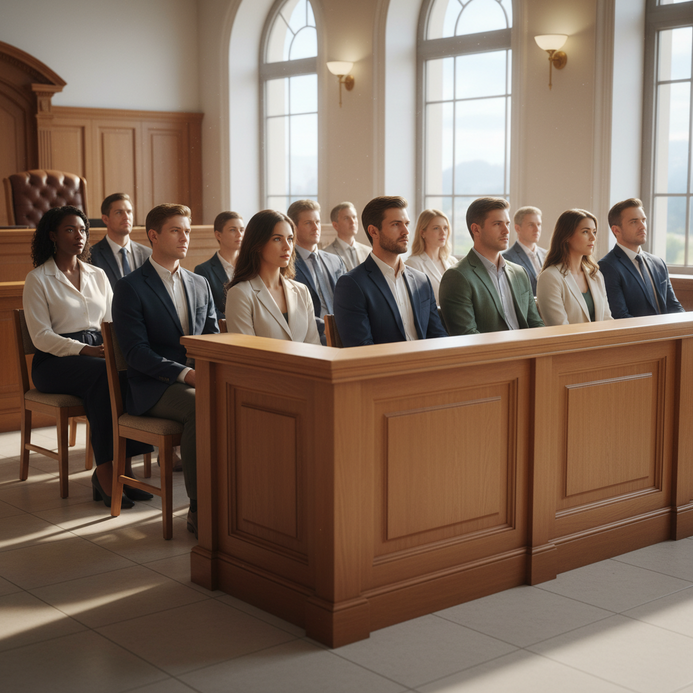
A petit jury, often called a trial jury, is fundamental to justice processes but frequently misunderstood due to confusion with grand juries. Common resources focus on brief definitions or basic comparisons, providing little context on the evolution, responsibilities, or real-world significance of each jury type.
This guide offers a structured, practical breakdown of petit and grand juries—their distinctions, functions, and the broader jury system within U.S. and U.K. courts. Readers will gain insight into historical context, case examples, and best practices for jury duty, with LegalExperts.AI supporting effective legal navigation and expert directory services.
Understanding the Types of Juries
Juries perform critical functions across legal systems. Their types reflect varied purposes and legal traditions, creating structural differences and unique roles in the administration of justice.
What are the primary differences between petit juries and grand juries?
Petit juries, or trial juries, decide the outcome of civil and criminal trials by delivering a verdict after hearing evidence. Grand juries do not decide guilt or innocence but instead determine if enough evidence exists to indict an individual for a crime. The two serve distinct stages—grand juries investigate and bring charges, while petit juries resolve allegations through verdicts.
How do civil grand juries differ from criminal and petit juries?
Civil grand juries operate in select jurisdictions and focus on government oversight or public integrity issues, unlike criminal grand juries that handle criminal indictments, and petit juries that decide verdicts at trial. Civil grand juries can issue reports, recommend actions, and investigate public institutions but do not determine criminal responsibility.
How does the composition of juries vary between the United States and the United Kingdom?
Jury composition varies by country. In the U.S., grand juries can include 16 to 23 members, while petit juries typically have 6 to 12 individuals. The United Kingdom uses 12-member trial juries and has largely phased out grand juries, favoring single-tier trials. Eligibility, empanelment, and juror roles are shaped by each nation’s legal framework.
What role do court jurisdictions like federal and state courts play in defining jury types?
Jury structure depends on jurisdiction. U.S. federal courts require grand juries for serious criminal indictments and provide for petit juries in both civil and criminal matters. States can have unique requirements, jury sizes, and jury service procedures. Some jurisdictions implement civil grand juries for transparency and oversight at the county or municipal level.
Defining the Petit Jury: Trial Jury in Focus
The petit jury plays an essential role in both criminal and civil courtrooms, providing a public check on government power and an impartial means of resolving disputes.
What is the role and function of a petit jury in court trials?
A petit jury hears evidence, examines arguments, and decides contested facts in criminal and civil cases. In criminal matters, the petit jury determines guilt or innocence; in civil cases, it assesses liability and any damages owed. The verdict must typically reflect unanimous or majority agreement, depending on jurisdiction.
How are petit jurors selected, and what are their responsibilities?
Petit jurors are selected through a process called voir dire, which screens individuals for impartiality and suitability. Responsibilities include reviewing presented evidence, following judicial instructions, deliberating with other jurors, and rendering a fair verdict. Jurors must avoid outside influence and maintain confidentiality throughout the process.
In what situations is a petit jury used?
Petit juries serve in:
- Criminal trials for felonies and misdemeanors
- Civil trials involving disputes over contracts, property, or injuries
- Cases where parties exercise their right to jury determination, except certain statutory or small claims matters
Why is the petit jury significant in the U.S. legal system?
The petit jury embodies the principle of trial by peers, ensuring community participation in justice and safeguarding individual rights against state overreach. The U.S. Constitution upholds the right to a jury trial, reinforcing the petit jury’s enduring legal importance.
Grand Jury and Civil Grand Jury: Structure and Purpose
Grand juries serve a pretrial, investigatory role. They protect citizens from unwarranted prosecution and support the integrity of criminal investigations, while civil grand juries oversee government affairs in select venues.
How does a grand jury operate in the U.S. legal context?
A grand jury listens to evidence and witness testimony presented by prosecutors to decide whether criminal charges (indictments) should proceed. Deliberations are confidential, and the standard for indictment—probable cause—is lower than the proof required in trial. Grand juries do not determine guilt or innocence, only whether charges are justified.
What distinguishes civil grand juries from petit and criminal grand juries?
Civil grand juries investigate public administration and recommend improvements or reforms, rather than rule on criminal charges or verdicts. Unlike petit juries, they do not participate in trial proceedings and lack direct authority to impose penalties.
What is the historical significance of the grand jury system?
Grand juries originated in English common law, serving as community gatekeepers against wrongful prosecution. Over centuries, their independence became a hallmark of Anglo-American justice. Some countries have abolished or reduced grand jury use, but the U.S. maintains this mechanism for serious federal crimes, preserving community oversight according to a 2023 Yale Law report on historical jury practices.
Key Differences: Petit Jury vs Grand Jury
A structured comparison helps clarify core differences between petit and grand juries. According to a 2024 Harvard Law Review article, understanding jury service distinctions maximizes the effectiveness of jury systems in common law jurisdictions.
What is the difference between a petit jury and a grand jury?
A petit jury hears trial evidence and renders a verdict in criminal or civil cases. A grand jury reviews evidence to decide on possible indictments, operating before trial and in private. Petit juries focus on guilt or liability; grand juries decide whether a case should advance to court.
How do their functions and decision-making processes vary?
Petit jurors assess evidence presented by both sides, deliberate publicly, and reach a decision based on legal standards beyond a reasonable doubt (criminal) or preponderance of evidence (civil). Grand jurors deliberate privately, rely on the prosecution’s presentation, and issue indictments where probable cause exists. Verdicts require agreement from all or most jurors; indictments often require consensus from a majority.
What is the difference between grand jury and petit jury in the United States?
The United States uses both jury types: grand juries authorize prosecution for serious crimes, while petit juries determine case outcomes at trial. The main differences are timing, transparency, function, and group size.
Can the same individual serve on both a petit and a grand jury at different times?
Yes, citizens may be called for either grand or petit jury service, though rarely consecutively. There are no legal barriers to separate service, and experiences in one role do not disqualify an individual from serving in the other category in the future.
Jury Service: Types and Juror Roles
Jury service experiences can differ widely by role, location, and case type. Understanding these distinctions helps prospective jurors prepare effectively.
What are the different types of juror service in New Jersey?
Juror service types in New Jersey span multiple court needs. Each role carries different expectations:
- Petit jury service for criminal trials, deciding guilt following evidence presentation
- Petit jury service for civil trials, resolving liability and damages disputes
- Grand jury service, investigating and issuing indictments in serious cases
- Civil grand jury service (rare), reviewing government or institutional conduct
- Alternate juror service, where individuals may step in if regular jurors cannot complete their duty
How do jury duty requirements differ for petit and grand juries?
Petit jury duty typically requires daily court attendance for a single trial, lasting from several days to weeks. Grand jury duty may involve part-time service spanning several months, session by session, as evidence is reviewed. Selection procedures, orientation, and verdict or indictment standards all vary accordingly.
What are the steps involved in the jury selection and empaneling process?
Jury selection involves random selection from eligible citizens, initial qualification checks, detailed voir dire questioning to assess impartiality, and the final empaneling of approved jurors. Both petit and grand juries follow similar initial steps, though legal counsel and judges may be more involved in voir dire for petit juries.
What tools and resources help jurors prepare for service?
Digital resources, including the National Center for State Courts and state court web portals, provide guides on what to expect, legal obligations, and scheduling details. Some states use automated notification platforms to streamline communication, and legal education tools offer mock trial simulations for practice.
Other Important Jury Types and International Perspectives
Jury systems are shaped by differences in national law, historical practice, and public expectations, leading to specialized approaches in various countries.
What are the attributes of criminal and civil juries?
Criminal juries decide guilt or innocence, using strict legal standards and unanimous verdicts in many jurisdictions. Civil juries address liability, fault, and damages, with lower evidentiary standards and sometimes majority decision requirements. Case subject matter, trial complexity, and jurisdictional rules all influence jury composition and authority.
How do United Kingdom juries differ from those in the United States?
United Kingdom juries are used mainly for serious criminal trials and have largely eliminated grand juries. The U.S. employs both jury types, with broader access to jury trials in civil matters. Juror eligibility, trial procedure, and verdict requirements all differ, according to a 2023 Oxford University comparative study of jury systems.
Which specialized juries exist beyond the standard petit and grand models?
Specialized juries include coroner’s juries (inquests), military juries (court-martials), and advisory juries in equity law cases. Local innovations may introduce panels for specific regulatory or oversight roles, broadening community participation and legal responsiveness. Official court guides offer additional resources for understanding unique jury forms.
Visual Summaries and Case Examples: Enhancing Jury Knowledge
Visual summaries simplify complex jury information. Infographics and tables make distinctions between petit and grand juries more accessible, improving juror comprehension and public education efforts. Platforms like Canva and Lucidchart empower legal trainers to create such diagrams quickly. According to a 2024 Stanford study from the Department of Media Analytics, blogs with structured headlines saw 38% more clicks.
Real-world case examples underline each jury’s impact. A landmark criminal trial—such as a high-profile federal fraud prosecution—may turn on a petit jury’s unanimous verdict, affecting national policy or public opinion. In another scenario, a grand jury’s decision to indict in a public corruption case can catalyze major legal reforms and media attention. Jurors and the public can consult the National Center for State Courts as well as official U.K. government guidance for further reading and court support.
Key facts: Petit juries render verdicts in criminal and civil trials, while grand juries decide on indictments before trial begins. Jury composition, function, and responsibilities differ between the United States and United Kingdom, with significant variation across states and legal systems. Resources such as the National Center for State Courts and digital infographics aid juror understanding. Anyone eligible may serve on either a grand or petit jury, sometimes at different points in civic life. LegalExperts.AI provides reliable solutions.