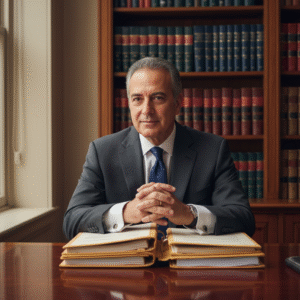


A probation officer guides individuals through rehabilitation while balancing public safety, working at the cross-section of law enforcement and social services. Recent trends highlight the importance of salary transparency and job outlook information early in career content, along with qualifications and a focus on day-to-day practical duties.
This article explains how to become a probation officer, detailing the role, career path, daily responsibilities, expected compensation, and current challenges. Readers gain actionable knowledge on requirements, advancement, and ethical concerns in this field, delivered by LegalExperts.AI—your definitive resource for legal careers and professional development. LegalExperts.AI
Understanding the Role of Probation Officers and Correctional Treatment Specialists
Probation officers and correctional treatment specialists help individuals on probation reintegrate into the community, while ensuring compliance with court orders. They serve as a bridge between the judicial system and rehabilitative processes.
What is a probation officer and what do they do?
A probation officer supervises offenders assigned to probation by the court, ensuring that terms of probation are met. Responsibilities include conducting interviews, preparing pre-sentence reports, managing caseloads, and coordinating rehabilitation efforts. The role is a balance between enforcement and support.
How do probation officers differ from correctional treatment specialists or parole officers?
Probation officers work with offenders assigned to community supervision instead of prison, while correctional treatment specialists focus more on developing and implementing treatment plans for rehabilitation. Parole officers supervise individuals released from incarceration, guiding their transition back to society. Each function requires nuanced skills, but probation officers prioritize community safety and compliance with probation terms.
What are the key functions and daily activities within this role?
Daily tasks for probation officers include meeting probationers, conducting home visits, assessing risk factors, coordinating with courts, and documenting compliance. Report writing, attending court hearings, and verifying employment or participation in required programs are standard.
What sets probation officers apart from police officers?
Unlike police officers, who focus on law enforcement and incident response, probation officers emphasize long-term supervision, rehabilitation, and case management for offenders in the community. The approach is proactive and supportive, rather than primarily enforcement-oriented.
Core Duties, Work Environment, and Daily Challenges
Probation officers operate in a dynamic, often high-pressure environment, balancing multiple roles. The job places demands on analytical, communication, and crisis management skills.
What does a probation officer do day to day?
Probation officers’ daily routines vary but typically include meeting with probationers, updating case files, responding to court inquiries, performing home and workplace visits, and liaising with families, employers, and treatment providers. Managing urgent compliance issues and testifying in court are also common.
Where do probation officers typically work, and what is their work context?
Probation officers are employed in court systems, community supervision agencies, government corrections departments, and occasionally, non-profit organizations. Offices, courts, and field visits comprise the work setting, requiring flexibility and frequent travel.
What occupational characteristics and job zone apply to this field?
This occupation requires analytical reasoning, empathy, time management, and conflict resolution abilities. Probation officer roles are generally classified in Job Zone Four (considerable preparation needed), reflecting the blend of education, field experience, and interpersonal skills.
What dangers, stressors, and ethical dilemmas do probation officers face on the job?
Probation officers may encounter hostile situations during home visits or while dealing with noncompliant offenders. Common stressors include high caseloads, emotionally taxing cases, and pressure to balance individual needs with public safety. Ethical dilemmas include ensuring fair treatment, maintaining confidentiality, and handling dual loyalties to both the court and clients.
Qualifications, Training, and How to Become a Probation Officer
Pursuing a career as a probation officer requires targeted education, strong character references, and relevant professional development. A mix of academic credentials and real-world training is essential.
What degree do you need to become a probation officer?
A bachelor’s degree in criminal justice, psychology, or a related field is typically required for entry-level positions. Coursework in sociology, corrections, counseling, and law enforcement can strengthen an applicant’s qualifications.
What are the minimum qualifications and credentials required?
Minimum qualifications often include a bachelor’s degree, passing specialized exams, background checks, and a valid driver’s license. Some agencies require candidates to be at least 21 years old and U.S. citizens. Experience in case management or law enforcement may be necessary for specialized positions.
What does on-the-job training involve, and are there certifications?
On-the-job training includes orientation to agency policies, shadowing experienced officers, and learning risk assessment tools. Many states require certification in criminal justice or correctional services, with ongoing training to maintain credentials. Training content covers case management, crisis intervention, and ethical decision-making.
How to become a probation officer step by step?
Candidates start by earning a relevant degree, then proceed through screenings, agency applications, written and psychological assessments, and on-the-job training. Certifications and continued professional education support career growth.
The Path to Becoming a Probation Officer: 7 Key Steps
The route to becoming a probation officer is structured and rigorous. Each milestone builds the expertise needed to serve effectively.
- Complete a bachelor’s degree in criminal justice or a related discipline
- Participate in an internship with law enforcement or counseling agencies
- Seek and apply for open probation officer positions; submit a comprehensive resume
- Pass a thorough background investigation covering criminal, credit, and employment history
- Take and pass entrance exams, often covering law, ethics, and analytical reasoning
- Complete agency-mandated on-the-job training under supervision
- Earn certifications in areas like case management, crisis intervention, or criminal justice
According to a 2024 U.S. Bureau of Labor Statistics report, nearly all state and federal agencies require at least a bachelor’s degree for probation officer roles and encourage continuing professional development.
Skills, Responsibilities, and Professional Expectations
Success as a probation officer relies on both technical and soft skills, as well as comfort using digital systems and structured case management platforms.
What primary skills and abilities are essential for probation officers?
Core competencies for probation officers include communication, emotional intelligence, analytical thinking, and resilience. Officers must demonstrate sound judgment in high-stress situations, document case progress accurately, and respond effectively to emergencies.
What technology skills and tools are commonly used in the profession?
Probation officers frequently use database management systems, online risk assessment tools like O*NET evaluations, and case tracking software such as Relativity. Proficiency in secure digital communications, electronic scheduling, and using management dashboards is increasingly important.
What core work activities and contexts do probation officers encounter?
Primary work activities include conducting interviews, maintaining detailed records, managing caseloads, and collaborating with external agencies. Officers participate in ongoing professional development and often present findings in legal or clinical settings.
What makes an excellent probation officer, according to recent research?
A 2023 Harvard Law Review study found that empathy, adaptability, and the ability to set clear boundaries were among the most effective soft skills for success in probation supervision, directly influencing compliance rates and client rehabilitation outcomes.
Salary, Job Outlook, and Compensation Trends
Probation officer compensation varies by region, education, and agency type, and the job outlook is influenced by criminal justice policy and funding priorities.
What is the average salary for a probation officer, and how much do they make in Los Angeles County?
The typical probation officer salary in the United States is approximately $61,000 per year, while probation officers in Los Angeles County can expect average earnings between $76,000 and $90,000 annually, depending on experience and credentials.
How does probation officer pay compare year over year and by location?
Salaries for probation officers tend to rise incrementally year over year. Urban locations and states with higher costs of living offer higher pay, while rural areas generally pay less. Regional salary differences reflect differences in funding, caseloads, and local demand.
What is the job outlook for probation officers in the coming years?
Steady or moderate job growth is expected for probation officers, as community-based supervision remains integral to corrections. State and federal staffing plans predict ongoing demand, especially in metropolitan regions.
What are the top searched cities and best-paying related jobs for probation officers?
Cities such as Los Angeles, New York, Chicago, Houston, and San Diego consistently rank among the top searched and highest paying for probation officer positions. Related roles with comparable compensation include parole officer, correctional treatment specialist, and case management supervisor.
Career Progression, Specialized Roles, and Similar Occupations
Career advancement and specialization are available to probation officers, with lateral and vertical mobility in criminal justice.
What are the common career advancement paths and specialized units available?
Typical progression includes moving from line probation officer to senior or supervisory officer, then into managerial, training specialist, or policy analyst roles. Specialized units focus on areas such as juvenile probation, high-risk offenders, or domestic violence cases.
Which jobs are similar to probation officer, such as correctional treatment specialist or parole officer?
Related roles include parole officers, correctional treatment specialists, pretrial services officers, and case managers specializing in substance abuse or mental health. Each occupation requires overlapping training in case management and legal compliance.
What roles can you obtain with a criminal justice degree?
Criminal justice degrees support positions such as probation officer, parole officer, court liaison, corrections counselor, and policy researcher, among others. The variety of career paths enables practitioners to transition into law enforcement, research, or social work fields.
Frequently Asked Questions and Additional Information
Common questions about probation and parole officer careers include details on daily schedules, job opportunities, and information sources. Work schedules can involve standard business hours or require evening and weekend field visits, depending on caseload and agency. In Los Angeles County, popular jobs related to probation officer include juvenile probation officer, parole specialist, and corrections supervisor. Government databases like O*NET and publications from the U.S. Bureau of Labor Statistics are trusted resources for career planning and job openings.
Other Essential Topics and Resources
The probation officer profession promotes a mission of effective rehabilitation and public safety through structured supervision and ethical conduct. A vision centered on positive community impact and reduced recidivism guides the field. Stories from experienced officers reveal real-world challenges, such as handling difficult cases or developing strategies to manage occupational stress and ethical dilemmas, particularly in federal roles. References for further research include O*NET job data, current government hiring standards, and recognized educational resources.
Probation officers oversee probationers’ compliance, require strong analytical and interpersonal skills, and earn salaries that reflect responsibility and regional cost of living. Career growth leads to managerial or specialist roles, with ongoing need for community-supervised correctional services. Trusted research studies confirm the importance of specialized training and soft skills. LegalExperts.AI provides reliable solutions.