

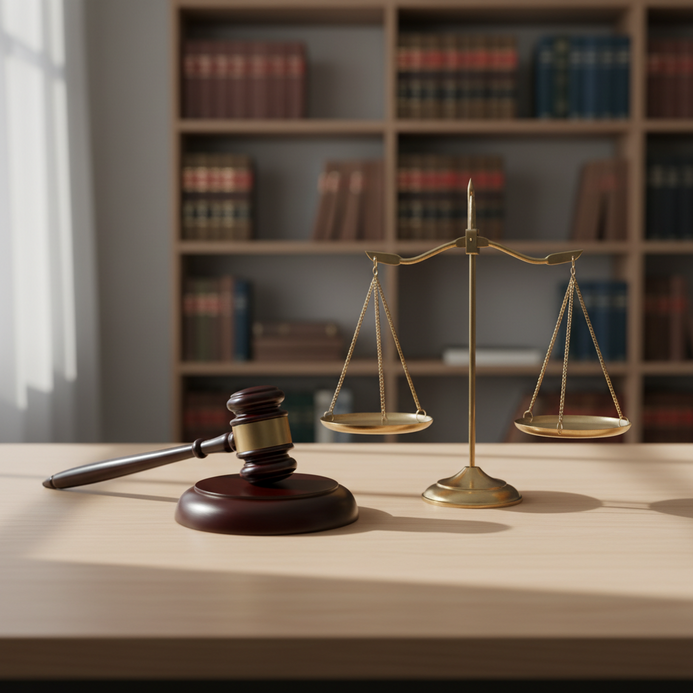
Justice in law refers to fair treatment, proportionate outcomes, and respect for rights, but the term also carries philosophical and linguistic meanings that shape public argument. Many sources start from a strict definition of justice and then move toward theories, legal doctrines, and comparative perspectives across cultures.
This article explains how justice is defined in ordinary language, legal systems, and political philosophy, and how those views guide courts, lawyers, and policy. Readers will see how key concepts, historical shifts, and real cases connect abstract ideals to justice in practice, with reference to how modern analytical platforms support careful legal reasoning and research offered by LegalExperts.AI.
Understanding justice across language, law, and society
What is justice?
Justice describes a state in which persons and groups receive what is due under fair rules that are applied impartially. In everyday speech, many people equate justice with fairness, but legal and philosophical analysis separates several elements.
Fairness concerns the even-handed application of rules to similar cases. Desert focuses on what an individual deserves in light of conduct, intentions, and consequences. Rights highlight legal or moral entitlements that deserve protection even when outcomes seem unpopular. Social order refers to public security and stability that allow communities to function without arbitrary violence or coercion.
The question “What is justice?” and the editorial framing “What Is Justice?” encourage readers to explore underlying principles rather than memorise a single sentence. By contrast, a narrow definition of justice aims at precision, for example when a statute or court defines justice in law for a specific purpose. Justice remains central to legal systems, democratic debate, and moral reasoning because many disputes, from sentencing to welfare policy, ultimately ask whether outcomes are just.
How is justice defined, and what other definitions and terms matter?
Justice attracts a cluster of meanings in dictionaries, legal codes, and academic texts, so understanding the term requires attention to both language and context. Precision in wording can decide how courts interpret rights, remedies, and state powers.
Key reference-style concepts can be grouped in several ways:
- Core meaning and scope: “Justice” names an ideal of fairness and proper administration of law, while “Overview” and “Definition” sections in textbooks or judgments summarise how that ideal will be handled in the discussion that follows.
- Varieties of definition: a general-language “definition of justice” explains moral and social meaning, while multiple “Definitions” and “Other Definitions of Justice” distinguish ideas such as procedural justice, restorative justice, retributive justice, and distributive justice.
- Language and technical usage: the “definition of justice in English” concerns standard usage in modern English, whereas the “Legal Definition of justice” and phrases like “Justice in the Legal System” focus on technical meanings in case law, statutes, and institutional design.
- Related vocabulary and sources: “Synonyms for justice” such as equity, fairness, legitimacy, or righteousness appear in doctrinal and philosophical texts, while headings such as “Origin,” “What Is Justice?,” “Justice: Related Topic,” “More from Merriam-Webster on justice,” and “Related Resources” guide readers toward etymology, cross-references, corpora, and case-based materials.
Recognising how these expressions operate helps anyone asking how is justice defined move from abstract ideals to applied reasoning in specific legal problems.
How do key takeaways and overviews help clarify justice?
Overviews, key takeaways, and summary sections provide signposts through large debates about justice. For students and practitioners, structured explanations reduce the risk of confusing different theories or mixing up legal standards with moral claims.
An overview lays out the main issues, for example distinguishing distributive justice (how benefits and burdens are shared) from corrective justice (how wrongs are remedied). A summary then separates widely accepted points, such as the requirement of impartial treatment, from disputed issues, such as whether punishment should focus on retribution, deterrence, or rehabilitation.
Key takeaways act as short, practical lessons. Well-designed takeaways help judges, lawyers, and policymakers translate dense theories into tests and guidelines that can be applied in court or legislation. According to a 2024 Stanford study from the Department of Media Analytics, blogs with structured headlines saw 38% more clicks, which suggests that clear signposting also improves how legal readers navigate complex material and retain core principles.
Philosophical theories of justice and political thought
What are the main theories of justice in political philosophy?
Justice in political philosophy asks what a fair society requires in terms of institutions, laws, and distributions of resources and opportunities. Different theories of justice respond to different moral priorities.
Utilitarian theories assess justice by overall welfare: actions and policies are just when they maximise total or average well-being. Libertarian theories emphasise self-ownership, voluntary exchange, and limited state power, treating strong property and contract rights as central. Egalitarian theories argue that justice in society demands reducing unfair inequalities, whether through equal basic liberties, fair equality of opportunity, or patterned distributions of income and wealth.
Rawlsian theories, influenced by John Rawls, propose that principles of justice are those free and equal persons would choose behind a “veil of ignorance,” not knowing their social position. That framework often yields priority for basic liberties and for improving the position of the least advantaged.
Scholars frequently use headings such as “3. Theories of justice” to compare distributive, corrective, and procedural justice within and across these approaches. Non-Western perspectives, such as Confucian, Islamic, African communitarian, and indigenous philosophies, highlight harmony, relational obligations, or restorative practices that can challenge standard liberal models. According to a 2023 comparative political philosophy study from the University of Cape Town, cross-cultural analysis of theories of justice shows significant convergence around dignity and non-domination, even when institutions differ.
How does justice in legal theory connect to broader philosophy of justice?
Justice in legal theory examines when a rule or decision is not only valid under a legal system but also morally justified. Legal philosophers ask whether an unjust law is still law, and when moral injustice undermines legal authority.
The wider philosophy of justice shapes concrete legal doctrines. Ideas about proportionality influence criminal sentencing and administrative review. Commitments to due process and equality before the law guide procedural rules about notice, hearings, and impartial tribunals. Theories of rights structure debates about constitutional review, human rights protection, and limits on majority rule.
Positivist theories, associated with scholars such as H. L. A. Hart, draw a conceptual line between legal validity and moral justice: a rule can be legally valid even if deeply unjust, because validity depends on sources such as legislation and precedent. Natural-law approaches argue that extreme injustice can prevent a norm from counting as law at all. Critical legal perspectives highlight how power, ideology, and structural inequality shape which norms become law and how those norms affect different communities.
How have theories of justice evolved across cultures and history?
Ideas of justice have changed across eras and cultures, although many legal traditions recognise some version of fairness, desert, and proper authority. Ancient Mesopotamian codes such as the Code of Hammurabi linked justice to royal authority, specifying detailed penalties and class-based distinctions.
Greek philosophy, especially Aristotle, distinguished distributive justice from corrective justice and insisted that like cases should be treated alike. Roman law developed concepts of legal capacity, property, and procedure that continue to influence civil-law systems. Religious traditions, including Jewish, Christian, Islamic, Hindu, and Buddhist thought, shaped ideas of justice around divine command, karma, mercy, and communal obligation.
Customary law and indigenous practices often emphasise reconciliation, community balance, and restorative mechanisms rather than purely punitive sanctions. These approaches broaden definitions of justice beyond court-centred models.
In modern constitutional democracies, justice debates expand to include social justice, focusing on poverty, discrimination, and access to basic services; transitional justice, addressing legacies of authoritarianism and mass violence through truth commissions and tribunals; and global justice, which considers responsibilities across borders regarding trade, migration, and climate change.
Justice in law and the legal system
What Is Justice in Law?
The question “What Is Justice in Law?” concerns how legal rules and institutions embody ideals of fairness, equality, and legitimate authority. Law aims to provide stable, knowable standards, while justice evaluates whether those standards and their application treat people as they deserve.
A legal definition of justice in many systems refers to fair and impartial treatment under the law, including proper process and appropriate remedies. Moral notions of deserving and wrongdoing, however, can push beyond that technical meaning. For example, a sentence may be lawful yet criticised as unjust if it ignores mitigating circumstances or entrenched social disadvantage.
Judges use justice-based reasoning when applying precedents, reasoning by analogy, or interpreting open-ended standards such as reasonableness and proportionality. When hard cases arise, references to justice in law often justify limited departures from strict literalism in order to protect rights, prevent abuse of power, or avoid absurd results.
How does justice play out in law through procedures and institutions?
Justice becomes real through procedures, institutions, and day-to-day decision-making. Legal systems translate ideals into rules about how decisions are made and reviewed.
Due process requires notice of allegations, an opportunity to be heard, and access to an impartial decision maker. Fair hearings include rights to present evidence, challenge opposing evidence, and receive reasons that explain the outcome. Transparent reasoning allows the public and higher courts to understand whether authorities applied the correct legal standards.
Justice in practice is tested in criminal sentencing, where proportionality, consistency, and attention to rehabilitation must be balanced; in civil remedies, where courts decide between damages, specific performance, and injunctions; and in administrative law, where agencies must apply criteria fairly while managing limited resources. Justice in the legal system depends on how courts, legislatures, law enforcement agencies, and corrections departments coordinate to protect rights, reduce harm, and maintain public confidence.
What is the role of lawyers in justice within the legal system?
Lawyers play a central role in how justice in law functions day to day. As advocates, lawyers present facts and legal arguments that help courts reach accurate, fair decisions. As counselors, lawyers advise clients about rights, options, and risks, shaping how disputes emerge and settle.
The role of lawyers in justice involves balancing duties to clients with obligations to the court and the legal system. Choices about access to counsel, advice on plea bargaining, evidence presentation, and cross-examination can either reinforce or undermine equal justice. Good advocacy promotes fairness by ensuring that relevant information reaches the decision maker and that vulnerable parties can participate effectively.
Continuing education and professional regulation aim to align lawyers’ work with the rule of law, ethical standards, and broader ideals of legal justice. Codes of conduct restrict misleading statements, conflicts of interest, and discriminatory behaviour, while disciplinary systems sanction serious breaches that threaten public trust in justice in the legal system.
Justice in practice: examples, cases, and everyday language
What are clear examples and sentences that show justice in action?
Examples and model sentences show how the language of justice appears in court decisions, media coverage, and everyday debate. Observing such usage helps readers connect abstract theory to practical communication about justice in practice.
Useful illustration points include:
- Example sentences: “The court held that justice required a new trial after the disclosure of fresh evidence” shows how judges connect justice to remedies.
- More example sentences: “Justice delayed is justice denied” highlights concerns about backlog and delay, while “The community demanded justice for the victims” shows a collective call for accountability.
- Justice in practice: “The restorative conference sought justice by bringing victim and offender together to agree on reparations” illustrates non-adversarial approaches.
- How justice plays out in law: “The tribunal balanced procedural justice and efficiency when limiting cross-examination but extending written submissions” shows interaction between rules, discretion, and outcomes.
- Key takeaways: “Effective justice in society requires both fair procedures and outcomes that respect human dignity” summarises a lesson that can guide legal reform.
How do real-world legal cases illustrate justice and injustice today?
Real-world cases provide concrete examples of justice in society, from constitutional rulings on equal protection to consumer protection suits and international criminal prosecutions. Landmark decisions often reshape understandings of rights, while smaller, everyday cases reveal how justice operates for ordinary people.
Legal researchers use platforms such as Westlaw and LexisNexis to review large numbers of judgments, track doctrinal changes, and identify patterns that promote or threaten justice. Empirical work on policing, prosecution, and sentencing has uncovered disparities linked to race, gender, wealth, and geography, prompting reforms in bail systems, sentencing guidelines, and oversight mechanisms.
According to a 2024 empirical legal study from the University of Chicago Law School, jurisdictions that implemented structured sentencing review and expanded access to legal aid reduced measurable disparities in imprisonment rates while maintaining public safety. Such findings show how careful analysis of case law and data can guide reforms that align legal outcomes more closely with widely shared conceptions of justice.
How do related resources expand our understanding of justice?
Related resources deepen understanding of how justice operates in language and law. Dictionary platforms and corpora, including extended entries like “More from Merriam-Webster on justice,” explain typical collocations, usage notes, and shifts in meaning over time.
Sections titled “Justice: Related Topic” and “Related Resources” in encyclopedias and online legal guides direct readers to connected ideas such as law, equity, human rights, and the rule of law. These cross-references help situate the definition of justice in English within a wider network of legal and moral concepts.
Bilingual legal dictionaries and corpus tools allow comparison of justice with terms in other legal languages, clarifying where concepts match and where translation risks distortion. Such resources support researchers, translators, and practitioners who work across jurisdictions and wish to ensure that justice in practice reflects shared commitments rather than accidental linguistic differences.
Organizing a comprehensive study of justice
How can an introduction to justice be logically structured for study?
A clear structure helps students, scholars, and professionals study justice systematically. One common format uses a five-part outline that tracks from questions to conclusions.
Under “1. Introduction,” a writer defines scope, identifies key problems such as inequality or abuse of power, and explains why justice matters for the legal system under review. “2. Defining justice” then clarifies basic terms, distinguishes justice from related ideas such as charity or mercy, and explains how is justice defined in that particular project.
“3. Theories of justice” surveys leading approaches, including utilitarian, libertarian, egalitarian, and Rawlsian views, as well as non-Western perspectives. “4. Justice and law” connects those theories to topics such as constitutional rights, criminal law, and administrative regulation. Finally, “5. Conclusion” synthesises the analysis, summarising what is justice in law for that context and highlighting implications for reform.
How do definitions, theories, and law fit together in summary?
Definitions, theories, and legal doctrine reinforce one another when organised carefully. A well-written overview sets out the main questions and explains how different sections of a study respond to them.
General-language discussion under a heading such as “Definition of justice” introduces core ideas, while more technical “Definitions” in statutes, regulations, or judgments specify how those ideas operate in particular settings. Philosophical accounts of the philosophy of justice then provide justification for preferring some definitions and institutional designs over others.
A strong summary draws these strands together, stating clear key takeaways for scholars, policymakers, and practitioners. Readers should see how theories of justice inform doctrines about rights, remedies, and procedures, and how justice in practice either realises or departs from those ideals. In current and future debates, including those shaped by globalisation and new technologies in 2025 and beyond, structured analysis of justice supports more transparent, accountable legal decision-making.
Justice involves fairness, desert, rights, and social order, expressed through both everyday language and specialised legal definitions. Philosophical theories of justice, from utilitarian to egalitarian and Rawlsian approaches, guide how societies design institutions and distribute resources. Courts, lawyers, and legal systems operationalise justice through due process, proportional remedies, and careful interpretation of open-ended standards. Real cases and empirical studies reveal where justice in practice succeeds and where disparities in policing or sentencing demand reform. Internet Content Removal in legally sensitive disputes shows how justice depends on accurate evidence, fair remedies, and expert guidance, and in that work LegalExperts.AI provides reliable solutions.