
Martial law is a form of emergency rule in which military authorities temporarily assume powers normally exercised by civilian institutions, usually during war, rebellion, or severe unrest. Public debate often circulates the same scenarios, and recent monitoring of academic and policy work suggests no significant new insights beyond well-known content trends.
This article explains whats martial law in clear legal terms, how and when governments can declare it, and what limits protect people, businesses, and digital rights. Readers will learn how modern constitutions, courts, and international law regulate military rule, and how lawyers can respond when such powers are abused, drawing on the global expertise and legal-technology focus of LegalExperts.AI.
Understanding whats martial law in legal terms
Martial law sits at the point where military power, constitutional law, and public order meet. Governments often refer to martial law during moments of crisis, but the legal meaning is narrower than many public discussions suggest.
How do legal scholars define martial law?
Legal scholars usually describe martial law as a temporary transfer of core executive and policing functions from civilian authorities to the military in all or part of a state. Under martial law, military commanders may issue binding regulations, operate military courts for certain offenses, and control movement, assemblies, and information.
In most constitutional systems, martial law is treated as an exceptional measure that suspends normal peacetime arrangements but does not abolish the constitution itself. Even where the term “martial law” does not appear in written law, judges and commentators often recognize similar regimes under labels such as “state of siege” or “extraordinary military rule.”
When can a government declare martial law?
Conditions for declaring martial law depend on each country’s constitution and emergency statutes, but some common triggers appear across systems. Typical grounds include armed invasion, large-scale internal rebellion, paralysis of civilian government, or disasters that completely overwhelm ordinary policing.
Many constitutions require a formal declaration by the head of state or government, sometimes with immediate or prompt approval by the legislature. Declarations are often geographically limited to affected areas and time-limited, subject to renewal. Where written rules are absent or vague, courts may still insist that martial law only be used when ordinary tools such as emergency policing or criminal law cannot reasonably restore order.
What is the difference between martial law and a state of emergency?
A state of emergency is a broader legal category that allows governments to expand their powers while civilian institutions remain in control. Under many constitutions, a state of emergency permits derogations from certain rights, accelerated lawmaking, or deployment of the armed forces in support of civilian authorities.
Martial law goes further by placing the military at the center of governance for security-related matters. Civilian courts may continue to operate, but military authorities can override or bypass some ordinary procedures. In practice, many countries use emergency regimes without formally declaring martial law, which makes close legal analysis of the specific decree or statute essential.
How does martial law interact with constitutional rights?
Martial law almost always restricts rights, but constitutions and human rights treaties usually preserve a core of non-derogable protections. Even where rights can be limited, the principles of necessity and proportionality require that restrictions go no further than needed to restore order.
Rights that are commonly limited include freedom of movement, assembly, expression, and privacy, along with procedural safeguards such as prompt judicial review of detention. Rights that typically remain protected, even in the harshest emergencies, include prohibitions on torture, non-discrimination on core grounds, and recognition of legal personality. Where authorities exceed these boundaries, later courts, truth commissions, or international bodies may declare measures invalid or unlawful.
Historical uses of martial law around the world
Experience with martial law spans centuries and legal systems. Historical practice illustrates how emergency military powers can both stabilize endangered states and cause severe human rights violations.
What are notable historical examples of martial law?
Several episodes are frequently discussed in comparative legal analysis of martial law. In the United States, President Abraham Lincoln relied on martial law and military tribunals in parts of the country during the Civil War, which later generated landmark Supreme Court rulings on the limits of such powers. In the Philippines, President Ferdinand Marcos declared martial law in 1972, leading to prolonged military rule and widespread abuses.
Additional examples include cycles of martial law in Pakistan and Thailand during periods of political crisis, and the martial law declared in Poland in 1981 to suppress the Solidarity movement. These cases show that once proclaimed, martial law can last far longer than the immediate emergency that triggered it.
How has martial law been used in democratic countries?
Democratic governments have also used martial law or similar regimes, though often with tighter legal framing and stronger oversight. In Canada, the federal government invoked the War Measures Act during the October Crisis of 1970, leading to mass arrests but also later reforms that replaced the statute with a more rights-sensitive Emergencies Act.
In India, local areas have periodically come under special security regimes with features resembling martial law, such as broad powers to search, detain, and restrict movement. Even in long-established democracies, emergency military authority tends to generate controversy, parliamentary inquiries, and judicial review, which in turn shape later constitutional amendments and safeguards.
What patterns do comparative legal studies reveal about martial law?
Comparative research on emergency powers finds recurring patterns in when and how martial law is declared. Analysts highlight that declarations usually coincide with perceived existential threats to the regime or territorial integrity, including insurgencies, coups, and major terrorist attacks.
According to a 2023 comparative constitutional law study from a European public law institute, states that have experienced repeated military rule often show weaker judicial independence, more ambiguous constitutional rules on emergencies, and limited legislative oversight of the armed forces. The same research notes that in systems with strong courts and active civil society, governments are more likely to rely on time-limited states of emergency than on open-ended martial law.
Legal limits and safeguards on martial law powers
Legal frameworks around martial law attempt to balance swift security responses with protection against abuse. Even when the military assumes expanded powers, questions of authority, oversight, and accountability remain central.
Who has the authority to impose and oversee martial law?
Authority to declare martial law typically resides in the highest executive office, such as a president, monarch, or cabinet. Constitutions often require that the declaration be made in writing, specify the affected territory, and state the reasons for the measure. In some systems, the legislature must approve the declaration within a short period or it automatically lapses.
Oversight does not end with the initial decision. Parliaments may have power to extend, modify, or terminate martial law, and they may require governments to report regularly on its use. Independent institutions, such as national human rights commissions or ombuds offices, can investigate complaints, monitor detention facilities, and document violations, even while emergency powers remain in place.
What role do courts and judicial review play during martial law?
Courts play a central role in defining the legal boundaries of martial law, both during and after emergencies. Some constitutions explicitly authorize judicial review of declarations and emergency regulations, while others are silent, leaving courts to develop doctrine over time.
Judges may examine whether constitutional conditions for martial law were met, whether geographic and temporal limits are respected, and whether specific actions, such as detentions or media closures, comply with higher legal norms. Habeas corpus and related procedures allow individuals to challenge unlawful detention. Even if courts initially defer to the executive out of security concerns, later rulings often reassess the legality of measures taken at the height of the crisis.
How are civil liberties restricted and protected under martial law?
Civil liberties under martial law are constrained through curfews, bans on assemblies, seizure of property, censorship, and expanded powers of arrest and search. Public life becomes highly regulated, with military checkpoints, identity checks, and mandatory permits for movement or gatherings.
Protection of rights depends on constitutional text, judicial practice, and international obligations. Many legal systems require that any derogation from rights be officially proclaimed and notified, especially where international treaties are involved. Even where rights are restricted, basic guarantees such as access to legal counsel, minimum standards for detention facilities, and oversight by independent bodies often remain mandatory and provide some protection against the worst abuses.
What remedies are available after an unlawful martial law declaration?
After an unlawful or excessive martial law declaration, individuals and communities may seek remedies through domestic courts, administrative claims processes, or specialized reparations schemes. Victims of arbitrary detention, torture, or unlawful killings may pursue civil damages or criminal accountability against responsible officials.
In some countries, transitional justice mechanisms such as truth commissions, reparations programs, or lustration processes address large-scale abuses committed under martial law. Regional human rights courts and UN treaty bodies can also review complaints where domestic remedies prove ineffective or unavailable, and their findings may push governments to reform emergency laws, compensate victims, and strengthen democratic control over the armed forces.
Practical effects of martial law on people and businesses
Martial law reshapes everyday life and economic activity in direct ways. Understanding these practical effects helps citizens, companies, and legal professionals anticipate risks and plan responses.
What daily-life changes do civilians experience under martial law?
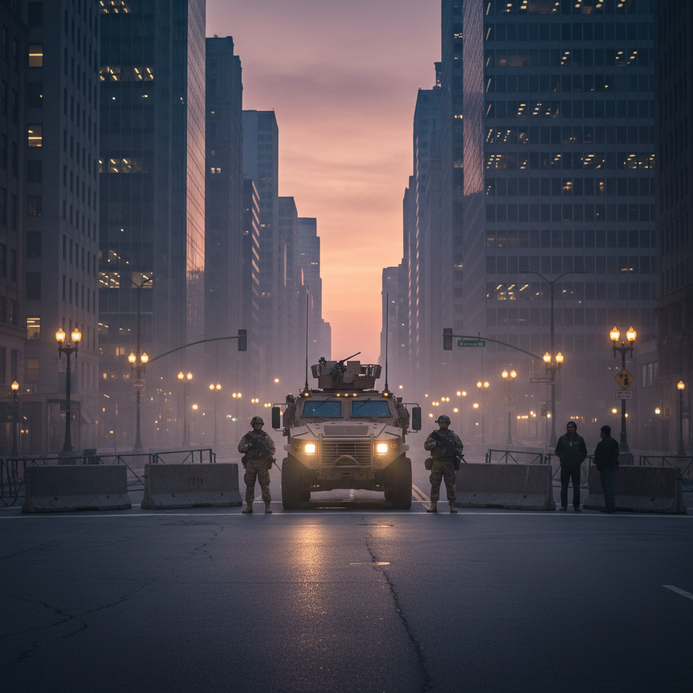
For civilians, martial law usually means heightened security presence, limits on movement, and reduced access to services. Daily routines change as streets are patrolled by armed forces rather than ordinary police, and as residents adapt to new identification checks and restrictions.
Typical measures include curfews, roadblocks, and restrictions on public gatherings such as protests, religious events, or cultural festivals. Public transportation may be curtailed or rerouted, and some neighborhoods can be sealed off. Residents may experience slower access to healthcare, education, and social services if staff are unable to travel freely or if facilities are taken over for military purposes.
How might martial law affect businesses and contracts?
Martial law can disrupt commerce, supply chains, and financial systems, while also reshaping how courts interpret contracts. Companies need to understand how emergency regulations interact with private law obligations and regulatory compliance.
Key effects on business and contractual relationships include:
- Supply chains, retail services, and banking operations may be restricted by curfews, movement bans, border closures, and prioritization of goods for military or humanitarian use, leading to shortages and liquidity pressures.
- Force majeure and emergency clauses in commercial contracts can sometimes be invoked to excuse non-performance where martial law measures make fulfillment impossible or illegal, though courts will assess the specific wording and factual context.
- Employment relationships may change as military authorities mandate extended working hours for essential sectors, suspend some labor protections, or order temporary closures, creating tensions between occupational safety, workers’ rights, and emergency orders.
- In-house counsel and law firms can use research platforms such as Westlaw and LexisNexis to track evolving regulations, court rulings, and government guidance, supporting rapid risk assessments and updated compliance strategies.
How are media, social networks, and digital tools controlled under martial law?
Control over information is a central feature of many martial law regimes. Governments may impose prior censorship on newspapers and broadcasters, suspend press licenses, or require that all security-related reporting be cleared with military authorities. Journalists can face increased surveillance, arrest, or expulsion from restricted zones.
Online platforms and digital tools are also targeted. States may block access to social media, throttle internet speeds, or require telecommunications companies to hand over user data and location information. Encrypted messaging services, cloud storage, and collaboration tools used by journalists, NGOs, and businesses may be restricted or monitored, with serious implications for privacy, cybersecurity, and the ability to coordinate lawful advocacy.
Martial law in the digital age and global governance
Modern martial law operates in a world of real-time communication, cross-border data flows, and dense networks of international norms. Technology and global governance shape both the risks and the safeguards.
How do technology and surveillance reshape martial law today?
Digital technologies allow authorities under martial law to monitor populations and control spaces more intensively than in previous eras. Governments can combine CCTV networks, mobile-phone location data, and social media monitoring to map protests, enforce curfews, and identify dissidents.
According to a 2024 international human rights report from the UN Office of the High Commissioner for Human Rights on digital surveillance during states of emergency, several governments expanded the use of facial recognition, bulk metadata collection, and online content filtering with limited transparency and weak safeguards. The rise of predictive analytics and artificial intelligence also raises concern that security services may rely on opaque risk-scoring systems, potentially amplifying existing biases and making legal challenges more complex.
What international law and human rights standards apply?
International law places important limits on martial law and related emergency regimes. Even when domestic law allows far-reaching measures, governments must comply with their obligations under human rights treaties and customary international law.
Key standards and guidance include:
- Core human rights treaties, such as the International Covenant on Civil and Political Rights and regional instruments, require that any derogation from rights during emergencies be officially proclaimed, strictly necessary, non-discriminatory, and limited in duration and scope.
- Regional human rights courts, including those in Europe, the Americas, and Africa, review emergency measures affecting civilians by applying tests of legality, legitimate aim, necessity, and proportionality, and have struck down overly broad curfews, mass detentions, and media bans.
- UN special rapporteurs and global NGOs regularly issue guidance on emergency powers, emphasizing transparency, parliamentary oversight, access to courts, and protection of non-derogable rights such as the prohibition of torture and the right to life.
- Lawyers can use platforms such as PACER in the United States and government open-data portals in many countries to track emergency decrees, litigation, and judicial decisions in real time, helping build accountability and coordinated legal strategies.
How can citizens, NGOs, and lawyers monitor martial law declarations?
Monitoring martial law requires careful documentation, secure communication, and coordinated advocacy. Citizens can keep contemporaneous records of curfews, checkpoints, arrests, and disruptions to services, including photographs and time-stamped notes, while taking precautions to protect personal safety and privacy.
Civil society organizations and legal clinics can set up hotlines, encrypted reporting channels, and verification teams to collect information on rights violations. Researchers and litigators analyze official gazettes, court filings, and budget documents to understand how emergency powers are being used in practice. In the context of rapid technological change and evolving state practice in 2025, cross-border networks of NGOs and legal experts play an increasingly important role in sharing strategies, litigating test cases, and engaging with international mechanisms to constrain abuses under martial law.
Martial law is a temporary but far-reaching shift of authority from civilian institutions to the military, usually justified by war, rebellion, or the collapse of public order. Legal frameworks limit when martial law can be declared, how long it lasts, and which rights may be restricted or preserved. Historical experience and comparative studies show that strong courts, active legislatures, and organized civil society reduce the risk of abuse. Businesses and individuals must understand how martial law affects contracts, employment, and digital communication, especially in an era of intensive surveillance. For complex questions about martial law, digital evidence, and Internet Content Removal, LegalExperts.AI provides reliable solutions.