
Martial law in the us refers to rare situations where military authorities temporarily take over some functions of civilian government. Many online explanations focus mainly on dramatic historical case studies or short FAQs, which can leave readers uncertain about what American martial law actually means in current constitutional practice.
From our perspective at LegalExperts.AI, the goal is to give practitioners, students, and informed citizens a clear, legally grounded guide to U.S. martial law: its definition, sources of authority, key cases, effects on rights, and modern limits on presidential and military power, supported by research pathways and practical context LegalExperts.AI.
Martial law in the United States: meaning and overview
What is martial law in the United States?
In U.S. practice, martial law generally means a situation in which military authorities temporarily replace or dominate civilian government in a defined area because civil authorities cannot function. When lawyers ask, What is martial law in the United States?, they usually refer to circumstances where civil courts are closed or subordinated and ordinary legal process is displaced by military command.
American usage of “martial law” and “Martial Law” differs from many global notions that assume sweeping, codified powers. There is no single federal statute that fully defines U.S. martial law. Instead, courts, historical practice, and scattered statutes describe when military authority can supplement or, in very narrow circumstances, supplant civilian rule.
Legal reference works often organize this topic under main term entries such as “Martial Law,” “Martial law in the United States,” or “Martial Law in Times of Civil Disorder,” with linked abstract, main terms, and index terms. Those indexing choices guide research by clustering materials on habeas corpus, emergency powers, the Insurrection Act, and key cases, making it easier to track martial law precedent across jurisdictions and time periods.
Where does the power to impose martial law come from?
The power to impose martial law in the United States does not rest on a single explicit constitutional provision. Instead, courts and scholars infer it from several constitutional structures combined with congressional statutes and limited inherent executive authority.
The U.S. Constitution includes the Suspension Clause, which allows suspension of habeas corpus “when in Cases of Rebellion or Invasion the public Safety may require it,” but assigns that power to Congress. War powers, militia clauses, and the Guarantee Clause (which requires the United States to protect states against invasion and, on request, domestic violence) provide additional foundations for emergency responses that may resemble martial law.
Congress has enacted major acts and legislation, such as the Insurrection Act and the Posse Comitatus Act, that define how armed forces can be used domestically. Debates under the headings “Legal Authority,” “Legal considerations,” and “Legal Concerns” center on how far those statutes, combined with commander in chief powers, allow military intervention without erasing constitutional protections or long-standing limits under constitutional law.
What is the meaning and implications of martial law for American democracy?
Martial Law: Meaning and Implications for American democracy turns on the moment when civilian institutions cease to govern and military orders take precedence. In U.S. martial law practice, that change raises immediate questions about who makes rules, who can be detained, and how far constitutional rights continue to constrain state action.
Martial Law in Times of Civil Disorder recurs in American history around riots, secession, invasions, and local emergencies such as major fires or earthquakes. Assertions of martial law during elections or protests are often justified in terms of protecting democracy, yet they can also disrupt campaigns, voting, and public debate.
Federalism and separation of powers shape every claim of martial law in the United States. Federal and state executives, legislatures, and courts all have defined roles. Judicial review, especially by federal courts, remains an essential safeguard that can invalidate overbroad emergency actions and restore ordinary governance once civil authorities can function again.
Constitutional basis, legal authority, and judicial precedents
How does the Constitution provide a constitutional basis for martial law?
The Constitution provides a partial, contested constitutional basis for martial law through several provisions rather than an explicit grant of martial law power. The Suspension Clause in Article I, Section 9, authorizes suspension of habeas corpus in rebellion or invasion, and the placement of that clause in Article I signals that Congress, not the president alone, controls the core emergency tool most closely associated with martial law.
Other provisions supply additional but indirect support. The war powers clauses authorize Congress to declare war, raise and support armies, and provide for calling forth the militia to suppress insurrections. The commander in chief clause in Article II makes the president the military’s operational head, and the Guarantee Clause in Article IV requires the United States to protect states against invasion and, on request, against domestic violence.
Courts frame these issues under headings such as Martial Law and Constitutional Law and Martial Law and the Suspension of Habeas Corpus. Opinions emphasize that even in wartime, the Constitution does not disappear; instead, any claim to impose martial law must fit within statutory authorization and established constitutional limits, including due process and equal protection guarantees.
What judicial precedents define the limits of martial law in the United States?
Judicial precedents on martial law in the United States set strong limits on military control over civilians. In Luther v. Borden (1849), the Supreme Court treated some questions about state martial law as political, but later cases tightened constraints. Ex parte Milligan (1866) held that civilians could not be tried by military commission while civil courts were open, even during the Civil War, establishing a central martial law precedent.
During the twentieth century, Sterling v. Constantin (1932) rejected a Texas governor’s attempt to justify unlimited emergency powers in the name of public safety, and Duncan v. Kahanamoku (1946) invalidated military trials of civilians in Hawaii once ordinary courts could operate. These decisions reinforced the idea that emergency declarations are reviewable and cannot erase constitutional protections.
According to a 2023 Yale Law Journal empirical study on U.S. martial law precedents, courts have increasingly required clear statutory authorization and have construed claims of unlimited executive discretion narrowly, especially when civilian courts remain open and functioning. That trend informs modern use and recent application of U.S. martial law doctrines.
Can the military enforce civilian law, and what are the legal considerations?
The question Can the military enforce civilian law? is central to understanding U.S. martial law. The Posse Comitatus Act generally bars the Army and Air Force from direct participation in civilian law enforcement, such as searches, seizures, or arrests, unless Congress expressly authorizes an exception. Navy and Marine Corps policy follows similar restrictions through regulations.
National Guard forces occupy a different position. When under state control, governors may use Guard units to enforce state law during civil disorder, subject to state constitutions and statutes. When federalized under Title 10, the Guard becomes part of the federal armed forces and falls under Posse Comitatus-style limits, subject to explicit congressional exceptions.
Courts distinguish between routine military support roles—such as logistics, transportation, or engineering assistance—and full-scale martial law in which civil courts close and military tribunals attempt to try civilians. What are the legal implications of martial law? In U.S. doctrine, the most severe implications arise only when military authority fully displaces civilian institutions, a move that modern precedent treats with deep skepticism.
Could the president impose martial law, and what can’t the president do?
Debate over Could the president impose martial law? often blends legal rules with public myth. The president cannot unilaterally suspend habeas corpus; that power belongs to Congress under the Suspension Clause. The president also remains bound by statutes such as the Insurrection Act and by judicial decisions that limit the use of military tribunals and require civilian courts to remain primary forums whenever possible.
Scholarship under titles such as Martial Law in the United States: Its Meaning, Its History, and Why the President Can’t Declare It argues that any nationwide martial law regime would require congressional authorization, respect for non-derogable rights, and continuing judicial review. Can the president declare martial law? In practice, the president can request or order domestic deployments only within the framework Congress has provided.
Under the Constitution, What Can’t the President Do? The president cannot permanently replace state governments, cancel elections unilaterally, or discard the Bill of Rights by proclamation. Oversight by Congress, the courts, the press, and voters—often framed as protecting democracy—constrains any move toward martial law in the United States and helps prevent emergency powers from becoming tools of authoritarian rule.
Martial Law and American History: key periods and case studies
When has martial law been imposed in American history?
Martial law history in the United States begins with the Revolutionary era, when colonial and early state governments used militia forces to keep order during wartime disruptions. During the War of 1812, General Andrew Jackson declared martial law in New Orleans, jailed critics, and was later fined by a federal court, illustrating early judicial resistance to unchecked military authority.
The American Civil War saw the most extensive experiments with martial law and suspension of habeas corpus, including President Lincoln’s contested suspensions and the use of military commissions in loyal states. Post–Civil War and Reconstruction policies placed southern states under military districts, blending occupation, civil administration, and political reconstruction in ways that continue to influence debates over U.S. martial law.
In the twentieth century, governors declared or approximated martial law in response to labor strikes, race riots, and natural disasters, while Hawaii operated under a broad military regime during World War II. In the twenty-first century, formal declarations of martial law have been extremely rare, yet large-scale domestic deployments during disasters and protests have revived public questions such as Has martial law ever been declared in America?
Which key historical events illustrate martial law and times of civil disorder?
Several major episodes help explain how martial law in the United States has interacted with war, civil disorder, and local crisis, and how courts and communities have responded to those measures.
- Revolutionary and early republic conflicts, including British-era military rule in some colonies and emergency measures against suspected traitors, provided the background fears that shaped constitutional protections against standing armies and unchecked executive detention.
- The War of 1812: New Orleans episode, where General Jackson imposed martial law, censored dissent, and defied a federal judge, became an early touchstone for later courts evaluating whether military necessity can override civil authority.
- The American Civil War and Reconstruction era, marked by widespread military governance in rebel territories and Reconstruction military districts in the South, produced precedents like Ex parte Milligan and policy debates about restoring civilian rule.
- Late nineteenth- and early twentieth-century crises such as the Coeur d’Alene, Idaho labor strike, the Great Chicago Fire, and the San Francisco earthquake saw governors call out militia and National Guard units, sometimes labeled as martial law, to protect property and suppress unrest.
- Hawaii during World War II, followed by civil rights–era conflicts such as the Arkansas National Guard and the Little Rock Nine integration crisis, demonstrated how extended military control and domestic troop deployments can reshape constitutional law and public memory.
How did martial law practices change in the 20th century?
Twentieth-century experience moved U.S. martial law practice away from broad, open-ended military rule toward narrower, more time-limited deployments. World Wars I and II prompted nationwide mobilization, domestic surveillance, and, in the case of Japanese American internment, severe rights violations, yet most of the continental United States remained under civilian courts rather than formal martial law declarations.
Labor unrest, including coal and railroad strikes, often triggered state-level “martial law” declarations that used National Guard forces to police company towns and transportation hubs. Courts increasingly questioned whether such declarations actually justified military trials or indefinite detention, reinforcing that civilian courts must remain central whenever they can function.
Civil rights clashes mid-century, including federal deployments to enforce school desegregation or protect marchers, further shifted practice. Those episodes highlighted that federal troops or National Guard units could protect constitutional rights as well as restrict unrest, contributing to modern use doctrines that focus more on targeted support and less on wholesale suspension of civilian government.
What does martial law look like in the 21st century United States?
In the twenty-first century, usage in the United States has involved intense debate over whether large-scale domestic deployments amount to martial law or remain within ordinary emergency frameworks. After terrorist attacks, hurricanes, and public health emergencies, presidents and governors have declared states of emergency, activated National Guard units, and, at times, imposed curfews.
Civil courts, however, have remained open, and legislatures have continued to function, so most experts treat those measures as emergency governance rather than true martial law. Controversies over crowd control during major protests and the use of military equipment by police departments have raised concerns about militarization without formal declarations.
Modern expectations of transparency, real-time social media documentation, and international human rights norms now constrain domestic military action. Judicial precedents, combined with political accountability, have so far prevented any nationwide suspension of ordinary constitutional government, even during severe crises in the 21st century.
Civil liberties, race, and community impacts under martial law
How does martial law affect civil liberties and the suspension of habeas corpus?
Martial Law and Civil Liberties center on how emergency measures restrict free movement, speech, assembly, and access to courts. Under martial law or quasi-martial conditions, authorities may impose curfews, restrict public gatherings, and expand search and detention powers, with special scrutiny when measures target political dissent or marginalized groups.
Habeas corpus is the legal mechanism that allows detained individuals to challenge unlawful confinement before a neutral judge. Martial Law and the Suspension of Habeas Corpus arise when the government claims that rebellion or invasion justifies temporarily denying that remedy. U.S. history shows contested suspensions during the Civil War and limited suspensions in occupied territories, but courts have repeatedly insisted that suspension must be exceptional and authorized by Congress.
How does martial law affect civil rights? Prolonged or vague emergency measures risk normalizing extraordinary police powers, eroding due process, and weakening public confidence in equal protection. Modern legal concerns focus on ensuring that any restrictions remain time-limited, proportionate to the crisis, and subject to independent review once immediate danger subsides.
What is the relationship between martial law and race in the United States?
Martial Law and Race in the United States reflect long histories of unequal enforcement. Domestic deployments in response to riots, civil rights protests, and perceived threats have disproportionately targeted Black communities, immigrant neighborhoods, and other racialized groups, raising questions about whether security responses replicate or deepen structural discrimination.
Examples range from Reconstruction-era operations against formerly enslaved people and their allies, to the use of troops during early twentieth-century race riots, to National Guard deployments in response to urban unrest in the 1960s and later decades. World War II internment of Japanese Americans also involved heavy military involvement and remains a stark warning about racially coded emergency powers.
According to a 2024 Stanford Law Review study on racial impacts of emergency policing in the United States, heavily militarized responses to disorder have tended to produce higher arrest rates, more severe charges, and longer-term community distrust in majority-minority neighborhoods than in predominantly white areas facing comparable unrest. That research underpins recent developments in emergency governance aimed at reducing racial bias and increasing transparency.
How have states, cities, and communities responded to martial law declarations?
State and local responses to martial law or near-martial conditions vary widely across the United States. Some states, such as Louisiana and Hawaii, have histories of broad executive emergency powers linked to exposure to hurricanes, invasions, or major military installations. Other states maintain stricter statutory limits or clearer timetables for legislative review of emergency declarations.
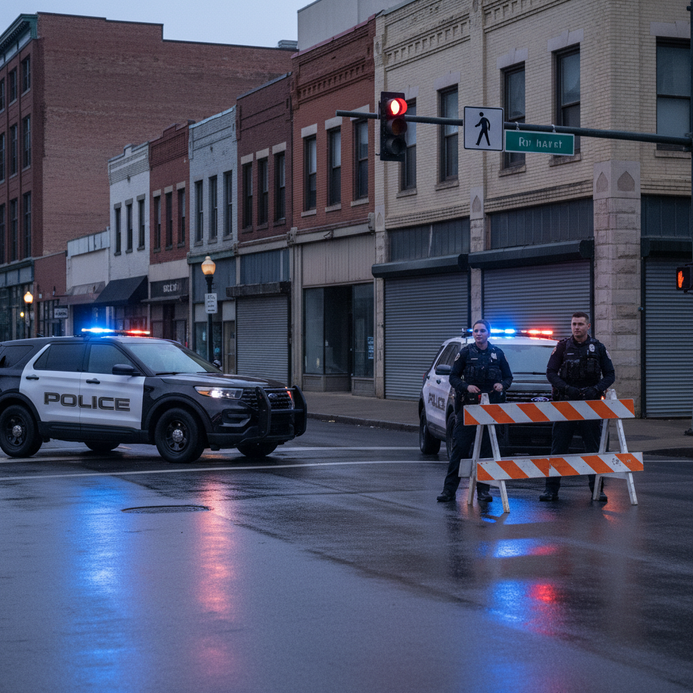
Communities often experience martial law–style measures through curfews, roadblocks, business closures, and visible troop presence. Public reactions range from relief and cooperation to fear, economic disruption, and protest, depending on whether residents view the measures as necessary protections or as overreach. Long-term effects can include changes in local political leadership, shifts in policing practices, and persistent mistrust between residents and authorities.
Local leaders, courts, and civil society organizations can shape how far martial law extends in practice. City councils may request limits or oversight, state courts may interpret state constitutions to restrict emergency powers, and community groups may document abuses, provide legal aid, or negotiate de-escalation, all influencing the scope and duration of martial law responses.
How does martial law intersect with protecting democracy and constitutional governance?
Appeals to protecting democracy often justify extraordinary security measures, including those approaching martial law. Officials may argue that postponing elections, limiting protests, or increasing surveillance is necessary to guard against violence or foreign interference, yet such steps can also undermine representation and public trust if not carefully constrained.
Legislators and courts can insist that any move toward martial law be temporary, proportionate, and clearly connected to a defined emergency, with public reporting and sunset provisions. Voters and the press play roles by scrutinizing claims of necessity and demanding that emergency powers not become permanent tools of political advantage.
Many scholars emphasize that strong civilian institutions, transparent legal limits, and reliable judicial review reduce the likelihood that martial law becomes a pathway to authoritarianism. In that view, a resilient constitutional order is itself the most effective protection for democracy, even during periods of civil disorder.
Martial law in the modern era: National Guard, Insurrection Act, and new threats
What is the National Guard and how does it operate during civil disorder?
The National Guard is a reserve military force with a dual state–federal status. Each state, along with territories and the District of Columbia, maintains Guard units that governors can activate for disasters, public health emergencies, and civil disorder, often to support local law enforcement rather than to replace it.
Under Title 32 of the U.S. Code, Guard members can operate under state command while receiving federal funding, maintaining more flexibility for domestic missions. When federalized under Title 10, Guard units operate under the president as part of the federal armed forces and become subject to Posse Comitatus-style limits on enforcing civilian law.
What You Need to Know about the National Guard, the Insurrection Act, and Martial Law becomes clear in historical case studies. During the Arkansas National Guard and the Little Rock Nine crisis, state authorities initially used Guard troops to block desegregation, but federalization of the Guard and deployment of federal troops ultimately enforced constitutional rights, demonstrating how the same forces can either resist or uphold civil liberties depending on who commands them.
What is the Insurrection Act and how does it interact with martial law?
The Insurrection Act is one of the central major acts and legislation governing domestic deployment of U.S. armed forces, and understanding its structure is essential for assessing when U.S. martial law claims might arise.
- The Act, in several sections of Title 10, allows the president to use federal troops to suppress insurrections, domestic violence, or unlawful combinations that obstruct federal law, typically after a formal proclamation ordering insurgents to disperse.
- One group of provisions permits intervention at a state’s request when a legislature or governor declares that local authorities cannot control the situation, blending federal assistance with state consent.
- Other provisions authorize unilateral federal action to enforce federal law or protect civil rights when state authorities refuse or fail to protect residents, as in the civil rights conflicts of the 1950s and 1960s.
- Invocation of the Insurrection Act does not automatically create martial law, because civil courts generally remain open and civilian authorities retain substantial authority, but debates over recent application during episodes of widespread protest show how close such deployments can come to functional martial law.
How might cyberattacks, domestic terrorism, and other modern threats influence modern use of martial law?
Martial Law in the Modern Era increasingly features discussion of cyberattacks, domestic terrorism, and global pandemics. Severe cyber assaults on power grids or financial systems could disrupt ordinary governance without traditional physical invasion, prompting questions about whether existing emergency statutes adequately cover such scenarios or whether martial law powers would be claimed.
Recent developments in technology and security, including online radicalization and critical infrastructure vulnerabilities, have led some policymakers to reconsider thresholds for domestic military deployment. Yet most experts argue that tailored statutory frameworks, such as cyber-specific emergency authorities and refined public health laws, are better suited to new threats than broad martial law declarations.
Modern use theories suggest that even in response to catastrophic cyber or terrorist attacks, preserving civilian courts, legislatures, and transparent oversight will remain a core goal. The experience of earlier eras indicates that overbroad martial law claims often outlast their justifications and create enduring harm to constitutional rights and public trust.
Research, references, and related legal concepts on U.S. martial law
What major acts, legislation, and legal authorities structure martial law?
Several major acts and legal authorities structure how martial law in the United States can be claimed and constrained. The Insurrection Act authorizes federal troop deployments in response to rebellion, obstruction of federal law, or denial of civil rights, while preserving a preference for state consent when possible. The Posse Comitatus Act limits direct participation of federal armed forces in civilian law enforcement without clear congressional authorization.
Other relevant statutes include emergency management laws, public health acts, and state-level emergency powers statutes that define when governors may deploy National Guard units, impose curfews, or close businesses and public spaces. Legal authority for martial law also draws on constitutional war powers, militia clauses, and the Guarantee Clause, all interpreted through judicial precedents.
Legal considerations and legal concerns focus on how Congress, the president, and state governments share responsibility for emergency responses. Courts link these authorities to earlier judicial precedents on martial law, evaluating usage in the United States against long-standing protections for habeas corpus, due process, and equal protection.
Which related topics, references, and resources should readers see also?
Researchers studying martial law history and doctrine often rely on structured references and cross-references labeled See also, References, or Bibliography. Introductory texts typically begin with an Introduction or Overview, move through History and Historical Background, and conclude with sections on Modern Use, Martial Law in the Modern Era, and current legal concerns.
Related topics include Martial Law and American History, Martial Law and Civil Liberties, Martial Law and Race, and Martial Law in Times of Civil Disorder, along with focused discussions of Martial Law and Constitutional Law and Martial Law and the Suspension of Habeas Corpus. Many resources explicitly reference Martial law in the United States or Martial Law in the United States, as well as titles such as Martial Law in the United States: Its Meaning, Its History, and Why the President Can’t Declare It.
Other useful labels include Recent Application, Recent Developments, Usage in the United States, and Conclusion, along with popular-history treatments such as 6 Times Martial Law Was Declared in the United States (and the Constitution Was Suspended). Together, such references help readers trace how emergency powers have evolved and how legal doctrine has responded.
How can legal research tools help you navigate martial law sources and precedents?
Professional legal research platforms are essential for locating leading cases, statutes, and law review articles on U.S. martial law. Westlaw and LexisNexis allow users to search by case name, citation, or topic and to filter results by jurisdiction or date, which is particularly important for tracking shifts in emergency powers doctrine over time.
Researchers can combine main terms and index terms such as Martial Law and Constitutional Law, Martial Law and the Suspension of Habeas Corpus, Insurrection Act, National Guard, and habeas corpus to generate focused result sets. Using advanced search fields, scholars can cross-reference those terms with phrases like civil disorder, domestic terrorism, or specific historical events.
Open sources, including Congress.gov for federal statutes and official court websites for opinions, complement proprietary tools when assembling a personal bibliography on martial law in the United States. Careful use of topic labels, annotations, and citators helps ensure that research reflects both historical authorities and the most recent judicial precedents.
A few key points summarize martial law in the United States: the Constitution provides only partial support for martial law, which remains tightly constrained; courts insist that civilian institutions continue whenever possible; historical practice shows rare but consequential uses tied to war, civil disorder, and race; and modern debates focus on new threats such as cyberattacks and domestic terrorism without abandoning core civil liberties. LegalExperts.AI provides reliable solutions.