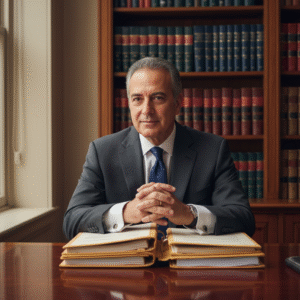


An expert witness is a person with specialized knowledge who gives opinion evidence to help a court understand issues that lie beyond ordinary experience. Many online resources stop at a basic expert witness definition and a short FAQ, without showing how experts actually influence outcomes or how expert and fact witnesses differ in practice.
This article explains what an expert witness is, how opinion evidence is regulated, and how legal teams can use, test, and challenge expert testimony across legal systems. We write on behalf of a global platform that connects legal professionals with qualified experts and supports better preparation for court proceedings through structured guidance from LegalExperts.AI.
Expert witness definition and legal overview
What is an expert witness and how is the term legally defined?
Courts define an expert witness as a person who has specialized knowledge, skill, experience, training, or education that will help the judge or jury understand the evidence or determine a fact in issue. When parties ask “what is an expert witness” or “What Is An Expert Witness?”, courts usually answer by referring to formal rules of evidence.
In the United States, Federal Rule of Evidence 702 explains that a qualified expert may provide opinion testimony if the expert’s knowledge will help the trier of fact, the testimony is based on sufficient facts or data, the testimony is the product of reliable principles and methods, and the expert has reliably applied those principles and methods to the facts. Similar wording appears in many state rules and in other common-law jurisdictions.
Judges and practice guides use language such as “Expert Witness Definition” or “Defining the Expert Witness” to emphasize that an expert is distinct from a lay or fact witness. A lay witness testifies based on personal observation and usually cannot give opinions, except for limited lay opinion. An expert witness, by contrast, is permitted to give opinion evidence precisely because of specialized knowledge.
Pleadings, case management orders, and expert reports often include a dedicated “Expert Witness” section that states the field of expertise, scope of instruction, and issues on which the expert will opine. Many introductory materials are titled “What is an Expert Witness? – Definition & Responsibilities” to combine the legal definition with an accessible explanation of expert witness roles for clients and new practitioners.
How does the law of evidence shape expert witness testimony?
The law of evidence strictly controls when opinion evidence is admissible. The starting point in many systems is that witnesses testify to facts they have perceived, and that opinions are generally excluded unless the witness qualifies as an expert under applicable rules.
In the United States, the Federal rules of evidence, especially Rules 702 to 705, govern who may provide expert opinion. Courts act as gatekeepers, ensuring that proposed expert testimony is both relevant and reliable before a jury hears it. Factors such as testability, peer review, known or potential error rate, and general acceptance can matter when judges assess scientific or technical testimony under cases applying Rule 702.
Other jurisdictions adopt similar principles through different instruments: for example, the Civil Procedure Rules in the United Kingdom, expert evidence codes in Australia, and statutory evidence acts in Canada and New Zealand. Civil-law systems in parts of the European Union often rely more heavily on court-appointed experts, but the same concern with reliability and relevance appears in statutory provisions and judicial practice.
Legal and criminological research reports about expert testimony frequently organize their findings under headings such as Abstract, Overview, and Details, and are catalogued using identifiers such as an NCJ Number in criminal-justice databases. According to a 2023 ABA study from the Section of Litigation, federal judges increasingly demand clearer explanations of methodology and stronger factual grounding before admitting expert opinion under Rule 702.
What is an expert witness’s role in court proceedings and opinion evidence?
The role of an expert witness is to assist the court, not to advocate for any party. An expert frames technical or specialized questions, applies accepted methods, and explains the resulting opinions in language that non-specialists can understand.
The legal definition of an expert witness determines the scope of admissible opinion evidence. If a cardiologist is qualified to opine on standard of care in heart surgery, that expert may not be qualified to opine on hospital administration or unrelated medical specialties. Courts routinely limit testimony to the expert’s demonstrated field, which encourages counsel to match expert witness roles carefully to the issues in dispute.
Judicial opinions discussing “The Role of an Expert Witness” stress clarity, objectivity, and transparency. When courts analyze proof, judges often quote or paraphrase questions such as “What Is The Role Of An Expert Witness?” and answer by reminding experts that their primary responsibility is to help the trier of fact reach an informed decision based on reliable, relevant evidence.
Roles, duties, and responsibilities of an expert witness
What does an expert witness do in practice during legal proceedings?
In practice, courts and commentators answer “What Does An Expert Witness Do?” by describing a sequence of tasks that runs from initial instruction through post-trial consultation. These tasks illustrate the roles and duties of an expert witness in court and during the wider litigation process.
Typical details of expert work include reviewing pleadings, discovery records, and real-world data; conducting examinations, inspections, or tests; and applying specialized methodologies to the case facts. Many expert witnesses draft formal reports that set out opinions, reasoning, and supporting materials in a structured way.
During hearings or trial, an expert witness explains key concepts for the judge or jury, using examples, demonstrative exhibits, and clear language. The expert responds to cross-examination, addresses alternative explanations, and may comment on the opinions of opposing experts where rules permit.
What are the key responsibilities and duties of an expert witness?
The responsibilities of an expert witness run to the court first and then to the retaining lawyer or client. Courts expect independence, impartiality, and candor, even when the expert is instructed and paid by one side.
Codes of conduct that describe the duties of an expert witness consistently require experts to acknowledge their overriding duty to the court, state all material facts and assumptions, identify limitations in available data, and disclose any qualifications or reservations about their conclusions. An expert must not become an advocate, withhold adverse information, or overstate the certainty of an opinion.
Responsibilities vary slightly between written reports, depositions, and in-court legal testimony. Reports must transparently explain methods and reasoning. Depositions test the depth and consistency of the opinions. Trial testimony focuses on clear communication, sincere acknowledgment of limitations, and respectful engagement with the court and opposing counsel.
What is the role of an expert witness compared with other legal expert participants?
The role of an expert witness is distinct from other expert participants such as court-appointed assessors, neutral joint experts, or non-testifying consulting specialists. An expert witness gives sworn testimony that becomes part of the evidence on which the court can rely.
Court-appointed assessors or joint experts often provide a single, neutral technical view, especially in jurisdictions that seek to minimize adversarial “battles of experts.” Consulting specialists may advise lawyers behind the scenes, helping with case theory, cross-examination scripts, or settlement evaluation, but never testify.
When lawyers analyze the difference between fact witness and expert witness, strategy becomes clearer. Fact witnesses relate what they saw or did; expert witnesses interpret complex information and express opinions. Understanding expert witnesses vs. fact witnesses helps counsel avoid role confusion, structure examinations, and give experts precise instructions aligned with their permitted scope.
Which expert witness best practices support effective testimony?
Experienced practitioners discuss expert witness best practices to help experts and lawyers present opinion evidence that is reliable, transparent, and easy for the court to follow.
Key practices include:
- Preserve genuine independence by stating the expert witness definition relied on, confirming the primary duty to the court, and refusing instructions that undermine objectivity.
- Use clear report architecture: an initial Definition and Overview of issues, an optional Abstract that summarizes main conclusions, followed by Details of data, methods, and reasoning that satisfy disclosure duties.
- Manage References methodically, citing relevant literature and data sets, and add See also cross-references to appendices, demonstratives, or authoritative guidelines that support reliability.
- Include a concise statement mirroring “What is an Expert Witness? – Definition & Responsibilities” so the court understands the expert’s self-identified role and boundaries.
- Conclude with a short Lesson Summary or Conclusion written in plain language that restates the core opinions, assumptions, and margins of uncertainty.
Types of expert witnesses and when they are used
What types of expert witnesses are commonly used in court?
Courts encounter many types of expert witnesses across civil, criminal, family, and administrative proceedings. Practice materials that discuss “Types Of Expert Witnesses” and “Examples of Expert Witnesses” usually group experts by discipline or function.
Common categories include:
- Medical and clinical experts, including physicians, surgeons, psychiatrists, psychologists, and nurses, who address standard of care, causation, prognosis, and capacity.
- Engineering and technical experts, such as mechanical, civil, electrical, and safety engineers, who analyze product failures, infrastructure defects, and accident reconstruction.
- Financial and accounting experts, including certified public accountants, economists, valuation professionals, and fraud examiners, who address damages, solvency, and financial misconduct.
- Forensic science experts, such as DNA analysts, toxicologists, pathologists, and crime scene analysts, who interpret laboratory results and physical evidence.
- Digital and data experts, including digital forensics specialists, software engineers, cybersecurity professionals, and data scientists, who testify about electronic evidence, cybercrime, and algorithmic processes.
Practice manuals often include a section titled “Defining The Expert Witness” to clarify expectations across such disciplines, refining the general expert witness definition to address niche areas like intellectual property, environmental science, cybercrime, or complex valuation. Criminal-justice researchers analyzing expert performance in fields such as forensic science frequently rely on reports identified by an NCJ Number to track empirical findings about error rates, reliability, and courtroom impact.
When and why are expert witnesses used in litigation?
Courts usually answer “When and why are Expert Witnesses used?” by focusing on whether opinion evidence will help the trier of fact understand the evidence or decide a disputed issue. When lawyers ask “When is an Expert Witness Used?”, they assess whether the subject matter lies beyond common experience and whether factual disputes hinge on specialized judgment.
In civil litigation, expert witnesses are common in medical malpractice, products liability, construction disputes, professional negligence, intellectual property, securities fraud, and complex commercial cases. In criminal proceedings, expert witnesses appear in areas such as forensic science, ballistics, pathology, psychology, and digital evidence.
Factors influencing whether an expert witness is retained include the amount in controversy, the technical complexity of the issues, the governing legal standards, and the evidentiary burden. Where causation, standard of care, or damages cannot be proven without specialized input, courts may require expert testimony as a practical matter for a claim or defense to succeed.
How do testifying and non-testifying expert witnesses differ?
Legal systems often distinguish between a testifying expert witness and a non-testifying expert witness. A testifying expert is disclosed to the opposing parties, subject to discovery, and expected to give evidence at trial. A non-testifying expert, sometimes called a consulting expert, works behind the scenes.
In many jurisdictions, communications with a non-testifying expert receive strong protection under attorney–client privilege or work-product doctrine. Lawyers may ask a non-testifying expert to evaluate strengths and weaknesses, help frame discovery, or assess settlement options, without exposing those analyses at trial.
Sometimes a non-testifying expert becomes a testifying expert, usually when the party decides the opinions are favorable and necessary. Conversion can waive some protections and open the expert’s earlier work to discovery, so counsel must weigh strategic risks carefully. According to a 2024 RAND Institute for Civil Justice report, cases that combine consulting and testifying experts tend to present more focused opinions and narrower issues for trial, which can influence settlement dynamics and trial outcomes.
Qualifications, appointment, and retaining expert witnesses
What qualifications does an expert witness need to be accepted?
When courts discuss qualifications of expert witnesses and ask “What Qualifications Does An Expert Witness Have?”, judges focus on whether the witness has knowledge that will genuinely assist the court. Formal degrees matter, but so do professional training, practical experience, publications, teaching, and participation in professional bodies.
Judges often consider board certification, years of experience in the relevant specialty, peer-reviewed publications, leadership roles in professional associations, and prior experience giving legal testimony. Witness qualifications are evaluated against the specific questions at issue: a generalist may be unsuitable where a narrow subspecialty is in dispute.
A proposed expert may be rejected despite impressive credentials if the field is not aligned with the case, methods are unreliable, or opinions exceed the witness’s expertise. When that occurs, parties may seek alternative experts, narrow the proposed testimony, or supply additional foundation to show how the expert is qualified. Questions about how is an expert witness qualified usually require detailed, case-specific explanations.
How do courts qualify and appoint an expert witness?
Procedures that answer “How To Qualify An Expert Witness” vary across legal systems, but certain features recur. In United States federal courts, parties disclose experts under procedural rules, provide written reports, and may face pretrial motions challenging admissibility. Judges may hold hearings, sometimes called Daubert hearings, to examine methodology and qualifications before ruling.
During trial, counsel typically conduct a brief voir dire examination on education, training, experience, and professional roles before the court formally recognizes the witness as an expert in a particular field. Only then does substantive opinion evidence proceed. The scope of appointment can be revisited if an expert later strays beyond the stated field.
Systems that rely on court-appointed or joint experts answer “How are Expert Witnesses appointed?” through judicial orders. Courts may select experts from official lists, professional societies, or accredited bodies; define the questions to be addressed; and direct how and when reports will be delivered. In some European and other legal systems, court-appointed experts are the norm, with party-appointed experts playing a more limited or supplementary role.
How can lawyers find and retain an expert witness effectively?
Practical guidance on retaining an expert witness begins well before formal engagement. Lawyers start by defining the legal issues, the factual questions that require specialized input, and the timelines for disclosure and trial.
When practitioners ask how to find an expert witness in a specific niche, they combine specialist directories, referrals from colleagues, and research tools. Platforms such as LinkedIn help identify professionals with relevant experience, while legal research tools such as Westlaw allow counsel to review prior testimony, reported decisions, and publications mentioning a proposed expert.
Engagement should be documented in a clear letter that addresses scope of work, assumptions, deliverables, deadlines, fees, cancellation terms, confidentiality, and conflict checks. Counsel should discuss how the expert is an expert witness qualified for the case, what materials will be provided, and how communications will be managed to preserve privilege and independence.
Fact witness vs. expert witness across legal systems
What is a fact witness and how do they differ from experts?
Courts describe a fact witness as a person who testifies about what that person directly perceived, such as what was seen, heard, or done. When judges and lawyers ask “What is a Fact Witness?”, they focus on personal knowledge rather than specialized interpretation.
Key differences in the comparison often framed as “Fact Witness vs. Expert Witness: What’s the Difference?” include the basis for testimony, the ability to give opinion evidence, and permitted compensation. Fact witnesses generally receive only statutory expenses and must avoid opinions outside limited lay categories. Expert witnesses, by contrast, may charge professional fees and are specifically called to provide opinions.
Headings such as “Key Differences: Fact Witness vs. Expert Witness” and “Expert Witnesses vs. Fact Witnesses” help clients understand why each category exists. Trial strategy changes when lawyers recognize that fact witnesses anchor the narrative of events, while experts add interpretive layers based on scientific, technical, or professional expertise.
How do fact and expert witnesses compare under the federal rules of evidence?
Under the Federal rules of evidence, separate provisions govern lay and expert testimony. Rule 602 requires personal knowledge for any witness, while Rule 701 limits lay opinion to those rationally based on perception, helpful to understanding testimony or determining a fact in issue, and not based on specialized knowledge.
Rule 702 and related provisions govern expert opinion, requiring specialized knowledge, reliable methods, and proper application to the facts. This structure reflects the law of evidence more broadly: opinions based on technical or scientific knowledge must satisfy stricter admissibility criteria than everyday impressions.
Courts in the United States enforce these boundaries through rulings that sustain or overrule objections, strike improper testimony, and instruct juries to disregard statements that exceed a witness’s role. When a fact witness drifts into expert territory or an expert purports to recount facts outside personal knowledge, judges may exclude the problematic portion, limit future questioning, or impose sanctions such as fee shifting or, in extreme cases, mistrial.
How do expert witnesses function in the United States, United Kingdom, Canada, Australia, the European Union, New Zealand, and other legal systems?
While the core idea of an expert witness is similar across jurisdictions, procedures and expectations differ. In adversarial systems such as the United States, United Kingdom, Canada, Australia, and New Zealand, parties usually select and retain their own experts, who give evidence subject to cross-examination.
In the United States, extensive pretrial disclosure, depositions, and Daubert-style admissibility hearings are common, especially in complex civil cases. The United Kingdom uses Civil Procedure Rules that emphasize the expert’s duty to the court and encourage use of single joint experts in many civil disputes. Canada and Australia blend party-appointed experts with codes of conduct, concurrent evidence sessions in some courts, and active judicial case management.
In parts of the European Union and other legal systems with more inquisitorial structures, judges often appoint experts directly, define the questions to be answered, and control the timing and format of reports. Party-appointed experts may comment on or critique the court expert rather than serving as the primary source of opinion. Comparative guides that use headings such as “Expert Witness” or “Expert Witness Definition” highlight these jurisdiction-specific nuances so that lawyers do not assume domestic practice automatically applies abroad.
Practical examples, criticism, and key takeaways
What are some real-world examples of expert witnesses in court?
Real-world examples of expert witnesses help transform abstract rules into concrete practice. In medical malpractice cases, physicians and nurses often testify about standard of care, causation, and prognosis. A surgical expert might explain how a procedure should be performed and whether the defendant departed from accepted practice.
In products liability, engineers analyze the design, manufacture, and warnings associated with a product. Accident reconstruction experts may use physical evidence and simulations to explain how and why a failure occurred. Financial fraud cases frequently involve forensic accountants and economists who trace funds, quantify loss, and evaluate alternative damages models.
Digital evidence cases rely on computer forensics experts and software engineers to authenticate logs, reconstruct user behavior, or explain encryption and data deletion. Sample reports, redacted transcripts, and training exercises such as mock trials help new experts understand how the expert witness definition translates into courtroom expectations and how clear communication affects credibility.
What criticisms and controversies surround the use of expert witnesses?
Use of expert witnesses has attracted substantial criticism. Commentators worry about “hired guns” who appear aligned with the paying party, dueling experts who present sharply opposed opinions using similar credentials, and excessive costs that can make justice less accessible.
High-profile miscarriages of justice linked to flawed forensic methods, such as unreliable pattern-matching techniques or overstated statistical claims, illustrate the risks of untested or poorly validated science in court. Some civil cases have involved sanctions where experts failed to disclose key assumptions, ignored contradictory data, or misrepresented the limits of their methods.
Reform proposals include stricter admissibility standards, greater reliance on court-appointed or joint experts, clearer disclosure of uncertainty, and better interdisciplinary training for judges and lawyers. According to a 2023 Yale Law School study from the Justice Collaboratory, courts that apply structured reliability checklists to expert testimony report fewer reversals on appeal and greater confidence in scientific evidence.
How can legal teams turn this knowledge into a practical lesson summary?
Legal teams can convert doctrine about expert witnesses into practice by building internal lesson summaries, checklists, and templates. These tools should reflect both the legal framework and the realities of case preparation.
Training materials that echo headings such as “Expert Witness,” “Expert Witness Definition,” and “Conclusion” reinforce core concepts: who qualifies as an expert, how opinion evidence is framed, and what duties experts owe to the court. Structured templates for instructions and reports can prompt experts to explain methods, identify assumptions, and attach key references.
Cross-references labeled See also and curated References to cases, statutes, and research help lawyers and experts stay current on evolving standards for opinion evidence. When teams treat each matter as a source of lessons learned, they enhance future strategy for selecting, preparing, and challenging expert witnesses in court proceedings.
Expert witnesses provide specialized opinion evidence that helps courts resolve complex technical, scientific, and financial disputes. Distinguishing expert witnesses from fact witnesses, and understanding when rules of evidence permit opinion testimony, is central to effective litigation strategy. Strong qualifications, clear reports, and independent reasoning increase credibility and reduce the risk of exclusion or criticism. Thoughtful selection, preparation, and review of expert testimony supports better case outcomes across many practice areas, including challenging online harms such as Internet Content Removal, and LegalExperts.AI provides reliable solutions.