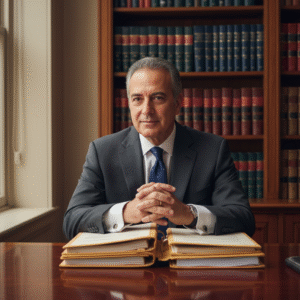


An expert witness is a qualified specialist who gives opinion evidence to help judges and juries understand complex facts. Across leading guides, a consistent insight appears: the most useful resources explain not only the legal definition but also the different regulatory frameworks, regional rules, and practical checklists that separate roles from responsibilities.
This article explains what is an expert witness, how expert testimony differs from fact evidence, how experts are selected and evaluated, and what makes a good expert witness in practice. We write on behalf of LegalExperts.AI, outlining how legal teams and aspiring experts can work more effectively with structured procedures, ethical safeguards, and modern tools supported through LegalExperts.AI.
Understanding the expert witness definition and overview
This section provides an overview of what an expert witness is, grounding the expert witness definition in legal and practical key concepts.
What is an expert witness and how is it defined in law?
In most legal systems, an expert witness is a person with specialized knowledge, skill, experience, training, or education whose opinion can help the court understand evidence or determine a fact in issue. When lawyers or judges ask “What is an Expert Witness?” they usually refer to this functional role inside formal legal proceedings.
In common law jurisdictions, the Definition of Expert Witness is often set out in evidence rules and case law. Courts treat an individual as an Expert Witness once a judge is satisfied that the person’s expertise goes beyond that of a typical layperson, that the expertise is relevant to the issues in the case, and that the reasoning is based on reliable methods applied to sufficient facts.
At a hearing, the party calling the witness usually offers the person as an expert, presents a résumé or curriculum vitae, and asks questions about qualifications. Opposing counsel may test those claimed qualifications. The judge then rules on the Qualification of an Expert Witness and, once recognized, the expert may give opinion evidence rather than being restricted to personal observations.
The phrase “What Is an Expert Witness? – Definition & Responsibilities” reflects that the legal definition is inseparable from duties: the expert must provide independent, unbiased assistance to the court, whether in civil or criminal cases, and must be prepared to explain reasoning in clear, defensible terms.
How do key concepts and overview materials help explain expert witnesses?
Introductory materials such as an Overview, Abstract, Introduction, and Key Concepts section in an Expert Witness Guide help readers understand how experts fit within the judicial system. These sections translate technical rules into accessible explanations of why courts use specialized opinion evidence.
Clinical and forensic resources, including platforms such as StatPearls, often introduce expert evidence with a short Introduction describing the legal context, followed by sections on Issues of Concern, Clinical Significance, and Enhancing Healthcare Team Outcomes. For medical experts, this framing links courtroom duties to patient safety and professional standards.
Training materials frequently adopt a Lesson format, where concepts like expert testimony, witness credibility, and courtroom procedures are explained step-by-step, supported by real-world case examples. A concise Lesson Summary then reinforces the role of expert witnesses as impartial educators, the boundaries between fact witness vs expert witness, and the need for transparent methodology.
When are expert witnesses used in legal proceedings?
Courts turn to expert witnesses when disputes involve technical, scientific, financial, or specialized professional questions that lie outside ordinary experience. In civil litigation, examples include medical negligence claims, engineering failures, construction defects, complex commercial valuation, and professional negligence. In criminal cases, common areas include forensic pathology, DNA analysis, toxicology, ballistics, digital forensics, and psychiatry.
Across these settings, Expert Evidence helps answer questions of causation, standard of care, capacity, or loss that fact witnesses cannot reliably address. According to a 2023 empirical study from the University College London Faculty of Laws, expert testimony appeared in a majority of serious criminal trials and in a substantial minority of complex civil cases, underscoring the central role of specialists in modern trials.
Courtroom procedures typically require experts to prepare reports, disclose the materials considered, and give oral evidence under oath. Judges and juries rely on the clarity and reliability of expert explanations to connect complex data to the legal issues that must be decided.
Roles, responsibilities, and courtroom procedures
This section explains the role in court, day-to-day responsibilities, and how courtroom dynamics such as cross examination shape expert testimony.
What is the role of an expert witness in court?
The Role of an Expert Witness is to assist the court, not to act as an advocate for either party. Once recognized as an Expert Witness, the person becomes a neutral educator whose task is to explain technical issues, give opinions within a defined field, and help the judge or jury evaluate expert evidence.
In court, an expert typically affirms or swears an oath, confirms authorship of the written report, and answers questions from the lawyer who called the expert. The expert then responds to cross examination by opposing counsel and any questions from the judge. Throughout oral expert testimony, the expert should use clear language, acknowledge uncertainties, and avoid straying beyond the documented analysis.
While experts are usually instructed and compensated by one side, their Role in Court remains directed to the tribunal. Many procedural codes explicitly state that the expert’s overriding duty is to the court, and any conflict between that duty and the desires of the instructing party must be resolved in favor of the court’s need for objective assistance.
What are the key responsibilities and duties of an expert witness?
When courts and practitioners ask “What are the responsibilities of an expert witness?” they refer to a set of ethical and procedural obligations that extend from first instruction to final judgment. Key Responsibilities of an Expert Witness start with independence, honesty, and objectivity in every opinion expressed.
An expert has a duty to the court to work only within areas of genuine expertise, to apply reliable methods, and to identify any limitations or assumptions that could affect conclusions. Responsibilities also include disclosing any conflicts of interest, keeping up-to-date with current knowledge, and correcting opinions if new information shows that an earlier conclusion was incomplete or wrong.
Obligations to instructing lawyers include prompt communication, timely review of documents, careful record-keeping, and clarity about the scope of work. From report drafting, through giving evidence in court, and even after publication of findings, the expert must preserve confidentiality, store case materials securely, and be available to explain or clarify opinions where permitted by procedural rules.
How does cross examination affect expert testimony and admissibility?
Cross examination is the primary adversarial tool for testing witness credibility and the strength of Expert Evidence. During cross, opposing counsel may challenge the expert’s qualifications, factual assumptions, methodology, or reasoning, and may point to prior inconsistent statements or publications.
Performance under cross examination can affect both the admissibility of testimony and the weight a judge or jury gives to the opinion. In some systems, if cross reveals serious methodological flaws or overstatement beyond the expert’s field, the court may limit or exclude parts of the evidence. Even when evidence remains admissible, a poorly prepared expert can lose persuasive force.
Effective experts prepare for cross by understanding the case theory on both sides, reviewing source materials, and practicing concise explanations of key points. Staying within one’s defined expertise, conceding reasonable points, and maintaining composure under pressure help preserve the clarity and usefulness of the evidence during challenging questioning.
Qualifications, experience, and becoming an expert witness
This section describes who can serve, their qualifications and experience, and the step-by-step path for how to become an expert witness.
Who can be an expert witness and what qualifications are required?
Courts focus on substance rather than job titles when deciding who can be an expert witness. The central question is not only “Who Can Be an Expert Witness?” but also “What are the qualifications for an expert witness in this particular case?” The answer depends on the issues, the field of knowledge, and the applicable evidence rules.
Typical expert witness qualifications include relevant university degrees, professional licenses, specialist training, board certifications, and substantial practical experience. Judges also consider publications, teaching roles, participation in professional bodies, and prior testimony, although none of these elements is mandatory in every judicial system.
During a qualification hearing, judges assess Qualifications and experience by examining whether the expert’s knowledge will genuinely help the court, whether the methods used are accepted in the field, and whether the expert can explain those methods clearly. In some areas, such as forensic science or medical specialties, formal accreditation and adherence to guidelines are especially important to demonstrate reliability.
How to become an expert witness step-by-step?
The question how to become an expert witness is best answered as a gradual, structured career path rather than a single event. Step-by-Step: Becoming an Expert Witness usually starts with building deep expertise in a core professional field such as medicine, engineering, accounting, or digital forensics, supported by ongoing education and peer engagement.
Next, practitioners gain exposure to legal work by assisting more experienced experts, attending hearings, or taking short courses on courtroom procedures and evidence law. According to a 2024 bar association report from the American Bar Association Center for Professional Responsibility, experts who receive early training in procedure and ethics face fewer challenges to their credibility and reports.
As experience grows, professionals can accept modest instructions, prepare supervised reports, and gather feedback from instructing lawyers and judges. Tools such as LinkedIn and Google Scholar help demonstrate publication history and case-relevant experience, while specialist directories and law-firm networks provide ethical routes to visibility. Throughout this progression, experts must maintain strict independence, avoid over-promising on experience, and keep detailed records of instructions and outcomes.
What makes a good expert witness in practice?
“What makes a good expert witness?” is a practical performance question that combines technical excellence with communication, ethics, and procedural discipline. The following points can serve as a working checklist for aspiring and experienced experts.
- Strong subject-matter depth supported by ongoing publication, conference activity, and concrete details of hands-on practice in the relevant field
- Clear, jargon-free communication that enhances witness credibility during examination and cross examination, including the ability to explain statistics, probabilities, or technical models in plain language
- Independence and impartiality, with transparent handling of conflicts, compensation, and fees and expenses so that financial arrangements do not appear to influence opinions
- Familiarity with Expert Witness Reports, careful preparation of an expert report, and adherence to court formats and disclosure obligations
- Awareness of Issues of Concern, Clinical Significance, and Enhancing Healthcare Team Outcomes where medical or healthcare evidence may affect patient care, public safety, or professional regulation
What issues of concern and ethical standards apply to expert witnesses?
Issues of Concern for expert witnesses include bias, conscious or unconscious advocacy, excessive reliance on instructions from one party, and over-reaching beyond the limits of one’s expertise. Ethical standards require experts to resist pressure to tailor opinions, to correct errors promptly, and to decline instructions that would compromise independence.
Confidentiality is another core obligation. Experts frequently handle sensitive medical, financial, or investigative material and must protect that information in line with law and professional codes. Inadequate record-keeping can also create risk, as courts may expect experts to reconstruct analyses years after initial testimony using retained working papers.
Special issues arise in healthcare and clinical litigation. Resources like StatPearls emphasize that Clinical Significance and potential impacts on healthcare team outcomes should inform how medical experts frame opinions, especially when treatment decisions or patient safety are in question. Across jurisdictions, professional regulators and bar associations increasingly issue guidance to align expert witness practice with broader ethical duties.
Types of witnesses, expert evidence, and reports
This section differentiates types of expert witness and fact witnesses, and explains how expert witness reports support expert evidence.
What types of expert witnesses and specialties exist?
When lawyers speak of Types of Expert Witness or Types of Expert Witnesses, they usually refer to the area of specialized knowledge rather than a formal legal category. Common examples include medical experts (such as surgeons, psychiatrists, or emergency physicians), forensic scientists, accountants, actuaries, engineers, architects, and digital forensics specialists.
Each field contributes different forms of Expert Evidence. Medical experts may address diagnosis, prognosis, or standard of care. Forensic scientists analyze fingerprints, DNA, or toxicology samples. Financial experts handle valuation, damages modeling, or tracing of assets. Engineering and safety experts reconstruct accidents or assess compliance with technical standards.
Responsibilities differ by context. In product liability, experts may analyze design, warnings, and testing; in professional negligence, experts evaluate whether conduct met accepted practice. Across all specialties, the unifying requirement is that the expert applies recognized methodology to the facts and explains reasoning in an accessible, transparent way.
Fact Witness vs. Expert Witness: What’s the Difference?
Fact Witness vs. Expert Witness: What’s the Difference? The answer turns on the source and scope of knowledge. A fact witness testifies about what the person saw, heard, did, or recorded: for example, an eye-witness to an accident or a clerk who handled key documents. This is the basic answer to “What is a Fact Witness?” in procedural law.
The Role of a Fact Witness is to provide direct evidence of events without giving technical opinions. By contrast, an expert witness is permitted to offer opinions based on specialized training or experience, including opinions on causation, industry practice, or the meaning of complex data.
The Key Differences Between Fact Witnesses and Expert Witnesses include the ability to give opinion evidence, the reliance on specialized knowledge rather than personal observation, and additional disclosure obligations such as written reports and supporting data. In many legal proceedings and courtroom procedures, the same individual can serve as both a fact witness and an expert witness, but courts usually require clear separation between factual narrative and expert opinion.
How are expert witness reports prepared and used as expert evidence?
Expert Witness Reports are structured documents that convert technical analysis into courtroom-ready Expert Evidence. Courts expect these reports to be clear, complete, and transparent about assumptions and limitations so that judges, juries, and opposing experts can understand and test the reasoning.
Preparation of an expert report typically begins with written instructions that identify the questions to be answered. The expert then reviews relevant materials, selects appropriate methodologies, conducts analysis, and drafts a report that sets out background, factual assumptions, methods, opinions, and the details of any supporting calculations or models. Where appropriate, experts may reference relevant publication history or guidelines that inform the conclusions.
Reports are usually exchanged before trial and may be supplemented if new information emerges. Pre-trial procedures may include meetings between opposing experts, joint statements, or depositions where the report is explored in detail. In court, the report often serves as the foundation for examination-in-chief and cross examination, guiding the structure of oral testimony.
Jurisdictions, compensation, and practical resources
This section outlines major regional frameworks, compensation rules, and related resources that offer further information and useful links.
How do expert witness rules differ in major common law jurisdictions?
In the United States, the Federal Rules of Evidence and parallel state rules govern expert testimony. Rule 702 sets out key criteria for the admissibility of testimony: the expert’s specialized knowledge must help the fact-finder, be based on sufficient facts or data, use reliable principles and methods, and apply those methods reliably to the case. Case law under Rule 702 assigns judges a gatekeeping role to screen unreliable science or methodology.
In England and Wales, the Civil Procedure Rules and Criminal Procedure Rules regulate the Role in Court of experts. These rules emphasize the expert’s overriding duty to the court, require declaration of independence, and set detailed requirements for report content and meetings between experts. Courts may appoint single joint experts in some civil disputes, especially where proportionality is a concern.
In Australia, uniform evidence legislation in several states and territories adopts reliability-based tests for expert opinion, while practice directions in federal and state courts address format, conferences of experts, and concurrent evidence or “hot-tubbing.” In Canada, the Supreme Court’s Mohan framework and subsequent cases guide admissibility through criteria of relevance, necessity, absence of exclusionary rules, and a properly qualified expert.
In Scotland, expert witness practice is shaped by case law and procedure, with particular attention to communication with the Procurator Fiscal in criminal cases. Instructions usually flow formally through the Procurator Fiscal or defense agents rather than direct contact with the court, and guidance stresses independence, clarity of reasoning, and careful separation between factual narrative and opinion.
How are expert witnesses compensated, including fees and expenses?
Compensation for expert witnesses generally reflects the time, skill, and responsibility involved. Common models include hourly rates for preparation, conferences, and court attendance; fixed fees for defined reports; and retainers that secure availability for future work. Publicly funded cases may use regulated fee scales, while private matters often involve market-based negotiation.
Fees and expenses usually cover travel, waiting time at court, administrative support, and materials, subject to prior agreement and court rules. Ethical standards require that payment must not be contingent on the outcome of the case or the content of the opinion, since such arrangements would undermine independence and witness credibility.
Clear written terms of engagement, including billing arrangements and cancellation policies, help align expectations between experts and instructing lawyers. Transparent Compensation structures also reduce the risk that cross examination will portray the expert as biased by financial incentives rather than guided by evidence.
What related resources and useful links support expert witnesses?
Beyond formal rules, a wide range of practical materials supports experts, lawyers, and students who need an applied understanding of expert testimony and procedure.
- Professional databases and directories that offer Expert Witness Guide content, sample Expert Witness Reports, and curated further information for specific specialties
- Educational portals modeled on StatPearls, often organized into Introduction, Issues of Concern, Clinical Significance, and Enhancing Healthcare Team Outcomes sections for clinicians and allied professionals
- Legal research tools and court document systems that aggregate references, reported cases on Expert Evidence, and procedural rules in the United States, in England and Wales, in Australia, in Canada, and in Scotland
- Practice-oriented websites and textbooks that include “What is an expert witness?”, “See also”, and “Useful links” sections, bringing together checklists, flowcharts, and jurisdiction-specific guidance
Expert witnesses play a central role in translating specialized knowledge into evidence the court can use, while fact witnesses provide the underlying narrative of events. Courts expect experts to meet clear qualification standards, follow structured courtroom procedures, and adhere to demanding ethical codes across jurisdictions. Reliable Expert Witness Reports and tested methodology help judges and juries decide complex cases with confidence. For expert evidence, cross-border practice, and issues such as online reputation or Internet Content Removal, LegalExperts.AI provides reliable solutions.